
First Sergeants, United States Colored Troops
Medal of Honor Recipients – Chaffin’s Farm / New Market Heights, September 29, 1864
Courage When the Line Breaks
The Battle of New Market Heights, fought as part of the larger engagement at Chaffin’s Farm on September 29, 1864, was not simply an assault against earthworks. It was an assault against doubt – doubt that African American soldiers could advance under fire, hold formation amid chaos, or lead when leadership was stripped away.
That doubt did not survive the day.
Among the men who proved it false were James H. Bronson and Alexander Kelly – First Sergeants in different regiments, fighting in different sectors of the same killing ground, each responding to collapse with decisive courage.
Their actions reveal a single truth: Courage knows no color – but it does demand action when order fails.
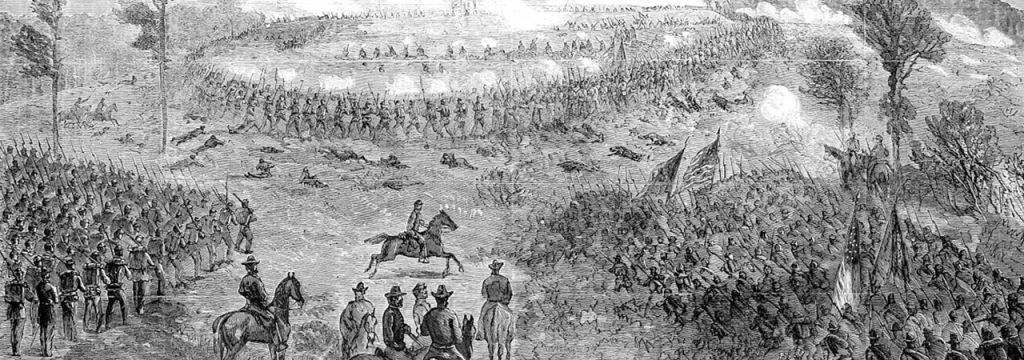
Chaffin’s Farm and the Test of Black Arms
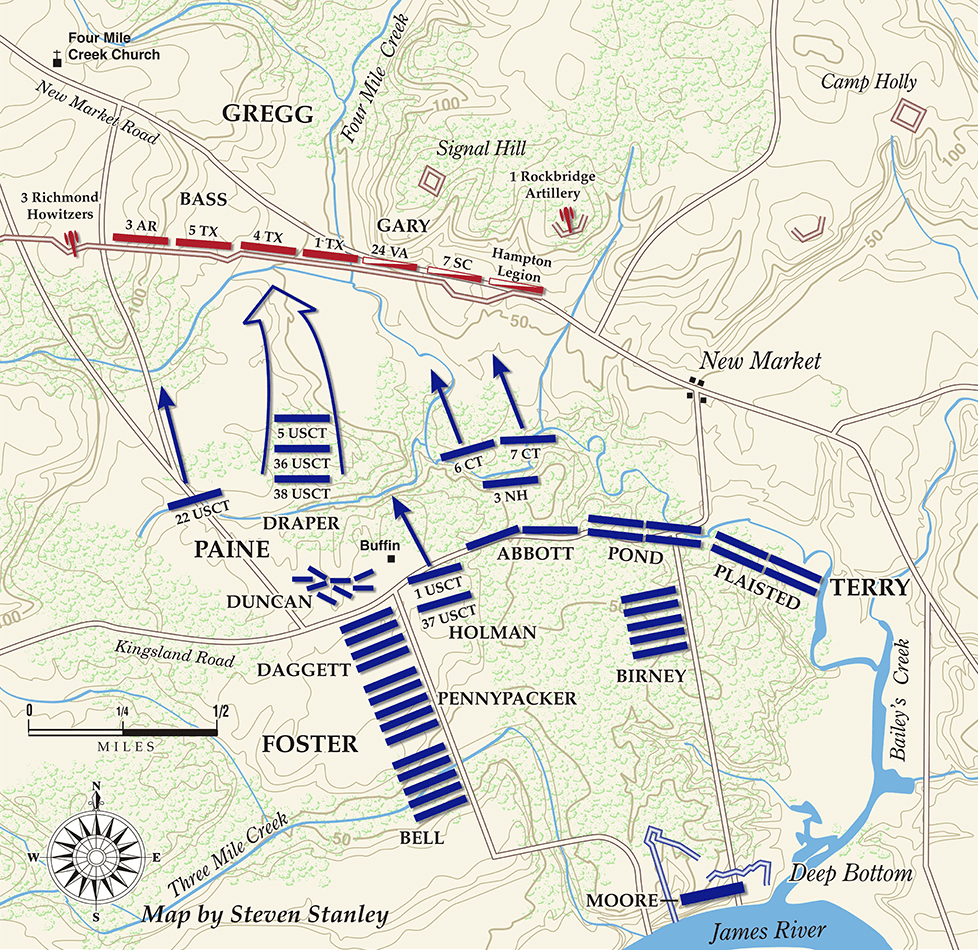
By late 1864, Union forces sought to break Confederate defenses north of the James River and tighten pressure on Richmond. The attack at New Market Heights was assigned largely to United States Colored Troops, placing Black soldiers in a central assault role against one of the strongest defensive positions in the region.
At New Market Heights, the Confederate position was deliberately engineered to defeat a frontal assault by breaking formations, slowing momentum, and holding attackers under sustained fire long before they could reach the main line.
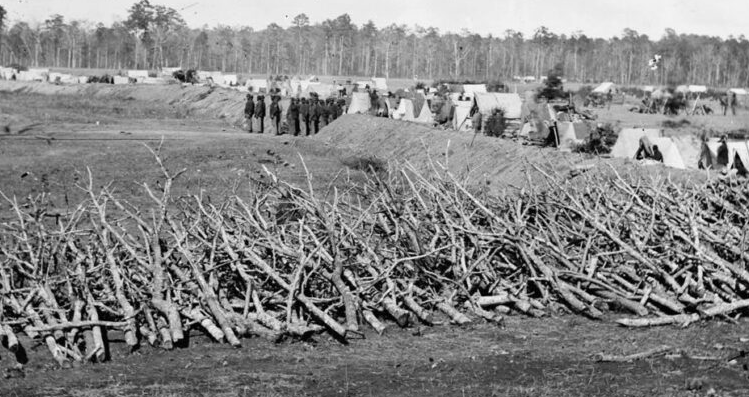
The defensive system was layered and intentional.
Advancing troops first encountered abatis – trees felled outward from the Confederate works, their branches sharpened and interlocked to form a dense, irregular barrier. Abatis forced attacking soldiers to slow, climb, crawl, or hack their way forward, destroying unit cohesion and exposing men upright and vulnerable to musket and artillery fire.
Beyond the abatis lay chevaux-de-frise–style obstacles, heavy timber frameworks studded with projecting spikes and sharpened poles. These barriers could not be easily stepped over or pushed aside. They halted forward movement, funneled men into narrow choke points, and caused attackers to bunch together under fire – turning progress into a deadly bottleneck.
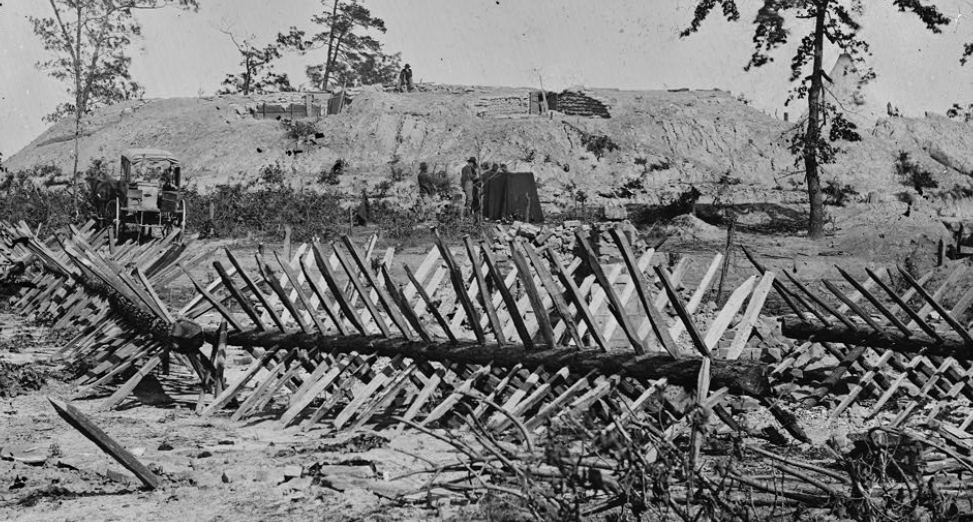
Behind these obstacles stood palisades, rows of stout vertical posts set firmly into the ground. Palisades denied attackers any immediate entry point and pinned them at close range, where defenders could fire directly through gaps or over the works. Once pressed against the palisades, soldiers had little room to maneuver and nowhere to take cover.
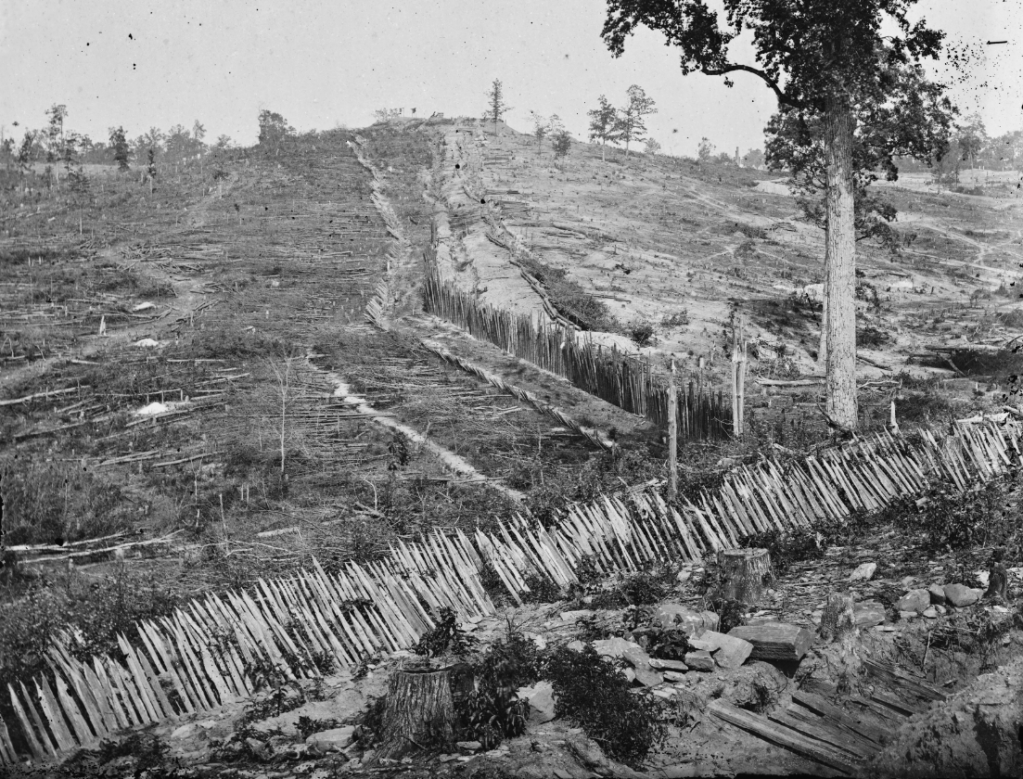
All of this was covered by veteran Confederate infantry, positioned behind prepared earthworks with clear fields of fire across the approaches. Each obstacle was designed not to stand alone, but to delay long enough for the next to kill – transforming the ground itself into a weapon.
This was not open-field fighting. It was an advance into a constructed zone of destruction, where survival depended on leadership, momentum, and the refusal to stop.
It was here – amid broken lines, fallen officers, and collapsing command – that Bronson and Kelly acted.
James H. Bronson: Command Taken Under Fire
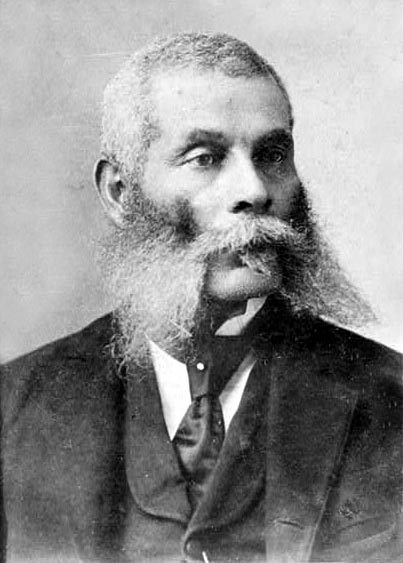
Born in Indiana County, Pennsylvania, James H. Bronson worked as a barber in Weathersfield Township, Trumbull County, Ohio, before enlisting in the Union Army on August 3, 1863. He joined Company D, 5th United States Colored Infantry as a private and rose to the rank of First Sergeant.
At New Market Heights, Company D advanced into intense Confederate fire. Officers fell rapidly. By the height of the assault, every commissioned officer in the company had been killed or wounded.
Bronson did not hesitate.
As the senior non-commissioned officer present, he assumed command, rallied the men, restored cohesion, and led the company forward through the abatis and palisades. Under direct fire and in close combat, Company D helped break through the Confederate line.
His Medal of Honor citation records the moment without flourish:
“Took command of his company, all the officers having been killed or wounded, and gallantly led it.”
Leadership, in Bronson’s case, was not granted. It was seized because the moment required it.
Alexander Kelly: The Colors Raised at the Point of Collapse
While Bronson fought with the 5th U.S. Colored Infantry, Alexander Kelly advanced the same day with Company F, 6th United States Colored Infantry.
Kelly was a 23-year-old coal miner, standing 5 feet 3½ inches tall, who enlisted as a substitute and was appointed First Sergeant on September 3, 1863, while his regiment trained at Camp William Penn near Philadelphia.
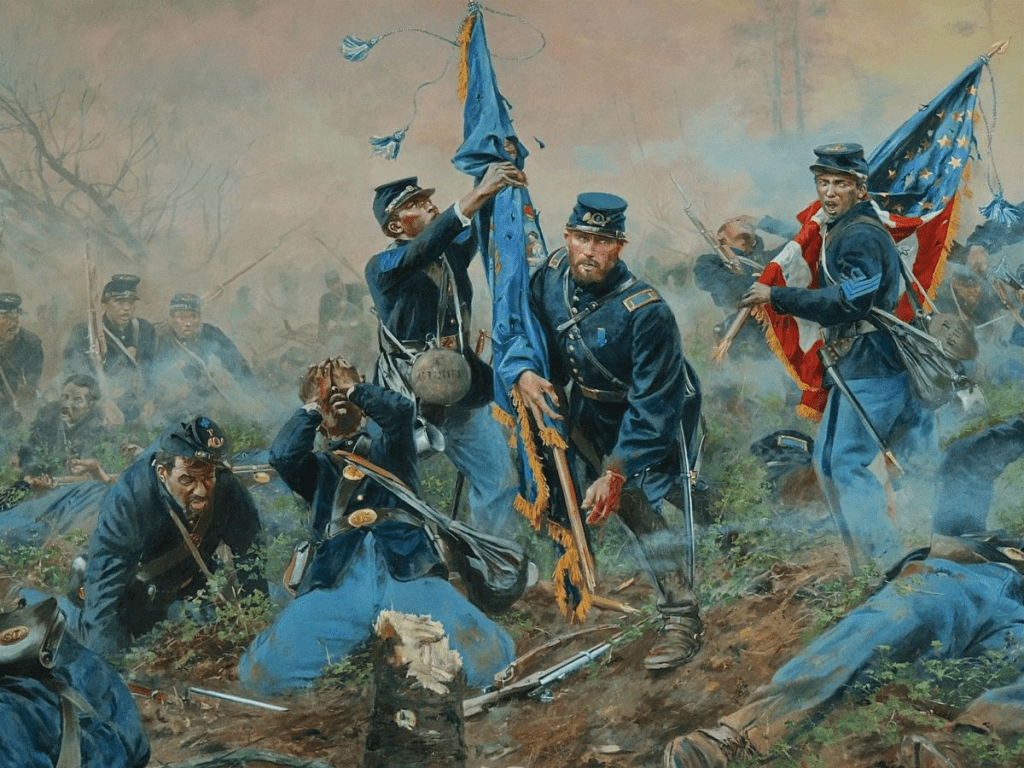
During the assault at New Market Heights, confusion swept the line. Near the Confederate abatis, the regimental colors fell – a moment that could unravel any attack. Without hesitation, Kelly seized the flag, raised it under fire, and rallied the men forward in one of the most dangerous sectors of the field.
His Medal of Honor citation captures the act precisely:
“Gallantly seized the colors, which had fallen near the enemy’s lines of abatis, raised them, and rallied the men at a time of confusion and in a place of the greatest danger.”
Where Bronson restored command, Kelly restored direction.
The flag went up. The line held.
Different Acts, One Truth
Bronson and Kelly did not perform the same deed – but they answered the same crisis.
- One took command when officers fell
- One raised the colors when the line wavered
- Both acted at the moment when hesitation meant collapse
Their courage was not theatrical. It was functional. It did what the battlefield demanded and nothing more.
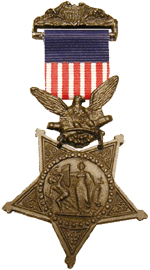
In recognition of such actions, fourteen African American soldiers received the Medal of Honor for New Market Heights – the highest number from any single engagement involving U.S. Colored Troops.
“Milton M. Holland, sergeant-major, Fifth U.S. Colored Troops, commanding Company C; James H. Bronson, first sergeant, commanding Company D; Robert Pinn, first sergeant, commanding Company I, wounded; Powhatan Beaty, first sergeant, commanding Company G, Fifth U.S. Colored Troops — all these gallant colored soldiers were left in command, all their company officers being killed or wounded, and led them gallantly and meritoriously through the day. For these services they have most honorable mention, and the commanding general will cause a special medal to be struck in honor of these gallant colored soldiers.” – Major General Benjamin F. Butler, Commanding Army of the James, October 11, 1864
After the War
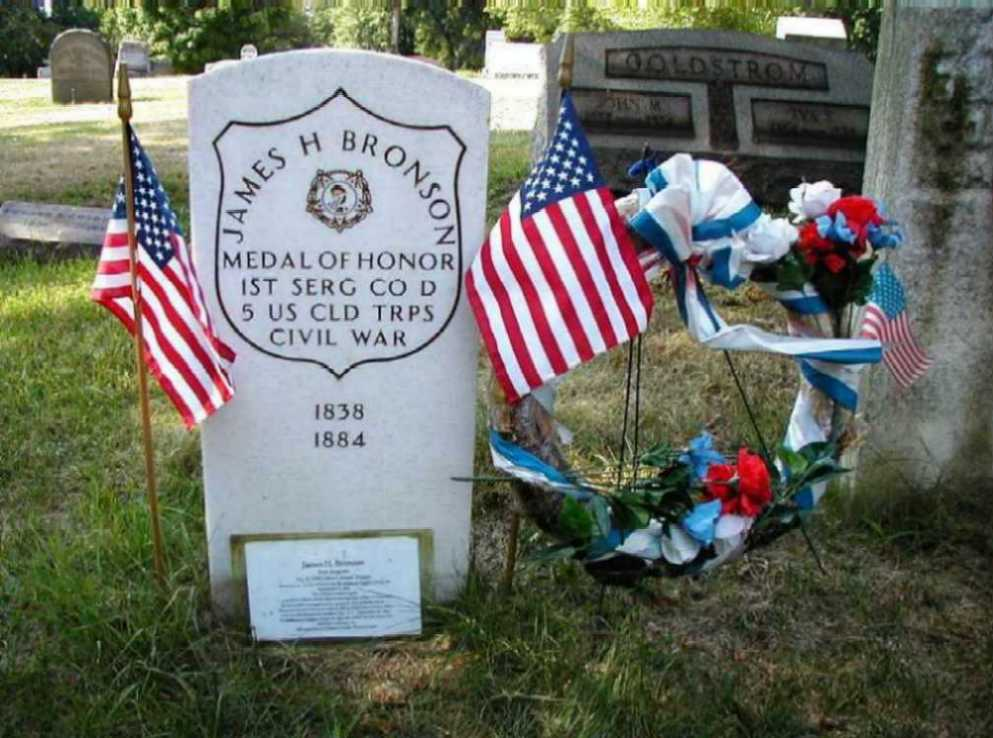
Bronson returned to civilian life and died on March 16, 1884. He is buried at Chartiers Cemetery in Carnegie, Pennsylvania.
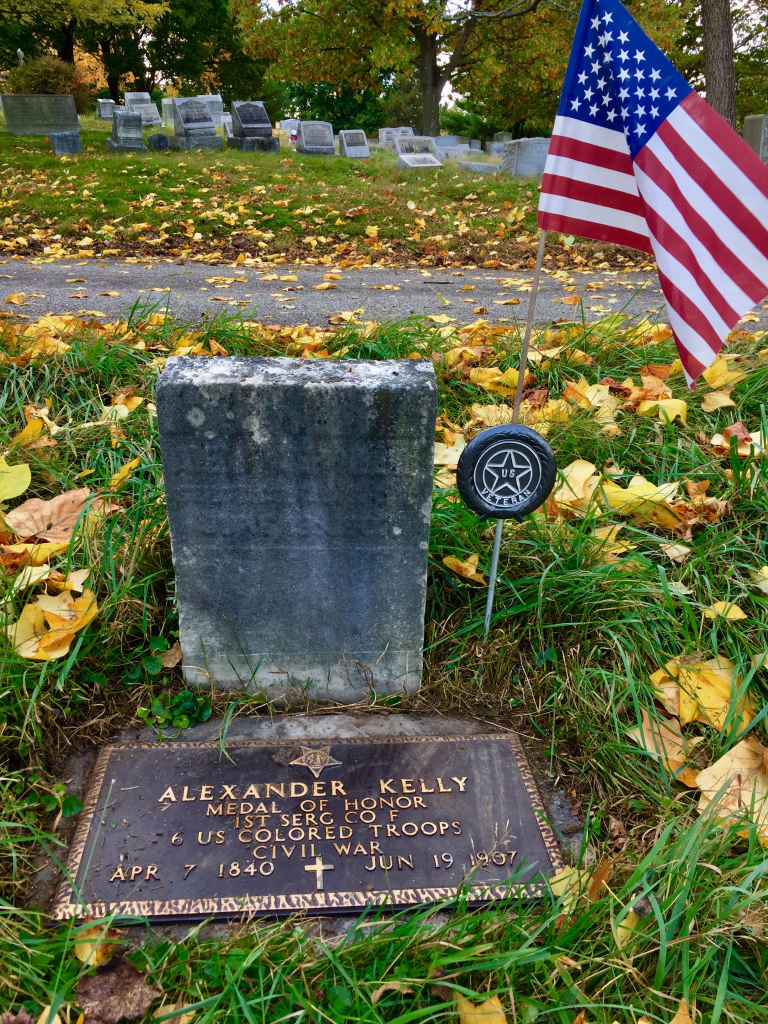
Kelly continued in service through the war’s end. Though reduced in rank in July 1865, he was promoted again to Sergeant on August 1, 1865, and was mustered out at Wilmington, North Carolina, on September 20, 1865. He is buried at Saint Peters Cemetery in Pittsburgh, Pennsylvania.
Neither man sought legacy.
Both left one.
What New Market Heights Proved
At New Market Heights, the nation witnessed something it could no longer deny:
that Black soldiers could advance under fire, maintain discipline amid slaughter, and lead when leadership vanished.
James H. Bronson and Alexander Kelly did not wait for permission.
They acted because the moment demanded it.
And in doing so, they carried the line forward – so nobly advanced.
“Once let the black man get upon his person the brass letters US, let him get an eagle on his button, and a musket on his shoulder, and bullets in his pocket, and there is no power on earth or under the earth which can deny that he has earned the right of citizenship in the United States.”
– Frederick Douglass, 1863
Sources
James H. Bronson
- Wikipedia — https://en.wikipedia.org/wiki/James_H._Bronson
- Congressional Medal of Honor Society — https://www.cmohs.org/recipients/james-h-bronson
- National Park Service (Richmond National Battlefield Park) — https://www.nps.gov/rich/learn/historyculture/bronson.htm
- American Battlefield Trust — https://www.battlefields.org/learn/medal-of-honor/james-h-bronson
Alexander Kelly
- Wikipedia — https://en.wikipedia.org/wiki/Alexander_Kelly
- National Park Service (Richmond National Battlefield Park) — https://www.nps.gov/rich/learn/historyculture/kelly.htm
Battle Context & Primary Sources
- National Park Service — Civil War Battle Summary: Chaffin’s Farm / New Market Heights (VA075) https://www.nps.gov/civilwar/search-battles-detail.htm?battleCode=VA075
- Official Records of the War of the Rebellion, Series I, Volume XLII, Part III (Serial 89)
Benjamin F. Butler, General Orders, October 11, 1864 https://www.wiu.edu/libraries/govpubs/war_of_the_rebellion/series_1.php
 So Nobly Advanced
Leave a comment