There are moments in history when words reveal more than armies ever could.
One such moment came in 1861, when a senior leader of the Confederate government spoke plainly of what his cause meant. Those words stand today not as a relic to be softened, but as evidence to be examined – and rejected – by constitutional reason and moral clarity.
What the Cornerstone Speech Claimed
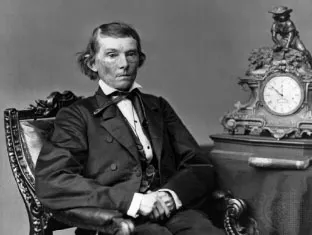
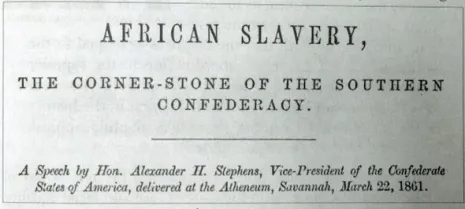
In March 1861, Alexander H. Stephens, Vice President of the Confederate States of America, delivered what became known as the Cornerstone Speech. Its purpose was not ceremonial. It was explanatory. Stephens sought to clarify what distinguished the Confederacy from the United States it had abandoned.
He did so with unmistakable precision:
“Our new government is founded upon exactly the opposite idea; its foundations are laid, its cornerstone rests, upon the great truth that the negro is not equal to the white man; that slavery – subordination to the superior race – is his natural and normal condition.”
This was not a defensive argument forced by circumstance. It was an affirmative declaration of belief. Stephens rejected the idea of natural human equality and asserted racial hierarchy as both scientific truth and political necessity. He described slavery not as a temporary condition, nor as a tragic inheritance, but as the proper ordering of society.
In constitutional terms, this claim was revolutionary – and not in a virtuous sense. It proposed a government whose legitimacy flowed not from the consent or rights of persons, but from a racial doctrine enforced by law.
Why the Cornerstone Speech Was Unconstitutional at Its Core
The United States Constitution rests on several foundational principles that Stephens’ doctrine directly contradicted.
First, the Constitution presumes personhood before law. Even where it failed to secure equality in practice, its structure assumes that rights belong to persons – not races. Due process, habeas corpus, trial by jury, and protection from arbitrary power are not granted conditionally by ancestry.
Second, the Constitution establishes a republican form of government. Republicanism requires that law be grounded in general principles applicable to all citizens, not in permanent caste distinctions. A state founded on racial subordination cannot be republican in any meaningful sense; it is oligarchic by design.
Third, the Constitution allows amendment – but not repudiation – of its animating ideals. Stephens explicitly dismissed the Declaration of Independence’s assertion of human equality as error. By doing so, he severed the Confederacy from the moral framework that gives the Constitution coherence. A constitution that denies equality as a principle ceases to be a charter of liberty and becomes a tool of domination.
Stephens’ speech therefore exposed the Confederacy not as a conservative defense of constitutional tradition, but as a radical departure from it – one that elevated inequality into law and denied the possibility of universal liberty.
Defeat Without Deliverance: The Aftermath of War
The Confederacy fell, but its racial ideology did not vanish with its armies. During the Reconstruction Era, the nation confronted the gap between constitutional promise and social reality.
The postwar amendments – the Thirteenth, Fourteenth, and Fifteenth – abolished slavery, established birthright citizenship, and prohibited racial discrimination in voting. On paper, they completed what the Cornerstone Speech denied: the legal recognition of Black Americans as equal members of the political community.
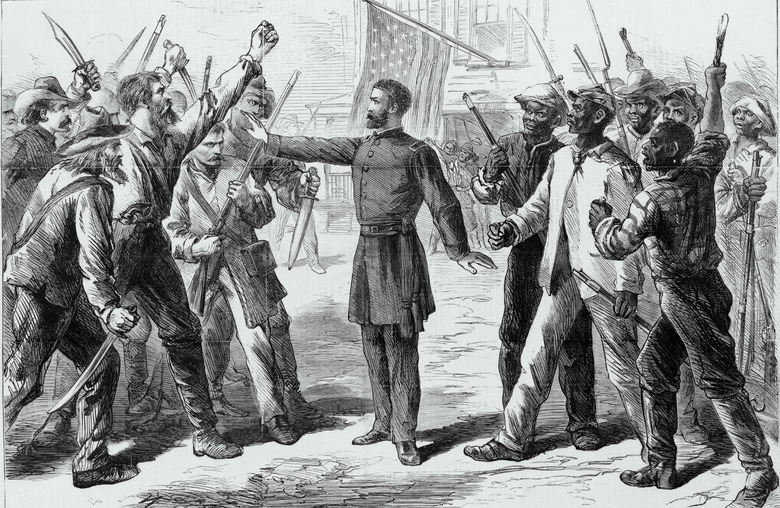
In practice, resistance was immediate and violent.
White supremacist organizations used terror to undermine Reconstruction governments. Night riders burned homes, assassinated local officials, intimidated voters, and enforced racial hierarchy through fear. Laws were subverted by custom; courts were constrained by violence; citizenship was narrowed by fraud and force. Sharecropping, convict leasing, and Jim Crow statutes restored dependency under new names.
This era demonstrated a painful truth: constitutional rights, once written, still require protection. Without enforcement and public will, the words themselves can be hollowed out.
The Moral Revival of American Liberty
Nearly a century later, a new generation of Americans confronted the unfinished work of Reconstruction. They did not seek to overthrow the Constitution. They sought to activate it.
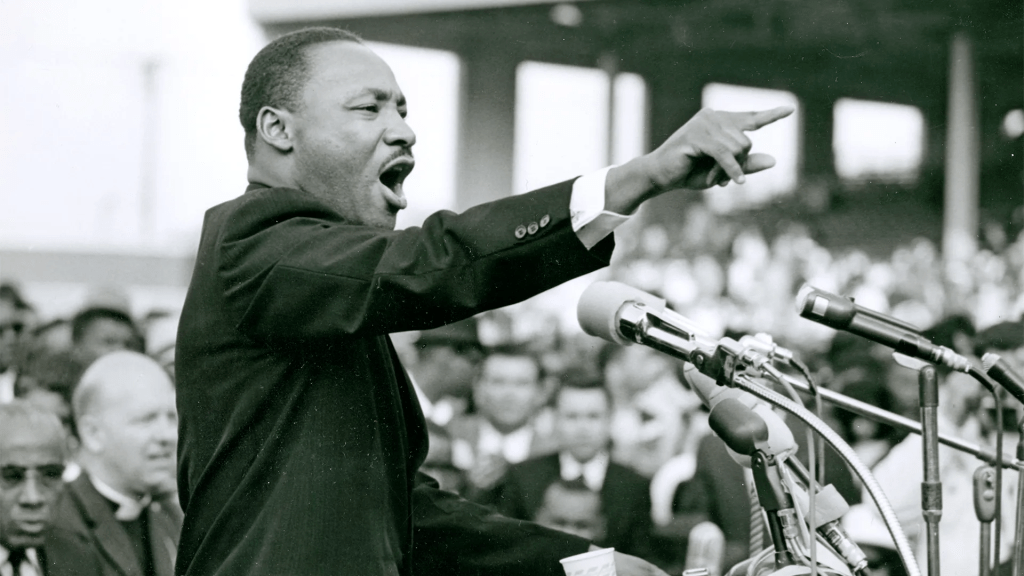
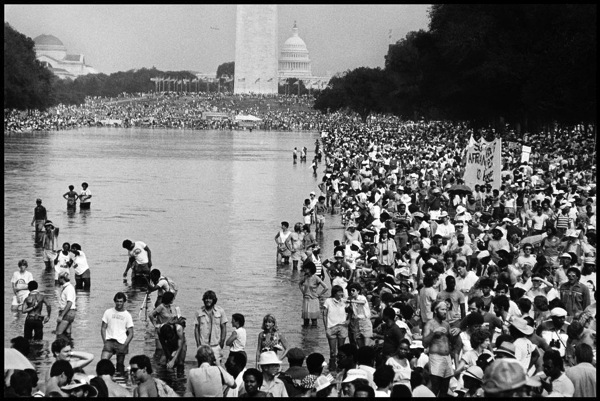
Martin Luther King Jr. articulated the movement’s moral center with clarity and restraint. He insisted that segregation was not merely unjust, but unconstitutional – that it violated equal protection and degraded the rule of law itself. His leadership fused moral philosophy with civic duty, grounding protest in both conscience and constitutional principle.
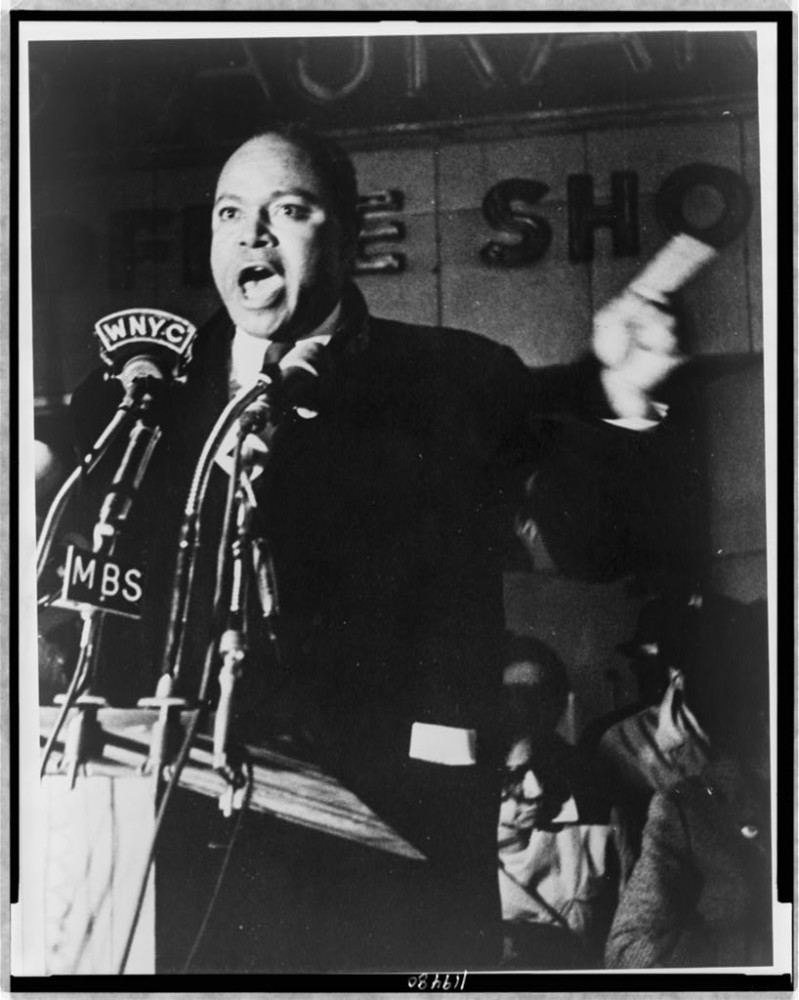
James Farmer, founder of the Congress of Racial Equality, translated principle into action through nonviolent direct confrontation. The Freedom Rides exposed the federal government’s failure to enforce its own laws, compelling the nation to choose between constitutional authority and tolerated lawlessness.
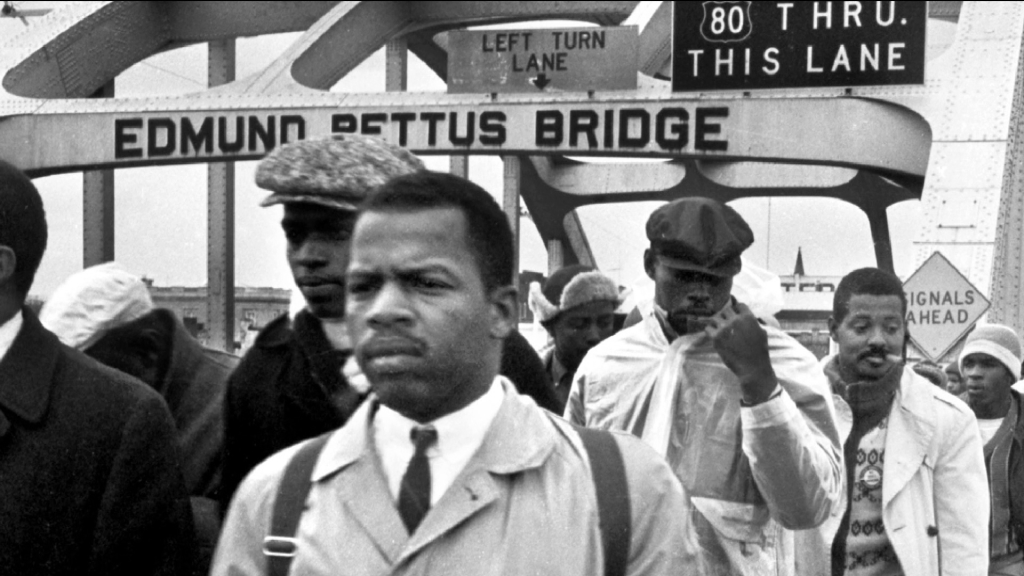
John Lewis embodied disciplined courage. On the Edmund Pettus Bridge, he faced state violence not with retaliation but with resolve, revealing to the nation that injustice, when exposed, cannot defend itself. His lifelong commitment to voting rights affirmed that democracy without access is democracy in name only.
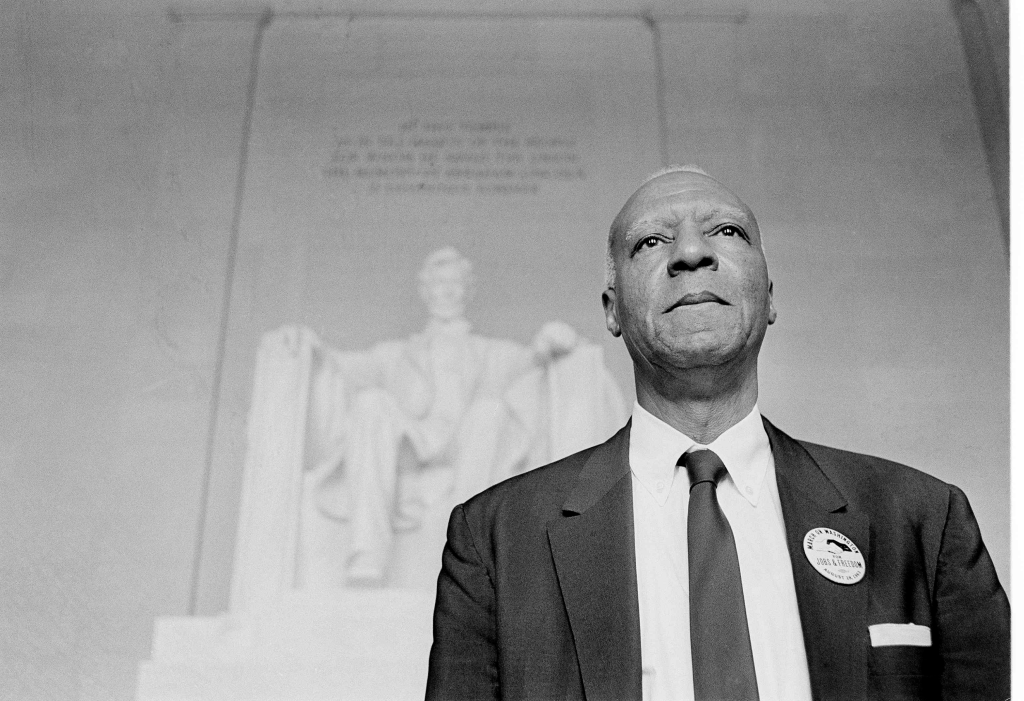
A. Philip Randolph understood liberty in economic terms. He recognized that freedom without opportunity is fragile. By organizing workers and pressuring the federal government, he linked civil rights to dignity of labor and fair participation in the national economy.
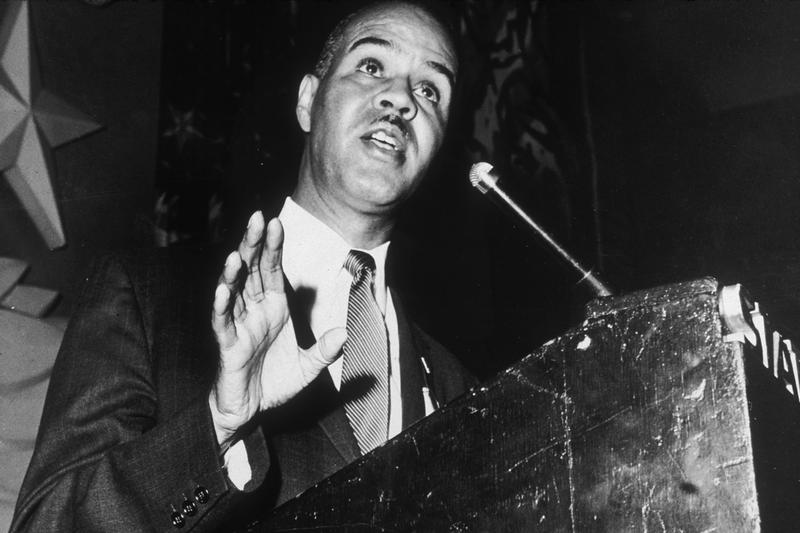
Roy Wilkins advanced civil rights through law, strategy, and institutional persistence. His leadership within the NAACP transformed constitutional litigation into a powerful engine of reform.
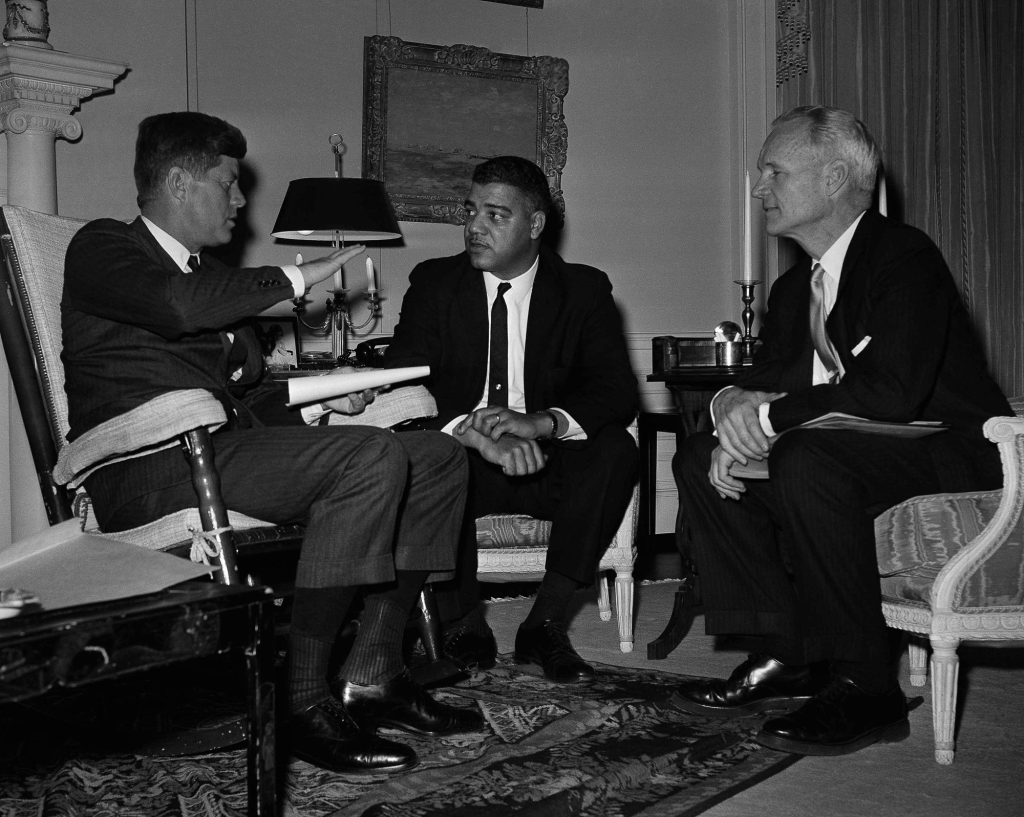
Whitney Young complemented that work by engaging business and government, proving that equality required not only protest but policy and partnership.
Together, these leaders dismantled the legal scaffolding of racial caste. The Civil Rights Act and Voting Rights Act did not grant new liberties; they enforced old ones that had been denied.
From Past to Present: Liberty as a Continuing Obligation
The struggle did not end with landmark legislation. Liberty, once advanced, must be defended against retreat. Today’s civil rights efforts confront new forms of exclusion and inequality – affecting people of all races, genders, orientations, religions, and beliefs.
The methods may change, but the principle remains constant: rights must be universal to be legitimate. A society that withholds liberty from any group undermines liberty for all. The same constitutional logic that rejects racial hierarchy rejects discrimination in every form.
This continuity matters. It reminds us that the defeat of the Cornerstone was not merely a military or legislative victory – it was a moral choice renewed across generations.
Conclusion: We Carry Forward the Cause
The Cornerstone Speech endures as a warning. It shows what happens when a nation abandons equality as a principle and substitutes hierarchy as law. The Constitution endures as its refutation – not because it is flawless, but because it contains the means for self-correction.
Those who fought slavery, resisted Reconstruction-era terror, and pressed the nation to honor its constitutional commitments did more than protest injustice. They strengthened the Republic by insisting that its promises apply to everyone.
The work continues. Each generation is called to measure law against liberty, power against justice, and tradition against truth. In answering that call – by expanding, protecting, and guaranteeing rights – we do not depart from American history. We fulfill it.
And in that work, we carry forward the cause which they who came before us so nobly advanced.


 So Nobly Advanced
Leave a comment