
On the evening of February 27, 1860, Abraham Lincoln walked onto a stage in New York City as a little-known former congressman from Illinois. By the time he finished speaking at Cooper Union, he had altered the course of American history.
The Cooper Union Address was not fiery. It was not theatrical. It was meticulously reasoned, historically grounded, and morally firm. In an age already saturated with political extremism and sectional fear, Lincoln offered something radical: an argument built on evidence, logic, and restraint.
Background: A Nation on the Edge
By 1860, the United States was unraveling. The issue of slavery – long deferred, compromised, and avoided – had reached a breaking point. The Republican Party at that time, still young and searching for national legitimacy, needed a candidate who could unite Northern voters without provoking immediate disunion.
Lincoln had gained attention during the Lincoln–Douglas Debates, where his calm logic and moral clarity contrasted sharply with the more flamboyant style of Stephen A. Douglas. But outside the Midwest, Lincoln remained largely unknown – and viewed with suspicion by Eastern elites.
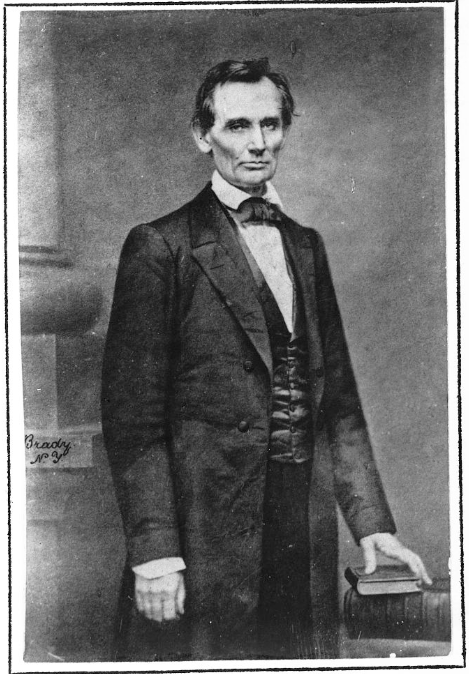
The invitation to speak at Cooper Union was his opportunity to prove himself on the national stage.
The Event: An Unassuming Entrance, a Transformative Moment
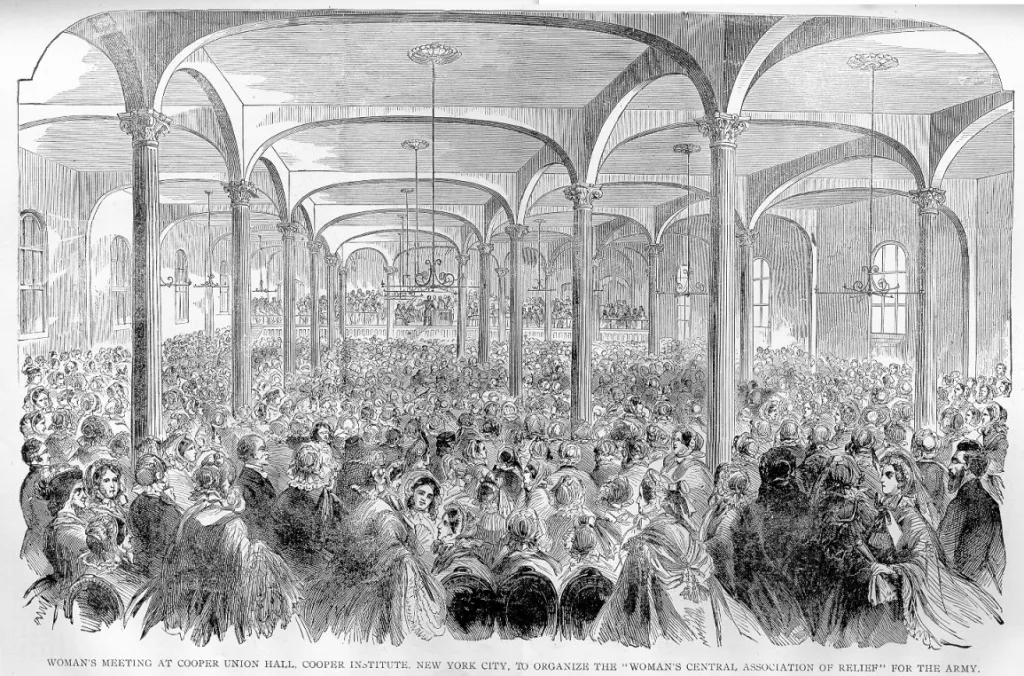
Cooper Union’s Great Hall was packed with influential New Yorkers – editors, intellectuals, political leaders, and skeptics. Many expected a provincial Westerner, perhaps earnest but unsophisticated.
What they received instead was precision.
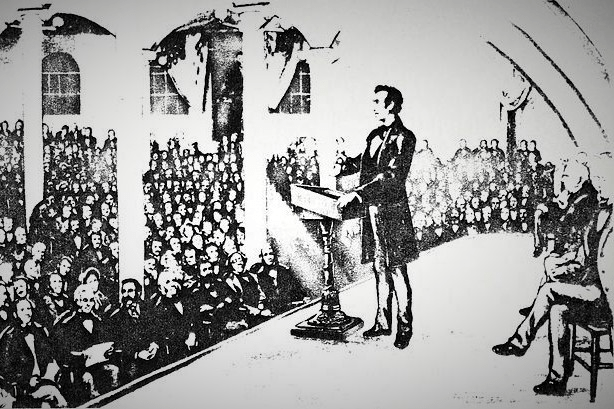
Lincoln arrived plainly dressed, spoke without flourish, and delivered a speech that unfolded like a carefully constructed legal brief. He did not appeal to emotion first. He appealed to fact.
The Speech: History as Moral Compass
Lincoln centered his address on a single, decisive question: What did the Founders believe about slavery?
Using exhaustive research, Lincoln demonstrated that a majority of the men who framed the Constitution believed Congress had the authority – and responsibility – to restrict the expansion of slavery. By grounding his argument in the intentions of the Founders, Lincoln dismantled claims that opposition to slavery’s expansion was radical or unconstitutional.
His message to the South was firm but measured.
His message to the North was sobering:
“Let us have faith that right makes might, and in that faith, let us, to the end,
dare to do our duty as we understand it.”
This was not a call to violence or revolution. It was a call to moral courage rooted in law, history, and conscience.
Meaning: Why This Speech Mattered
Lincoln reframed the national debate. Instead of asking whether slavery was politically expedient or economically beneficial, he asked whether it was right – and whether Americans were willing to live up to the principles they claimed to cherish.
He challenged extremism without validating it.
He rejected compromise without embracing chaos.
He showed that conviction need not be cruel, and firmness need not be loud.
In doing so, Lincoln redefined leadership itself.
Immediate Impact: From Obscurity to Contender
The response was electric.
Newspapers across the North praised the address for its clarity, scholarship, and moral seriousness. Skeptics became supporters. Influential Republicans began to view Lincoln not merely as acceptable, but as exceptional.
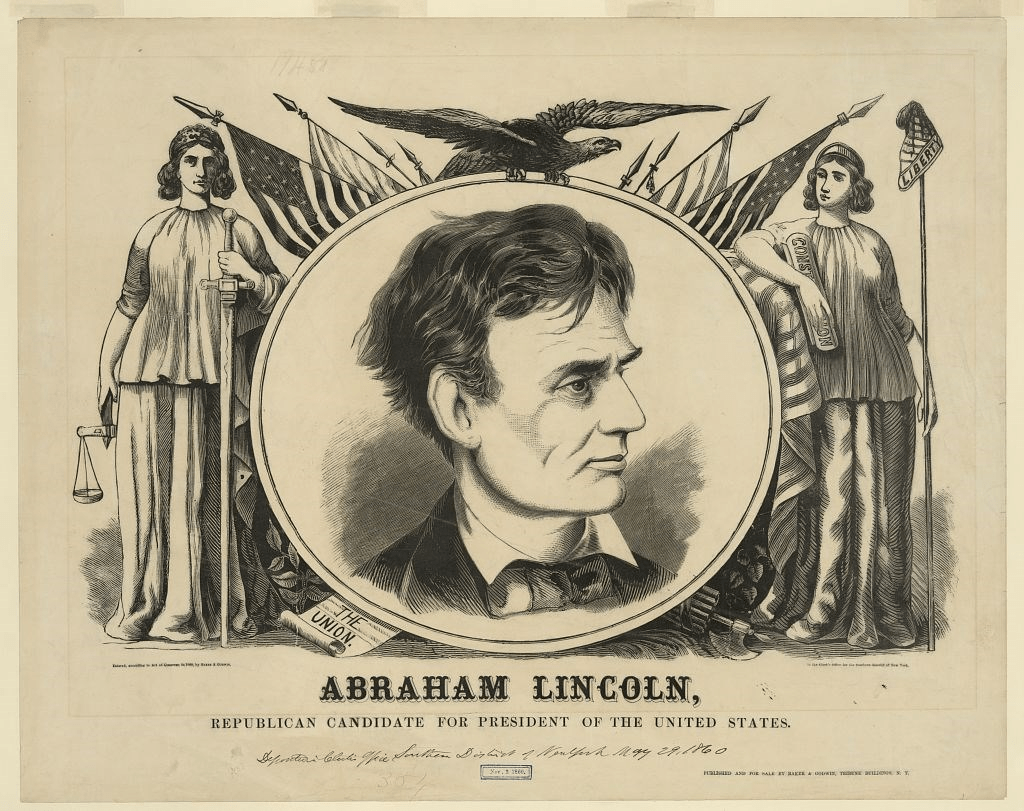
Within months, Lincoln secured the Republican nomination for president. Without Cooper Union, that outcome is difficult – perhaps impossible – to imagine.
Enduring Legacy: Why Cooper Union Still Matters Today
The Cooper Union Address reminds us that democracy depends not only on passion, but on persuasion.
It asks enduring questions:
- What happens when facts are dismissed as inconvenient?
- What happens when volume replaces reason?
- What happens when history is ignored rather than studied?
Lincoln showed that leadership is not about inflaming division – it is about elevating understanding.
He trusted the public to follow logic.
He trusted truth to carry weight.
And he trusted that moral clarity, patiently argued, could still move a nation.
Relevance for Our Time
In an era of polarization, misinformation, and performative outrage, Lincoln’s Cooper Union Address feels less like a relic and more like a challenge.
Are we still willing to listen to arguments we disagree with?
Do we value evidence over affirmation?
Do we expect our leaders to educate – or to entertain?
Lincoln’s answer, delivered quietly in a hall in New York, still echoes:
Truth matters. History matters.
And moral courage, when grounded in reason, can change everything.
So Nobly Advanced exists to explore moments like this – when words, carefully chosen and courageously spoken, bend the arc of history.
 So Nobly Advanced
Leave a comment