
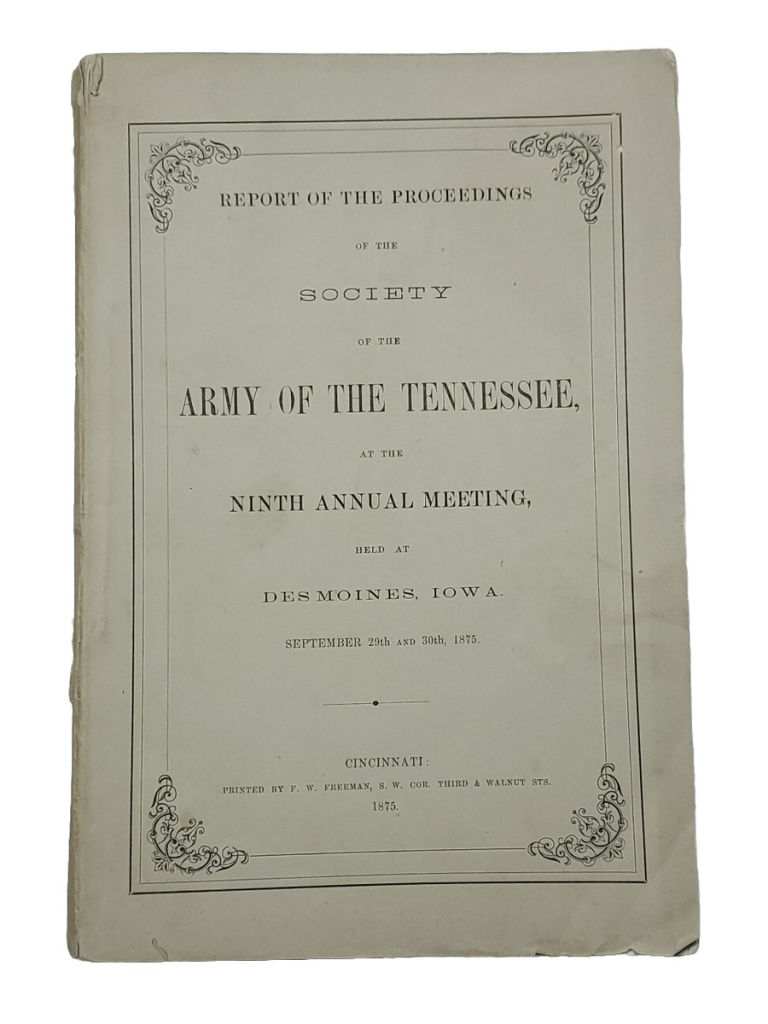
In September 1875, nearly a decade after Appomattox, Ulysses S. Grant addressed Union veterans gathered at the Ninth Annual Meeting of the Army of the Tennessee in Des Moines, Iowa. The war had been won. The Union preserved. Slavery abolished. Yet Grant spoke not of triumph, nor of sectional reconciliation, nor of personal memory. Instead, he posed a harder question – one that confronted the unfinished meaning of victory itself.
What, he asked implicitly, must be secured so that the war would not have been fought in vain?
His answer was neither military nor partisan. It was civic.
The survival of the republic, Grant argued, depended upon the intelligence of the people who governed it.
The Soldier’s Right to Deliberate
Grant opened his remarks by carefully narrowing the scope of his intervention. He disclaimed partisan intent, insisting that he did not bring “politics, certainly not partisan politics” into the assemblage. Yet he immediately asserted that soldiers – having borne the cost of war – possessed not only the right but the obligation to consider what safeguards were necessary to preserve the fruits of their sacrifice.
This framing is critical. Grant did not treat civic reflection as a civilian monopoly. For him, military service conferred a moral authority to speak about the conditions required for republican survival.
Victory, in this sense, imposed duties upon the living as surely as it honored the dead.
A New Dividing Line
Grant’s most striking assertion followed:
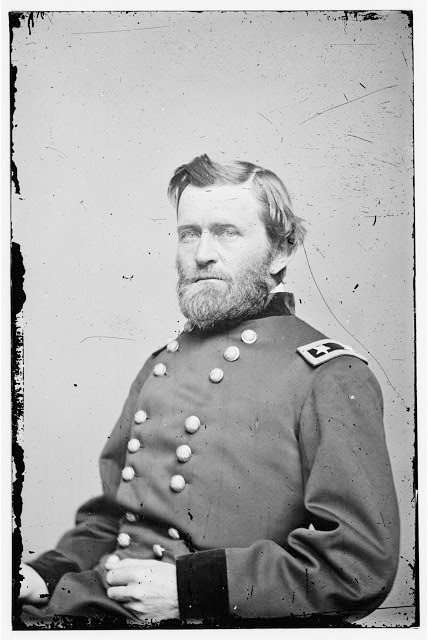
“If we are to have another contest in the near future of our national existence, I predict that the dividing line will not be Mason and Dixon’s, but between patriotism and intelligence on the one side, and superstition, ambition, and ignorance on the other.”
Here, Grant deliberately rejected the geographic logic of the Civil War. Sectional boundaries had defined the conflict just ended, but they would not define the next crisis. The future danger lay not in territory, but in the capacity – or incapacity – of citizens to govern themselves.
This was not an abstract concern. Reconstruction had revealed how easily democratic mechanisms could be undermined by misinformation, racial animus, and organized violence. Grant understood that republican government could not survive on loyalty alone.
Patriotism without intelligence, he warned, was insufficient – and potentially dangerous.
Education as National Preservation
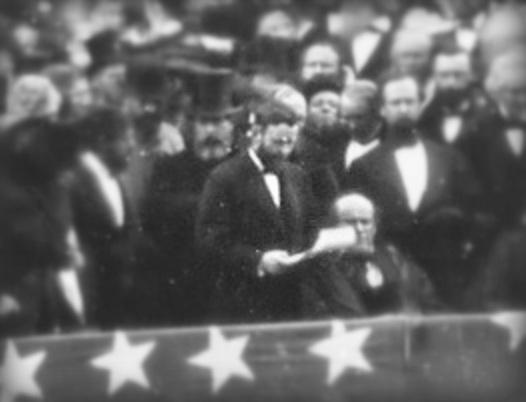
Grant located the solution in public education. The “free school,” he declared, was the “promoter of that intelligence” necessary to preserve a free nation.
Education was not merely a social good; it was a constitutional safeguard.
He went further. The state, Grant argued, bore a positive obligation to ensure that every child received a common-school education. This education must be public, universal, and deliberately non-sectarian. No public funds, he insisted, should support sectarian schools, regardless of how those funds were raised.
This was not hostility toward religion. Grant explicitly affirmed the place of faith within family life, churches, and privately supported institutions. But the republic, he believed, required a civic space where instruction remained free from sectarian control.
“Keep the church and state forever separate.”
For Grant, this separation was not an abstraction of political theory. It was a practical defense against factionalism and coercion in a nation where citizens were sovereign.
Equal Rights as a Civic Foundation
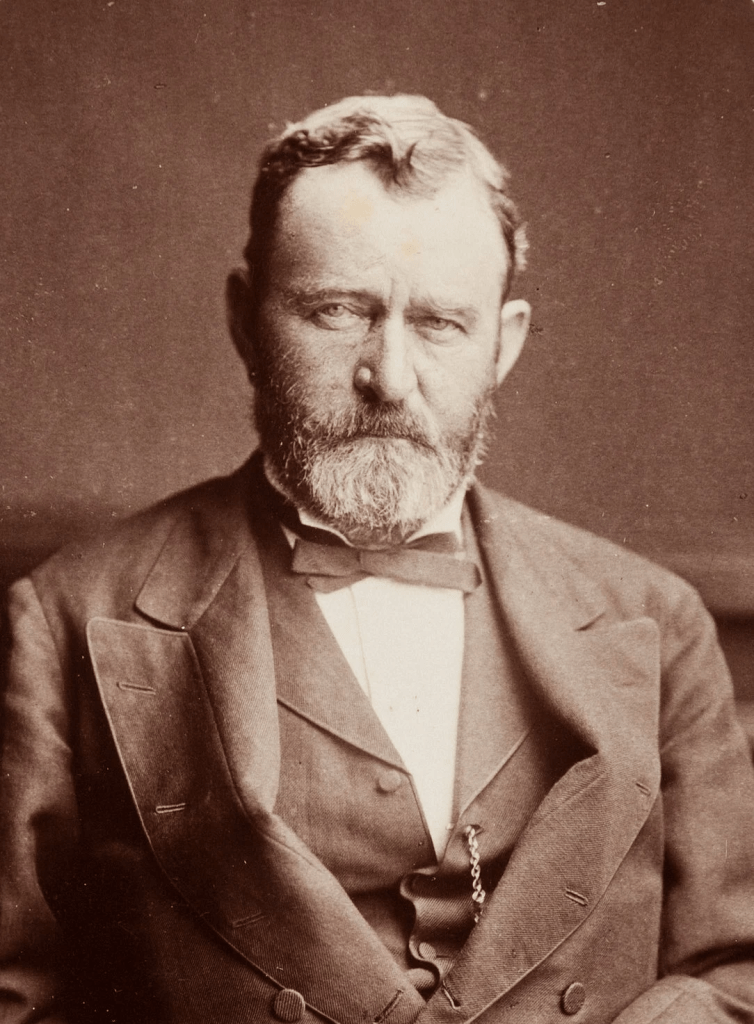
Equally notable is Grant’s unqualified language regarding equality. He called for guarantees of “equal rights and privileges to all men, irrespective of nationality, color, or religion.” There is no gradualism here. No appeal to future adjustment. No conditional phrasing.
This statement aligns squarely with Grant’s broader postwar record.
As president, he supported constitutional amendments expanding citizenship and suffrage, deployed federal authority against organized racial violence, and treated civil rights enforcement as a legitimate function of national power.
In Des Moines, he articulated the philosophical foundation beneath those actions: a republic cannot endure if sovereignty is denied to any portion of its people.
Centennial Reflection and Revolutionary Memory
Grant delivered these remarks during the nation’s centennial year, and he consciously anchored his appeal to the opening moments of the American Revolution – Lexington and Concord. The gesture was deliberate. By doing so, he connected the Civil War not as a rupture, but as a continuation of the same constitutional struggle begun a century earlier.
The Revolution had established the house. The Civil War had prevented its collapse.
The next task, Grant argued, was reinforcement – strengthening the foundation through education, free expression, moral responsibility, and equal rights.
Meaning After the Guns Fell Silent
Grant closed with a soldier’s reckoning:
“With these safeguards, I believe the battles which created the
Army of the Tennessee will not have been fought in vain.”
Victory, in his telling, was not measured by territory held or enemies defeated. It was measured by whether the republic emerged capable of sustaining liberty through informed self-government.
The war had settled the question of union by force of arms. It had not settled the question of whether Americans would prove equal to the power they possessed.
Grant placed that responsibility squarely upon the people themselves.
Grant’s Measure of the War
Grant’s Des Moines address stands among the clearest postwar statements of what the Civil War required of those who survived it.
He offered no assurances of permanence. He assumed no automatic moral progress. Instead, he warned that Liberty endures only through constant reinforcement – through education, restraint, and equal law faithfully applied.
The republic, he believed, would not fracture again along familiar sectional lines, but along a subtler and more dangerous fault: between citizens prepared to govern themselves and those willing to surrender judgment to ignorance, ambition, or fear.
That understanding – earned through war and spoken without triumph – was the legacy Ulysses S. Grant placed before his fellow soldiers. It remains a sober reminder that victory, once secured, is not an end state, but a responsibility – one that must be defended long after the guns fall silent.

“I do not bring into this assemblage politics, certainly not partisan politics, but it is a fair subject for soldiers in their deliberations to consider what may be necessary to secure the prize for which they battled in a republic like ours. Where the citizen is sovereign and the official the servant, where no power is exercised except by the will of the people, it is important that the sovereign – the people – should possess intelligence.
The free school is the promoter of that intelligence which is to preserve us as a free nation. If we are to have another contest in the near future of our national existence, I predict that the dividing line will not be Mason and Dixon’s, but between patriotism and intelligence on the one side, and superstition, ambition, and ignorance on the other.
Now in this centennial year of our national existence, I believe it a good time to begin the work of strengthening the foundation of the house commenced by our patriotic forefathers one hundred years ago, at Concord and Lexington. Let us all labor to add all needful guarantees for the more perfect security of free thought, free speech, and free press, pure morals, unfettered religious sentiments, and of equal rights and privileges to all men, irrespective of nationality, color, or religion.
Encourage free schools, and resolve that not one dollar of money appropriated to their support, no matter how raised, shall be appropriated to the support of any sectarian school. Resolve that the State or Nation, or both combined, shall furnish to every child growing up in the land, the means of acquiring a good common-school education, unmixed with sectarian, pagan, or atheistic tenets. Leave the matter of religion to the family altar, the church, and the private school supported entirely by private contributions. Keep the church and state forever separate. With these safeguards, I believe the battles which created the Army of the Tennessee will not have been fought in vain.”
– Ulysses S. Grant
Sources
- Ulysses S. Grant, Remarks at the Ninth Annual Meeting of the Army of the Tennessee, Des Moines, Iowa, September 29, 1875
- John Y. Simon, The Papers of Ulysses S. Grant, Southern Illinois University Press
- Jean Edward Smith, Grant, Simon & Schuster
- Brooks D. Simpson, Let Us Have Peace: Ulysses S. Grant and the Politics of War and Reconstruction
 So Nobly Advanced
Leave a comment