
In the winter of 1848, as war with Mexico continued, a young congressman from Illinois wrote not to the nation, but to a friend. There was no crowd, no speech, no performance – only argument, reason, and conviction set down in ink.
What Abraham Lincoln wrote in that letter was not about a single war.
It was about something more enduring:
Who has the authority to take a nation to war – and what happens when that authority is misplaced?
The Document
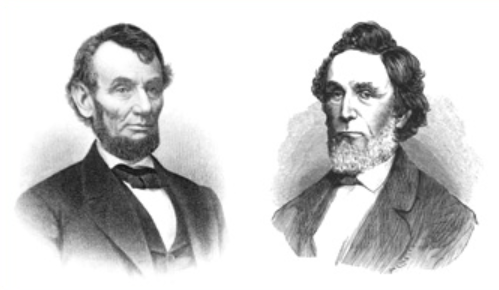
The letter, dated February 15, 1848, was written by Abraham Lincoln to William H. Herndon, his law partner. It addresses the constitutional justification for the Mexican-American War and, more broadly, the nature of executive power.
Lincoln challenges the claim that the President may initiate war under the justification of defending the nation. He writes that if such reasoning is accepted, it cannot be limited:
“Allow the President to invade a neighboring nation…
and you allow him to make war at pleasure.”
The argument is direct. If the President alone determines when defense requires invasion, then the check on war disappears. The decision becomes one of personal judgment rather than constitutional authority.
Lincoln presses the point further with a hypothetical:
If the President claims invasion is necessary, “how could you stop him?”
The implication is clear: once the principle is conceded, resistance becomes impossible.
What the Letter Actually Says
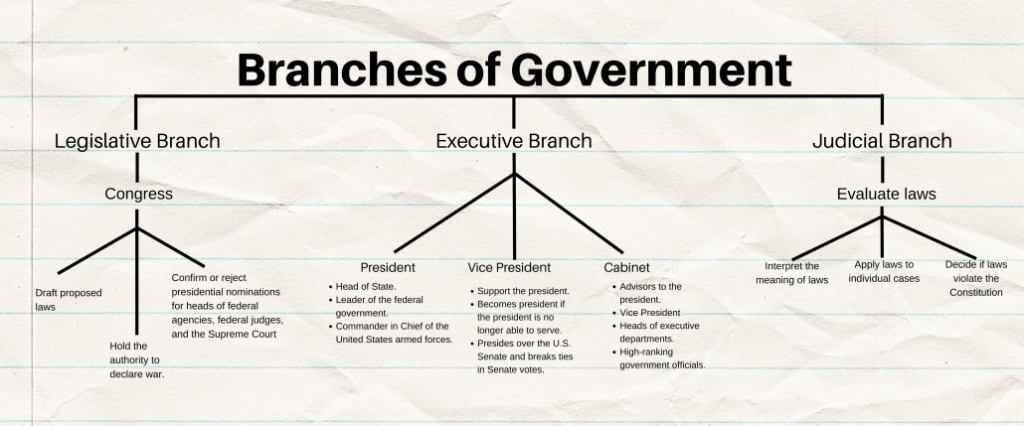
Lincoln grounds his argument in the structure of the Constitution itself. He explains why the power to declare war was deliberately placed in Congress:
“Kings had always been involving and impoverishing their people in wars…
pretending… the good of the people was the object.”
This, Lincoln argues, was precisely what the framers sought to prevent. War was not merely a policy choice – it was a historical danger, repeatedly used by rulers to consolidate power.
He continues:
“They resolved to so frame the Constitution that no one man
should hold the power of bringing this oppression upon us.”
This is the core of the letter.
The Constitution is not only a framework for governance; it is a guard against the concentration of force in a single individual.
Lincoln warns that abandoning this principle would reverse that design: It would place “our President where kings have always stood.”
The Context
The letter emerges from the Mexican-American War (1846-1848), a conflict justified by President James K. Polk as a defensive response to Mexican aggression.
Lincoln, then serving in Congress, had already challenged this claim publicly through his “Spot Resolutions,” demanding that the administration identify the exact location where American blood had been shed.
This letter reflects the same concern – but more candidly.
Without the formality of Congress, Lincoln writes plainly: if the President can define aggression and necessity, then the constitutional barrier to war dissolves.
The issue, for Lincoln, is not simply whether the war is justified, but whether the process of justification itself remains lawful.
The Argument
Lincoln’s reasoning unfolds in a sequence:
- If the President can claim defensive necessity, he can justify initiating hostilities.
- If that claim itself is sufficient for justifying initiation of hostilities, Congress becomes irrelevant.
- If Congress is irrelevant, the constitutional safeguard fails.
- If the safeguard fails, executive war power becomes unlimited.
What begins as an argument about one war becomes a warning about all wars.
Lincoln is not merely opposing a policy – he is defending a principle:
that the decision to wage war must be deliberate, collective, and accountable.
Meaning
Lincoln does not deny the reality of threats. He does not argue that the nation must never act. Instead, he insists that the power to act must be governed.
War, in his understanding, is not only a question of necessity – it is a question of authority.
The danger is not only in unjust wars, but in the ability of one person to decide what is just.
In that sense, the letter is not simply about Mexico. It is about the structure of a republic, and the fragile line between leadership and rule.

The Safeguard of Liberty
Lincoln’s letter does not offer a dramatic conclusion. It ends simply, with a request to “write soon again.” But the argument it contains does not end there.
It asks something of the reader: to consider whether the safeguards of Liberty remain intact not when they are convenient, but when they are tested.
The Constitution, as Lincoln understood it, was NOT designed for moments of ease. Rather, it was designed for moments when power could be expanded or exploited in the name of ‘necessity’.
To surrender that structure is not to solve the problem of war, but to remove the restraint upon it.
And in that removal lies the very condition the framers feared –
a republic that has, in quiet steps, placed its power where kings once stood.
To remember that design – to insist upon it even in moments of urgency – is to carry forward
the work they began and so nobly advanced.
Sources
- “Collected Works of Abraham Lincoln. Volume 1 [1824-Aug. 28, 1848].” In the digital collection Collected Works of Abraham Lincoln. Collected Works of Abraham Lincoln. Volume 1 [1824-Aug. 28, 1848]. | Collected Works of Abraham Lincoln | University of Michigan Library Digital Collections. University of Michigan Library Digital Collections.
 So Nobly Advanced
Leave a comment