
Part of Series “The Architecture of War”
On July 3, 1863, the ridge south of Gettysburg shuddered beneath the weight of artillery fire. Confederate batteries opened in coordinated fury, sending shell and solid shot crashing into Cemetery Ridge. Limbers exploded. Gun teams fell. Smoke rolled so thick across the crest that commanders struggled to see their own lines.
The instinct in such a moment was simple: answer violence with violence.
Henry Jackson Hunt, however, chose restraint.
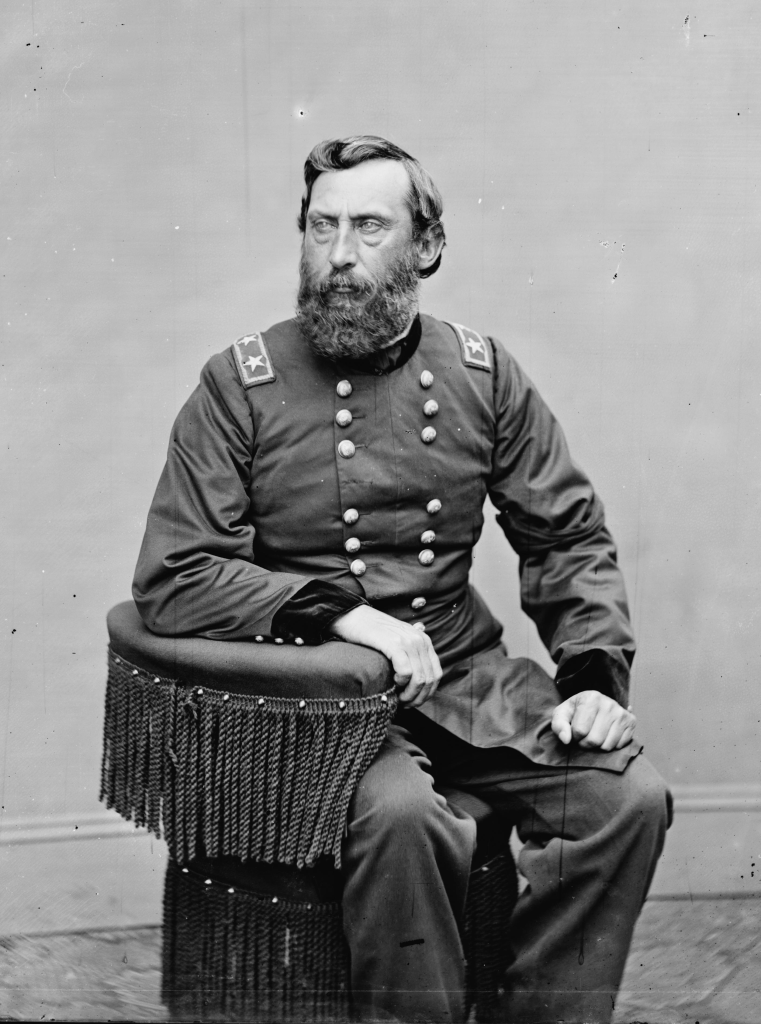
His greatest contribution to Union victory was not merely technical proficiency, but the disciplined control of destructive power – a doctrine he articulated in his own writings and physically engineered through the Union Army’s overhaul of its artillery arm. Gettysburg would become the fullest expression of that architecture.
The Moral Framework: Conscience Before Fire
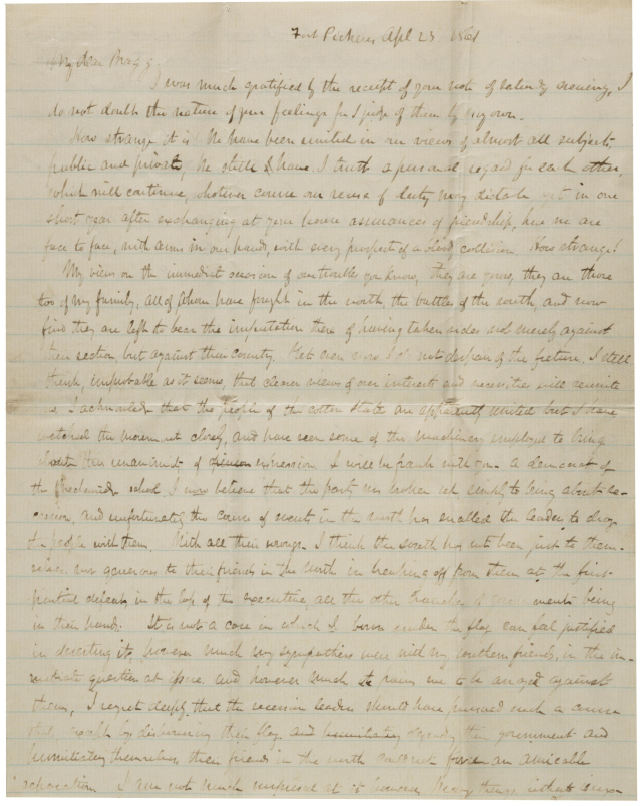
Two years before Gettysburg, Hunt wrote from Fort Pickens to his old friend Braxton Bragg, now aligned with the Confederacy. The nation had fractured. Officers were choosing sides.
Hunt’s letter was not the language of sectional fury. It was the language of conscience.
“We must each as you say act according to the dictates of our consciences.”
He acknowledged the strangeness of facing former comrades across opposing lines, and he refused to adopt the posture of an “alien enemy.” Yet he drew a firm boundary of duty:
“It is not a case in which I born under the flag can feel justified in deserting it…”
For Hunt, loyalty was not emotional attachment to a region. It was constitutional obligation to the national flag under which he had been commissioned.
Even amid the gathering storm, he expressed a conviction that bloodshed would not permanently divide the nation:
“It is a great mistake to suppose… that bloodshed will be an insuperable obstacle to re-union.”
And more boldly still:
“…the name of American will supersede that of northerner, and southerner.”
This was not naïveté. Hunt anticipated a “bloody collision.” But he believed force must serve restoration, not vengeance.
That belief would later govern how he managed the most destructive arm of the Union Army.
The Crisis of Artillery in the Early War
When the Civil War began, Union artillery was tactically uneven and structurally fragmented. Batteries were often attached loosely to infantry brigades. Ammunition supply systems lacked coherence. Senior artillery officers frequently lacked sufficient rank authority to impose discipline across corps lines. Concentration of fire – the essence of artillery effectiveness – was often impossible under such decentralized arrangements.
Hunt recognized that artillery effectiveness was not primarily a question of courage or equipment. It was a systems problem.
Following the Peninsula Campaign and the Seven Days Battles, Hunt pushed for reform. By late 1862 and early 1863, he had helped implement a major restructuring of the Army of the Potomac’s artillery arm. Batteries were consolidated into corps-level artillery brigades. More importantly, a substantial and centrally controlled Artillery Reserve was strengthened to permit rapid reinforcement and concentration of fire at critical sectors.
This was not administrative tinkering. It was structural architecture.
Hunt articulated artillery’s operational purpose clearly:
“It has, therefore, for its object… by a combined and concentrated fire… to arrest his attacks; and to support those which may be directed against him.”
That statement defined doctrine. Artillery was not meant for scattered or impulsive firing. Its power lay in concentration – in the deliberate application of massed fire at decisive moments.
Gettysburg in Numbers and Structure
By the time the Army of the Potomac reached Gettysburg, Hunt’s reforms were in place.
The Union army fielded approximately 370 guns at the battle, organized into corps artillery brigades and a powerful Artillery Reserve of over one hundred guns. This Reserve – one of Hunt’s most significant structural achievements – provided operational flexibility. Batteries could be shifted, reinforced, or concentrated according to battlefield necessity rather than remaining permanently tethered to individual infantry brigades.
The Confederate artillery that opened on July 3 numbered roughly 130 to 140 guns in coordinated action against the Union center. It was one of the largest artillery bombardments of the war.
Artillery battles are logistical battles. Ammunition was finite, carried in limbers and replenished by reserve trains. If Union batteries expended their ammunition in extended counterbattery exchanges, they risked being ineffective when Confederate infantry advanced.
Hunt understood this risk.
Positioning and Preparation
Hunt’s architectural thinking is visible not only in organization but in positioning.
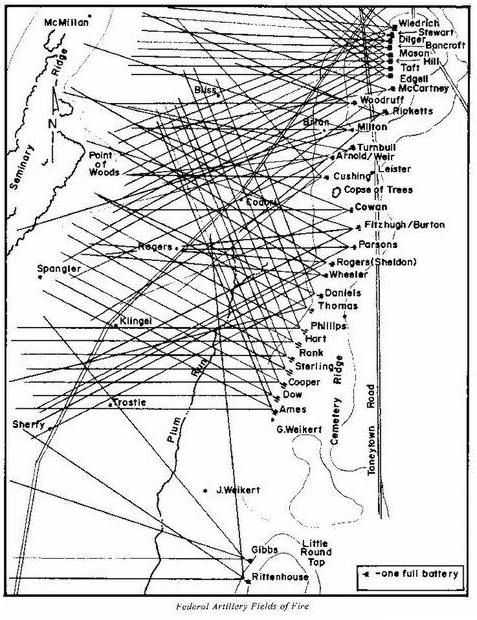
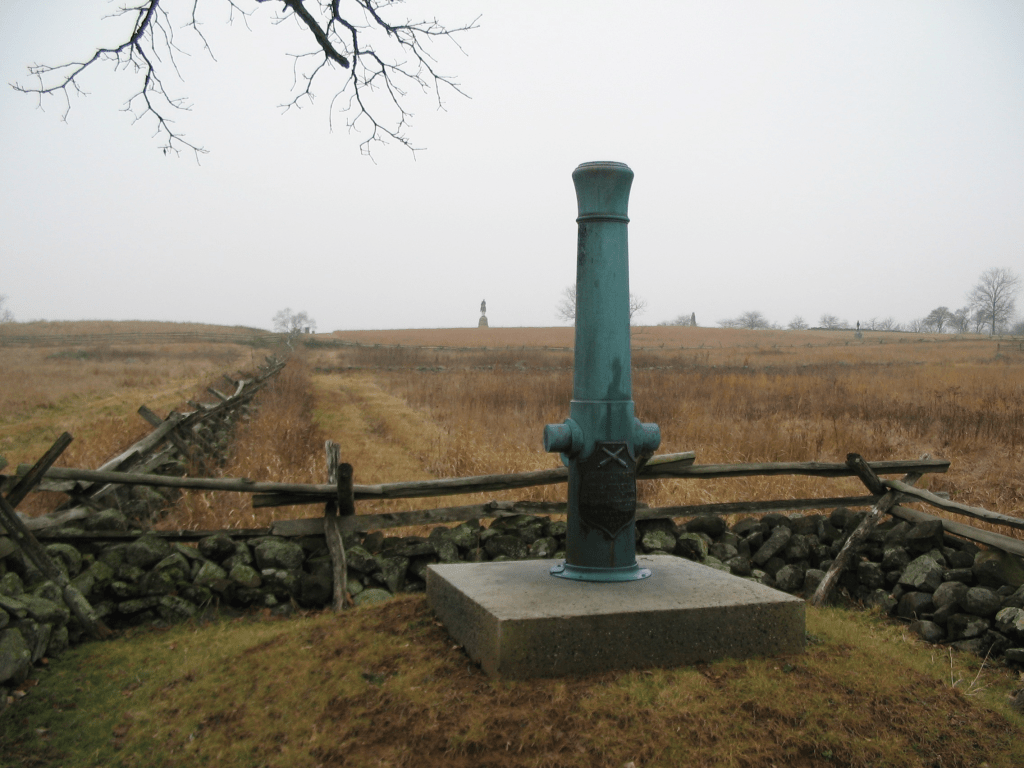
Cemetery Ridge was not a stone fortress but a gently rolling crest. Guns were placed to exploit the terrain – some slightly behind the crest line to reduce exposure, others positioned to create overlapping fields of fire across open ground. The Artillery Reserve was positioned to reinforce threatened sectors rapidly.
After the intense fighting of July 2, Hunt reported that the night was devoted to “repairing damages” and “replenishing the ammunition chests.” Batteries were reorganized, disabled guns addressed, and ammunition redistributed.
The ridge that faced the Confederate cannonade on July 3 was not the same battered ridge of the previous evening. It had been rebuilt.
This quiet labor was as critical as any exchange of fire.
July 3: Restraint Under the Cannonade
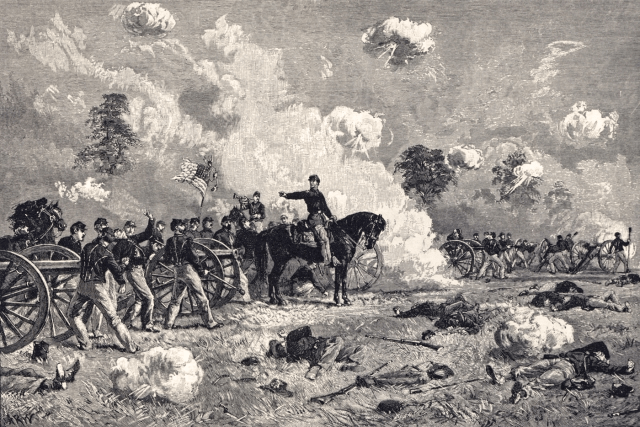
When the Confederate bombardment began, many Union batteries responded. But Hunt recognized that prolonged counterbattery fire would expend ammunition needed for the infantry assault he expected to follow.
He therefore exercised control over the rate and extent of return fire, conserving ammunition for the decisive moment.
This decision reflected his doctrinal principle: combined and concentrated fire at the point of enemy assault.
As Confederate infantry formations advanced toward the Union center, Union artillery resumed concentrated fire. Shot, shell, case, and eventually canister tore into the approaching ranks. The effect was devastating. Formations lost cohesion before reaching the stone wall.
The Union line held.
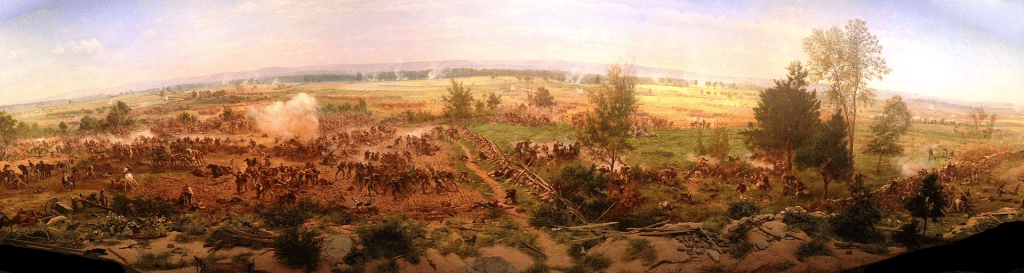
It is impossible to isolate any single cause in so vast an event. But the structural reality is clear: artillery that had exhausted its ammunition during the bombardment would have been unable to deliver the same concentrated fire during the infantry assault.
Hunt’s restraint preserved destructive power until it mattered most.
Authority and Accountability
Hunt also understood that architecture collapses without authority.
In the aftermath of Gettysburg, disputes emerged regarding command control of artillery during the crisis. Hunt defended his authority vigorously, describing unauthorized interference as a “sheer attempted usurpation of authority.”
Earlier in the war, he had warned that stripping artillery leaders of effective command amounted to the “palpable crippling of a great arm of the service.”
These statements reveal that for Hunt, artillery discipline was inseparable from centralized responsibility. Without clear command authority, ammunition could be squandered, batteries mispositioned, and concentration lost.
The architecture required an architect. At Gettysburg, Hunt fulfilled that role.
Power Under Discipline
The Civil War marked the United States’ first experience with large-scale industrialized warfare. Artillery embodied that transformation – mass-produced guns, coordinated battery fire, and logistical supply chains feeding sustained engagements.
Hunt’s importance lies not simply in his presence at Gettysburg, but in his insistence that such power be governed.
His 1861 letter reveals a man who believed force must answer to conscience. He refused to desert the flag. He believed bloodshed would not permanently define the nation. He anticipated reunion even while preparing for battle.
At Gettysburg, that moral framework translated into disciplined control of industrial violence.
He did not seek spectacle. He sought structure.
He did not unleash fire impulsively. He governed it.
The ridge held not because guns were fired wildly, but because they were fired deliberately.
The Governance of Destruction
History often remembers the men who charged across open fields. It remembers the breach at the Angle. It remembers the smoke and the cry.
It remembers less readily the man who withheld fire.
Henry J. Hunt rebuilt the Union Army’s artillery into a centralized, disciplined instrument of concentrated force. On July 3, 1863, that system functioned exactly as designed.
Two years earlier, he had written that he could not desert the flag under which he was born.
He did not.
He disciplined it. He structured it. He governed it.
And in governing destruction, he preserved the Union he believed would endure beyond north and south – a nation where the name American would supersede sectional division.
That preservation was not accidental.
It was both intentional and so nobly advanced.
Bonus: Here is an amazing article which does an excellent quantitative analysis of the impact of Henry Hunt’s artillery design at Gettysburg:
Union Artillery and Pickett’s Charge – by Josh
The article analyzes Pickett’s Charge using geospatial and statistical methods to evaluate how Union artillery influenced Confederate casualties during the assault. By mapping Union artillery fields of fire against the routes taken by Confederate regiments and comparing that exposure to casualty data, the author finds a measurable relationship between time spent under artillery fire and losses suffered.
Sources
- Correspondence between Gen. Braxton Bragg and Col. Henry J. Hunt, April 1861 (GLC00925.01–.02), The Gilder Lehrman Institute of American History.
https://www.gilderlehrman.org - Barnett, Bert. “Artillery ‘When Properly Managed’: Henry Hunt vs. William N. Pendleton.” Gettysburg National Military Park Seminar Papers, Vol. 16.
https://npshistory.com/series/symposia/gettysburg_seminars/16/essay4.pdf - Campbell, Eric A. “‘Full Authority over That Line of the Battle…’ or ‘A Sheer…Usurpation of Authority’: A Brief History and Analysis of the Hunt-Hancock Controversy.” Gettysburg National Military Park Seminar Papers, Vol. 12.
https://npshistory.com/series/symposia/gettysburg_seminars/12/essay10.pdf - Emerging Civil War. “Artillery: Henry J. Hunt, Chief of Artillery for the Army of the Potomac.”
https://emergingcivilwar.com/2018/06/26/artillery-henry-j-hunt-chief-of-artillery-for-the-army-of-the-potomac/
 So Nobly Advanced
Leave a comment