
In the midst of the Battle of Gettysburg, an artillery officer named Alonzo Hereford Cushing faced a test of resolve that would define both his life and his legacy. As the clamor of war enveloped Cemetery Ridge on July 3, 1863, Cushing made a choice that would immortalize his devotion to duty.
Despite being grievously wounded, he remained at his guns as Confederate infantry advanced across the open fields toward the Union line. In those final moments, Cushing and his battery delivered devastating close-range artillery fire into the oncoming assault, helping to break the attack that history remembers as Pickett’s Charge.
Early Life and Military Career
Alonzo Hereford Cushing was born in Delafield, Wisconsin, in 1841, and spent much of his youth in Fredonia, New York. His path toward military service led him to the United States Military Academy at West Point, where he graduated in June 1861 as the Civil War erupted.
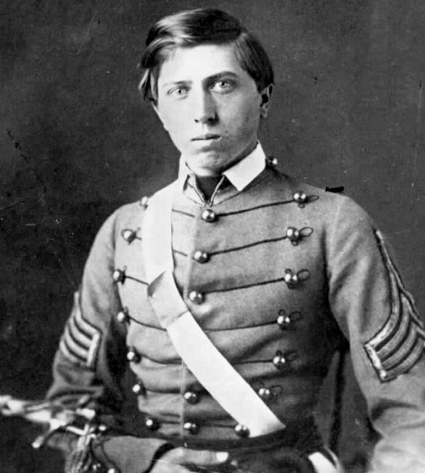
Cushing was immediately commissioned into the artillery branch, receiving appointments as both second and first lieutenant. His early service revealed both discipline and promise. Like many young officers of his generation, his education at West Point emphasized mathematics, engineering, and the technical science of artillery – skills that would soon be tested in the most violent circumstances imaginable.
During the early campaigns of the war, Cushing served with distinction. After the Battle of Chancellorsville in 1863, he received a brevet promotion to major for gallantry in action. By the summer of that year he commanded Battery A, 4th U.S. Artillery, a regular army battery assigned to the Union line along Cemetery Ridge.
It was there, at the center of the Army of the Potomac’s defensive position, that his moment would come.
Gettysburg – Artillery at the Point of Impact
On July 3, 1863, Confederate General Robert E. Lee ordered a massive assault against the Union center on Cemetery Ridge. Nearly 12,000 Confederate soldiers advanced across open farmland toward a narrow section of the Union line later known as The Angle.
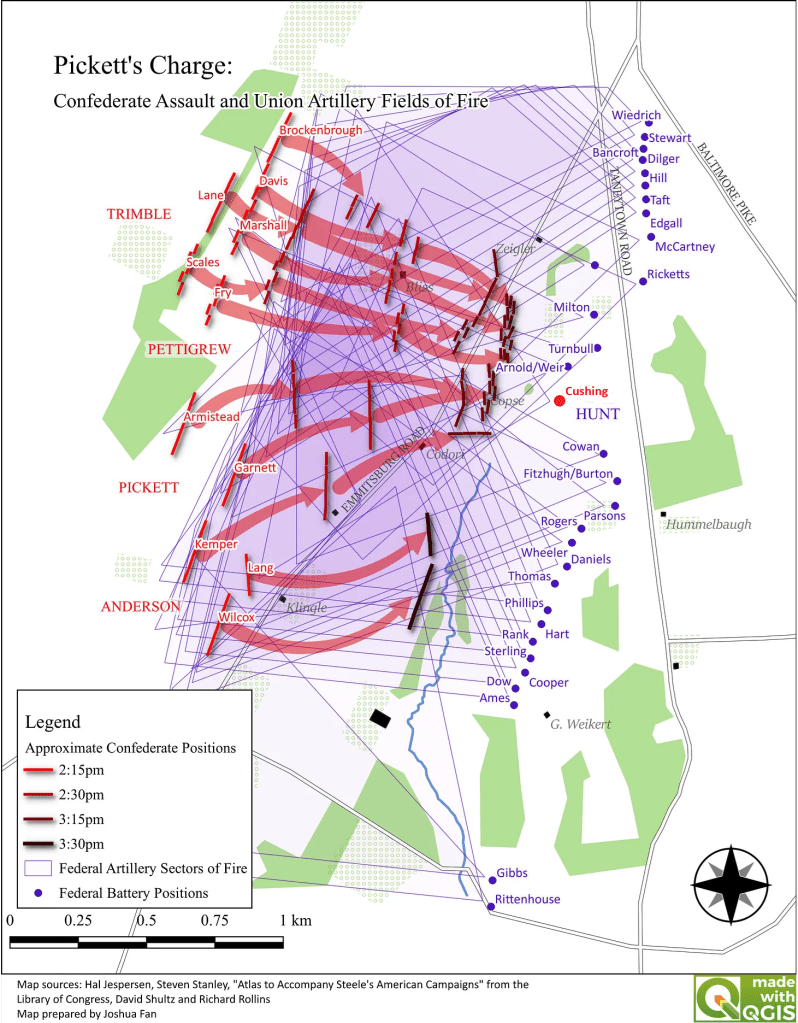
Directly in their path stood Cushing’s battery.
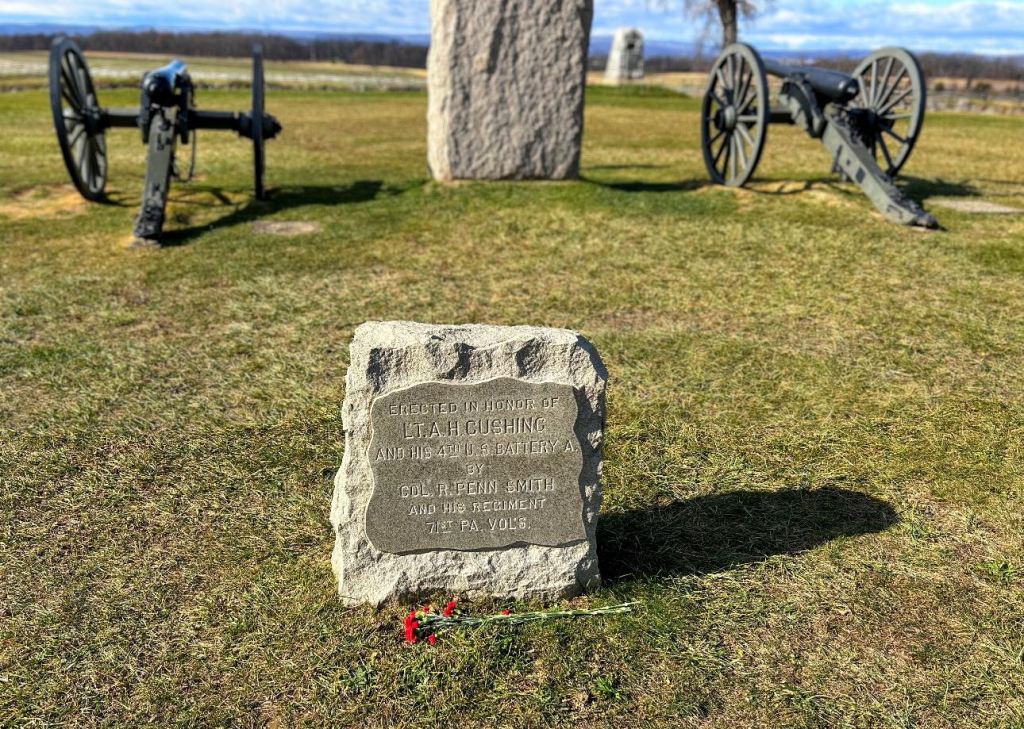
Positioned along the ridge beside the stone wall that marked the Union center, Cushing’s guns occupied one of the most exposed and critical positions on the field. As the Confederate artillery bombardment opened, shells tore through the Union line and through Cushing’s battery itself.
Early in the engagement, Cushing was struck by a shell fragment that tore through his shoulder. The wound was severe, but he refused to leave the field.
He continued directing his battery.
Later, another projectile struck his abdomen, causing catastrophic internal injury. His men urged him to withdraw, but he refused again, insisting that the guns remain in action as the Confederate infantry approached.
The Final Guns
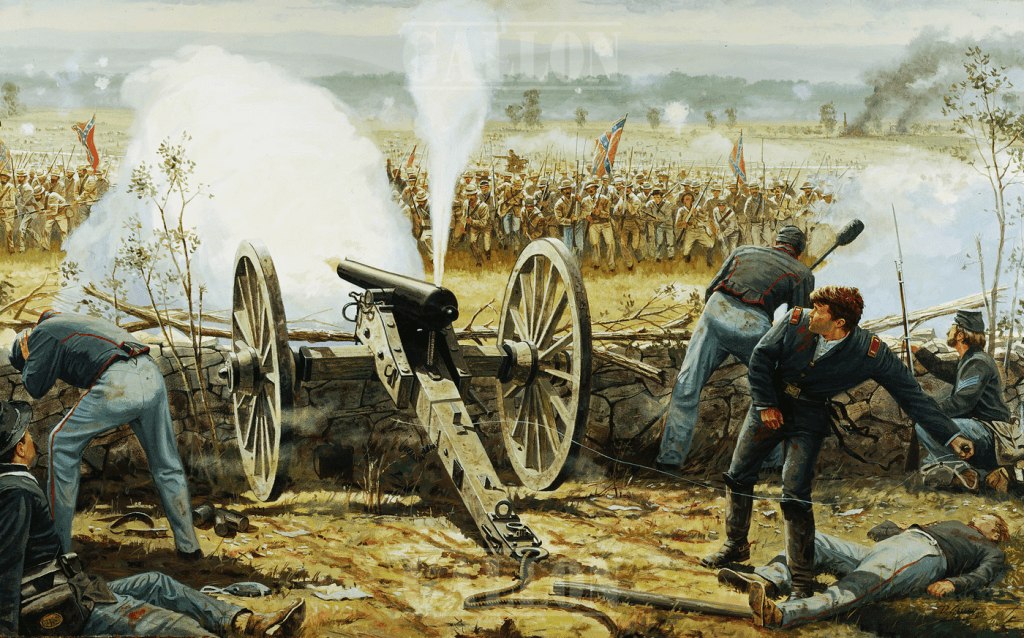
As the Confederate assault neared the Union line, the range closed rapidly. Artillery fire shifted from long-range explosive shells to canister, a devastating anti-personnel load in which a cannon effectively becomes a giant shotgun.
At close range, canister could tear through advancing infantry formations with catastrophic effect.
Recent analysis using geospatial modeling and casualty data has helped illuminate just how decisive this artillery fire was. Specifically, a modern study examining the artillery engagement during Pickett’s Charge mapped the fields of fire of Union guns and compared them to the routes taken by Confederate regiments.
The results were striking.
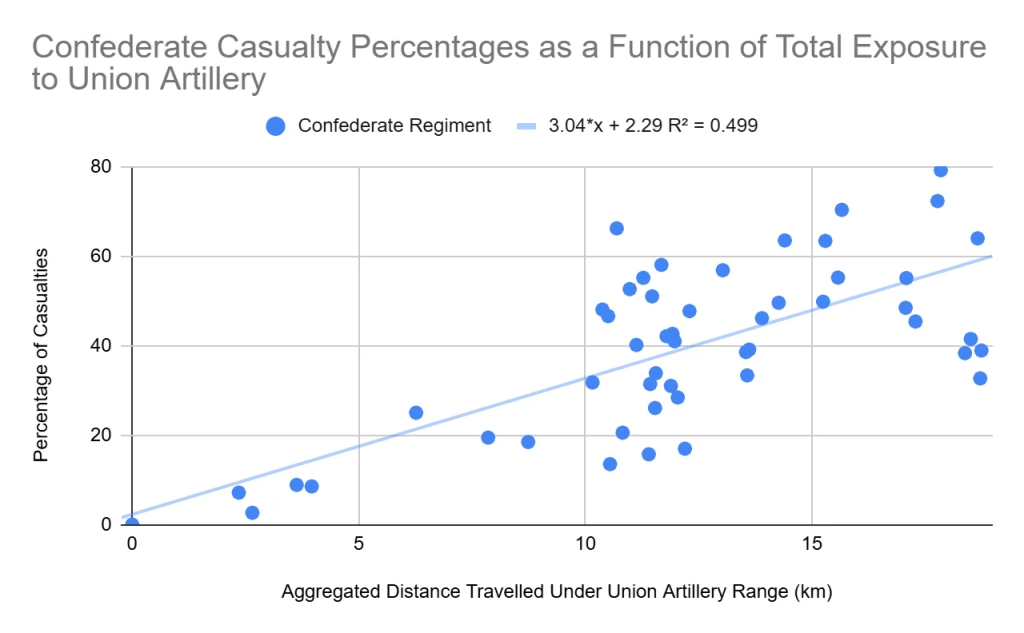
The analysis found a measurable relationship between time spent under Union artillery fire and the casualties suffered by Confederate units during the advance. Regiments exposed longer to artillery fire experienced significantly higher losses as they crossed the open ground toward Cemetery Ridge.
But the study also revealed something even more important: as Confederate forces closed with the Union line, close-range artillery fire – especially canister – became one of the most destructive forces on the battlefield.
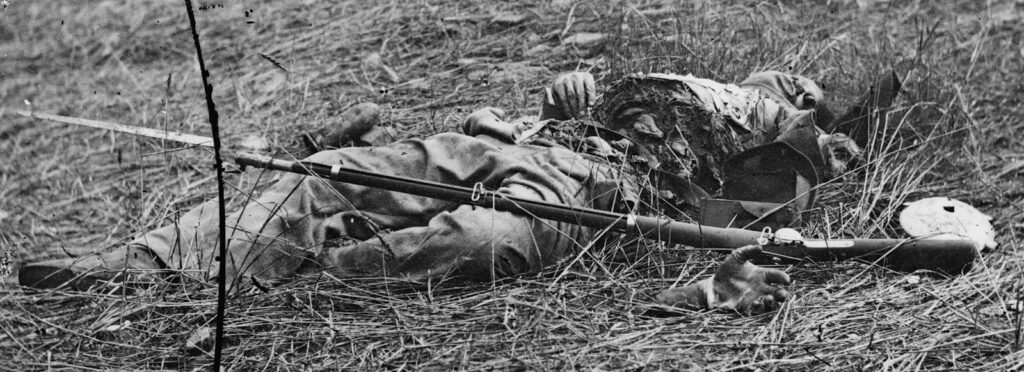
And at that decisive moment, Cushing’s guns were among the very closest to the advancing Confederate line.
Even as he bled from multiple wounds, Cushing ordered his remaining guns forward to the stone wall and directed them to fire double canister into the approaching Confederate formations.
The Confederate advance had already suffered under artillery fire during its long march across the fields. But at the ridge itself – where the assault narrowed and compressed near the Angle – the effect of close-range artillery fire was devastating.
Cushing’s battery stood precisely at that point of impact.
The Ultimate Sacrifice
As the Confederate line reached the stone wall, the fighting erupted into chaos. Confederate troops surged forward, attempting to break through the Union center in what would later be called the High Water Mark of the Confederacy.
Cushing, barely able to stand, continued directing the fire of his remaining guns.
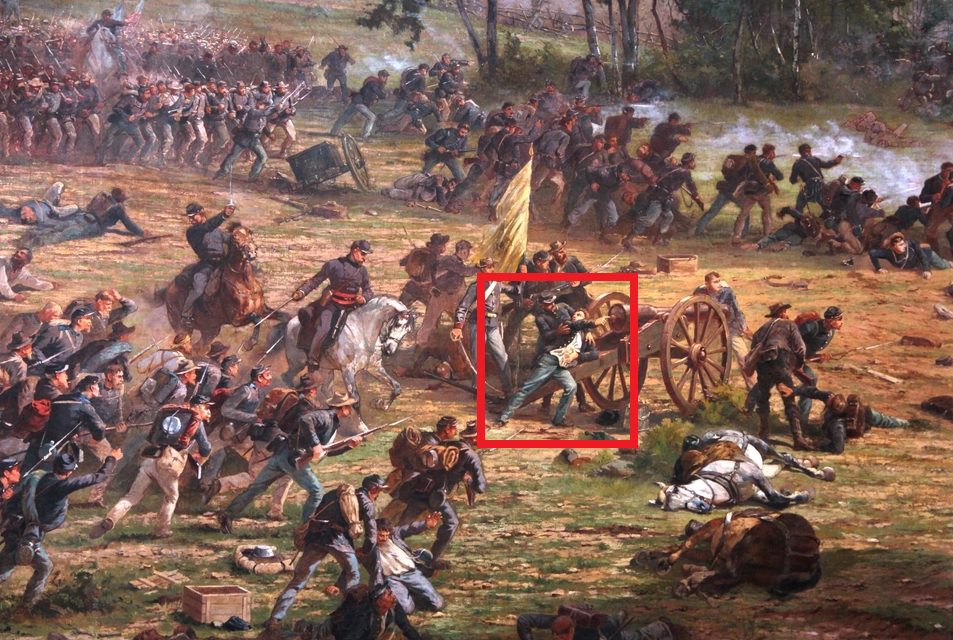
Moments later, a Confederate bullet struck him in the mouth, killing him instantly.
He died at his post beside his artillery.
His battery had continued firing until the Confederate assault collapsed under the combined force of artillery and infantry resistance along the ridge.
Modern battlefield analysis reinforces what eyewitness accounts suggested in 1863: the Confederate attack failed not simply because of distance, but because of the sustained destruction inflicted by Union artillery and the lethal final barrier of close-range canister fire at the ridge itself.
Cushing’s guns were part of that barrier.
Posthumous Recognition
Cushing’s bravery was immediately recognized by his comrades. He was posthumously brevetted to the rank of lieutenant colonel for gallantry in action.
His body was returned to his family and interred at West Point Cemetery, among the soldiers and officers who had once studied there beside him.
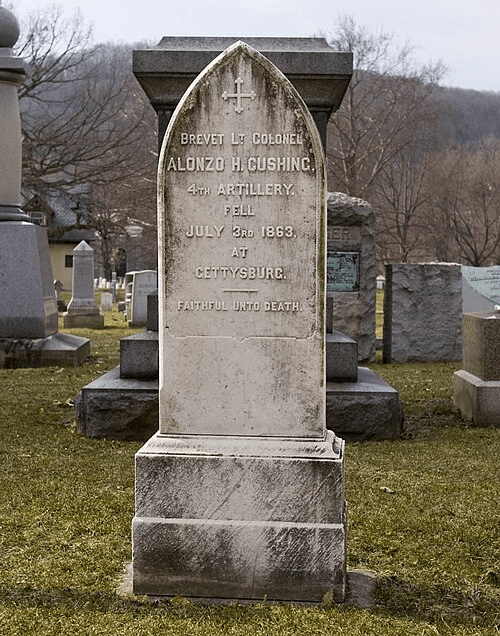
Yet the nation’s highest recognition for valor did not come until much later.
In the late 1980s, a campaign began to secure the Medal of Honor for Cushing. The effort gained momentum through the support of historians, veterans, and the citizens of his home state of Wisconsin.
Finally, in November 2014, more than 150 years after the battle, President Barack Obama awarded the Medal of Honor to Alonzo Hereford Cushing for his actions at Gettysburg.
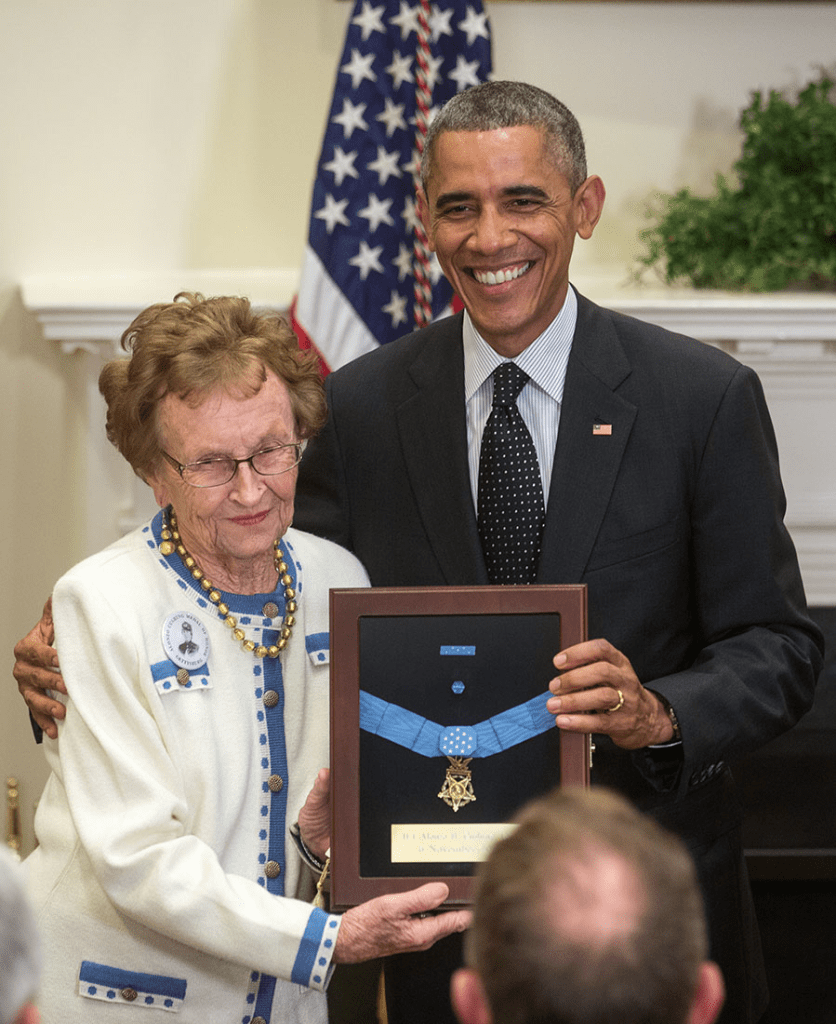
The citation recognized his refusal to leave the field despite mortal wounds and his leadership in continuing to direct artillery fire during the climactic moment of the battle.
Artillery, Courage, and the Defense of the Ridge
Cushing’s story illustrates something fundamental about Gettysburg: the battle was decided not only by sweeping maneuvers, but by precise acts of discipline at critical moments.
The Union line held in part because its artillery was positioned carefully and fired deliberately.
The analytical work examining Pickett’s Charge confirms that Confederate losses increased sharply with exposure to Union artillery fire during the advance, and that the most destructive phase of that fire occurred as the attackers approached the ridge itself.
At that moment, artillery officers like Cushing were not operating at a distance. They were directly in the path of the assault and their guns became the final barrier protecting the Union center.
Cushing’s courage therefore cannot be understood merely as personal bravery, though it was certainly that. It was also the courage to remain at the exact point where the fate of the line was being decided.
Memory and Meaning
Many soldiers fought bravely at Gettysburg. Many died in the fields between Seminary Ridge and Cemetery Ridge.
But a few men stood at the precise hinge of the battle’s outcome. Alonzo Cushing was one of them.
Even when mortally wounded, he remained with his men and his guns. The ridge held.
And in that moment – amid smoke, advancing infantry, and the chaos of battle – an artillery officer fulfilled what Abraham Lincoln would later call ‘the last full measure of devotion.’
It was through this ‘measure of devotion‘ that the Cause was so nobly advanced.
Sources
- Josh. “Union Artillery and Pickett’s Charge.” Trans Rights Gist (Substack). https://transrightsgist.substack.com/p/union-artillery-and-picketts-charge
- American Battlefield Trust. “Alonzo H. Cushing.” Battlefields.org. https://www.battlefields.org/learn/biographies/alonzo-h-cushing
- Congressional Medal of Honor Society. “First Lieutenant Alonzo H. Cushing.” Congressional Medal of Honor Society. https://www.cmohs.org/recipients/alonzo-h-cushing
- National Park Service. “Alonzo Cushing at Gettysburg.” U.S. National Park Service. https://www.nps.gov/articles/000/alonzo-cushing-gettysburg.htm
 So Nobly Advanced
Leave a comment