
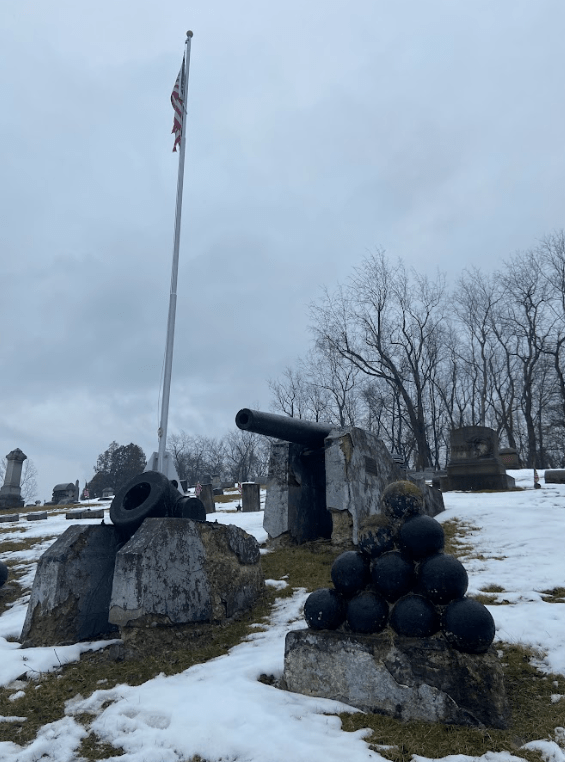
In Elizabeth Cemetery, a Civil War artillery piece rests in silence among graves and the Monongahela River Valley.
That gun is an iron 30-pounder Parrott rifle once designed to fire explosive shells across battlefields.
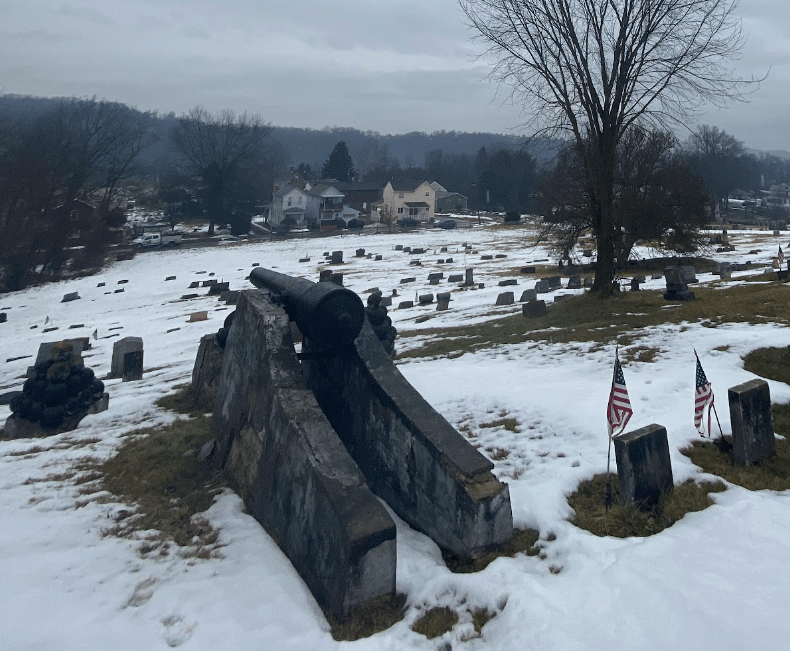
To a casual visitor, the artillery piece may appear to be simply another relic of the Civil War… but behind it lies the story of a soldier from Elizabeth – whose life ended hundreds of miles away during the conflict – and of the many local veterans who desired that his name would never be forgotten.
That soldier was Sergeant Joseph W. Stephens of the 28th Pennsylvania Volunteer Infantry.
This is his story.
A Soldier of the 28th Pennsylvania
Joseph W. Stephens was born in 1834 and lived in Elizabeth, Pennsylvania, a river town along the Monongahela south of Pittsburgh.
When the Civil War erupted in 1861, Stephens joined the wave of volunteers answering the Union’s call. On July 1, 1861, at the age of twenty-eight, he enlisted for service in the Union Army at Elizabeth.
Five days later, on July 6, 1861, he was mustered into service at Philadelphia as a member of Company F, 28th Pennsylvania Volunteer Infantry.
The company roll lists Stephens as serving as a sergeant in the regiment. As a non-commissioned officer, a sergeant carried significant responsibility within the volunteer army – maintaining discipline, supervising small groups of soldiers, and serving as the critical link between enlisted men and officers.
For more than two years Stephens remained with his regiment as the war carried Union armies across vast distances and through some of the conflict’s most difficult campaigns and battles, such as:
- Second Battle of Bull Run
- Battle of Antietam (Cornfield)
- Battle of Chancellorsville
- Battle of Gettysburg (Culp’s Hill)
- Battle of Wauhatchie
- Battle of Lookout Mountain
- Battle of Missionary Ridge
Ringgold Gap – November 27, 1863
Stephens’ war ended during the Chattanooga Campaign in late 1863.
Following the Union victory at Chattanooga, Federal forces pursued the retreating Confederate Army south into Georgia. On November 27, 1863, Confederate troops under Major General Patrick Cleburne made a determined stand at Ringgold Gap, using the rugged terrain of the mountain pass to delay the Union advance and allow the rest of the Confederate army to withdraw.
The resulting engagement became known as the Battle of Ringgold Gap.
As Brigadier General John W. Geary’s division deployed for battle on the morning of November 27, 1863, the Union advance converged on the narrow defile at Ringgold Gap. Just beyond the town, the ground rose sharply into White Oak Mountain, where Confederate forces under Patrick Cleburne had positioned themselves along commanding heights. From this elevated ground, they controlled the railroad corridor and the only practical route forward, transforming the gap into a fortified choke point.
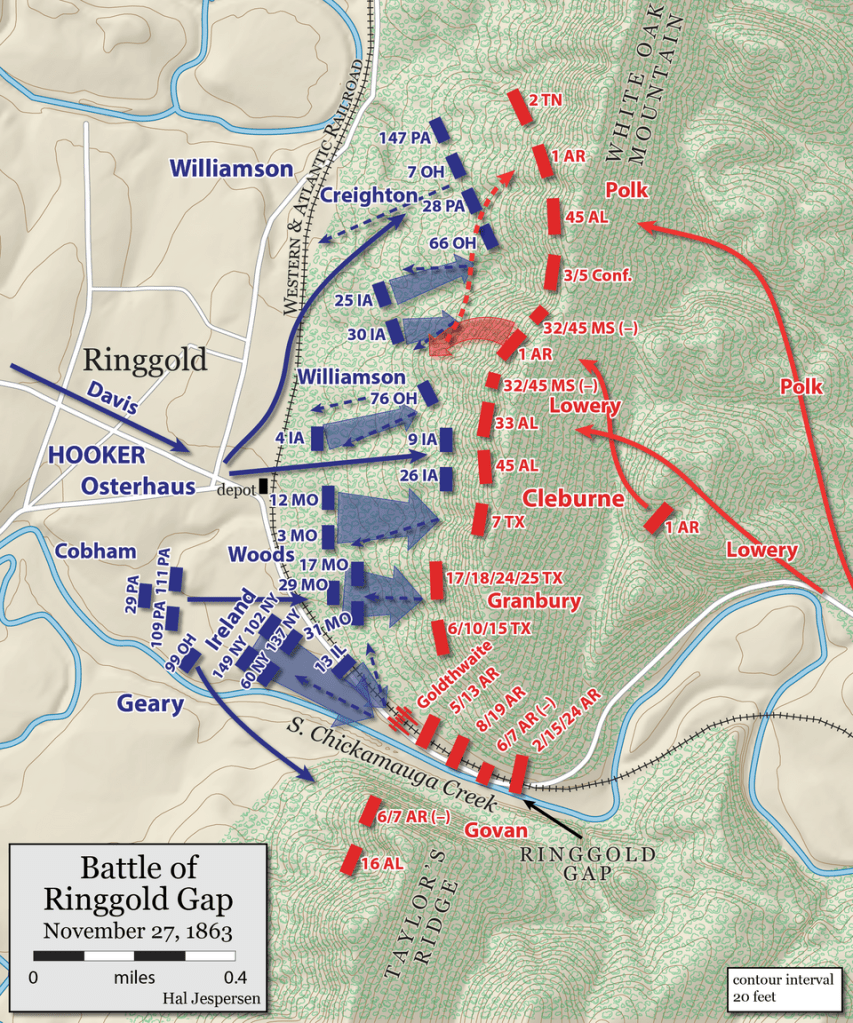
The 28th Pennsylvania moved forward with the 1st Brigade as it formed behind a railroad embankment east of town. At Geary’s order, the brigade surged over the embankment and advanced across open ground toward the base of the ridge. What followed was not a steady advance, but a compression of movement – regiments converging into a narrowing front, funneled toward the same confined approach beneath the heights.
Within that advancing line, Company F pressed forward with the regiment. The terrain stripped away alignment and spacing. Men climbed over fences, passed through prone units (i.e., the 25th and 30th Iowa) already pinned at the base of the ridge, and began ascending the steep slope under fire. Above them, Confederate infantry held firm behind cover, delivering plunging and enfilading fire into the exposed Union ranks below.
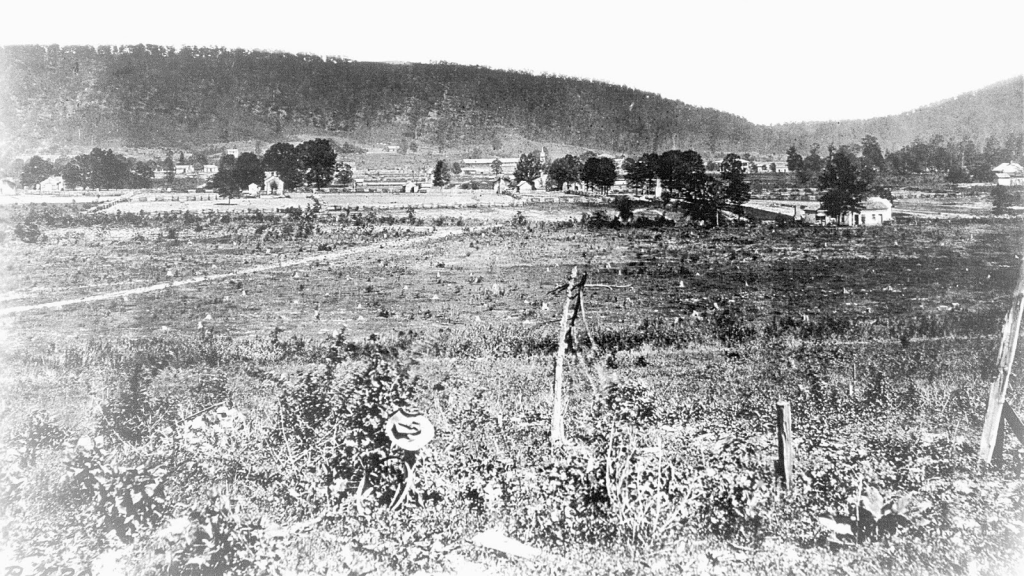
The assault lost cohesion as it climbed. Formations broke against the incline and the intensity of the fire. Return volleys from below carried little effect against entrenched defenders. The mountain face became a barrier not only of earth and stone, but of fire – a position that could be approached, but not easily taken.
It was in this constricted and exposed advance, beneath the heights of White Oak Mountain, that the men of the 28th Pennsylvania – and within it, Company F – met the full weight of Cleburne’s defense.
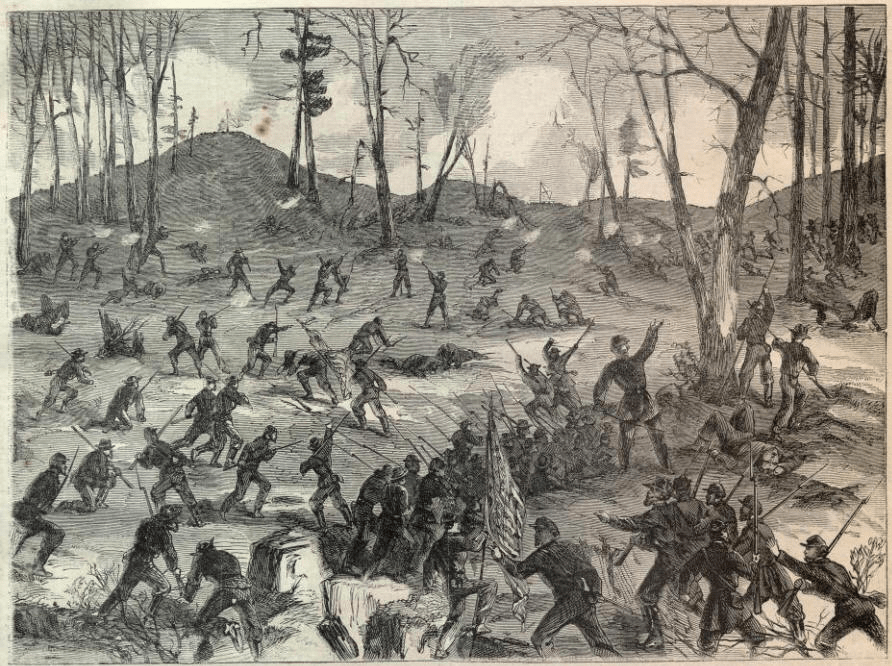
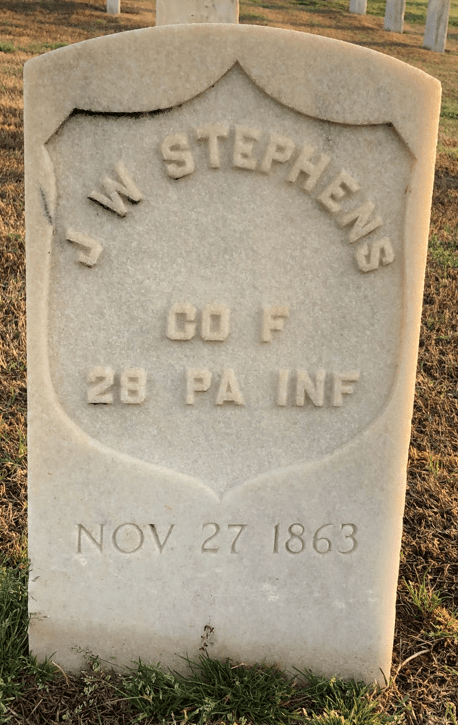
Here, in that confined space beneath the heights, Sergeant Joseph W. Stephens fell on November 27, 1863.
The company roll of the 28th Pennsylvania records simply that he was “killed at Ringgold, Ga., November 27, 1863.”

He was 28-29 years old.
Like many Union soldiers who fell during the western campaigns, Stephens was buried near the theater of operations rather than returned to his home state.
He now peacefully rests in Chattanooga National Cemetery, Section B, Site 668.
A Name Remembered in Elizabeth, PA
Although Stephens never returned to Pennsylvania, his hometown community did not forget him.
After the war, Union veterans organized throughout the country in the Grand Army of the Republic (G.A.R.) – a fraternal organization devoted to comradeship, mutual support, and the preservation of the Union’s memory of the war.
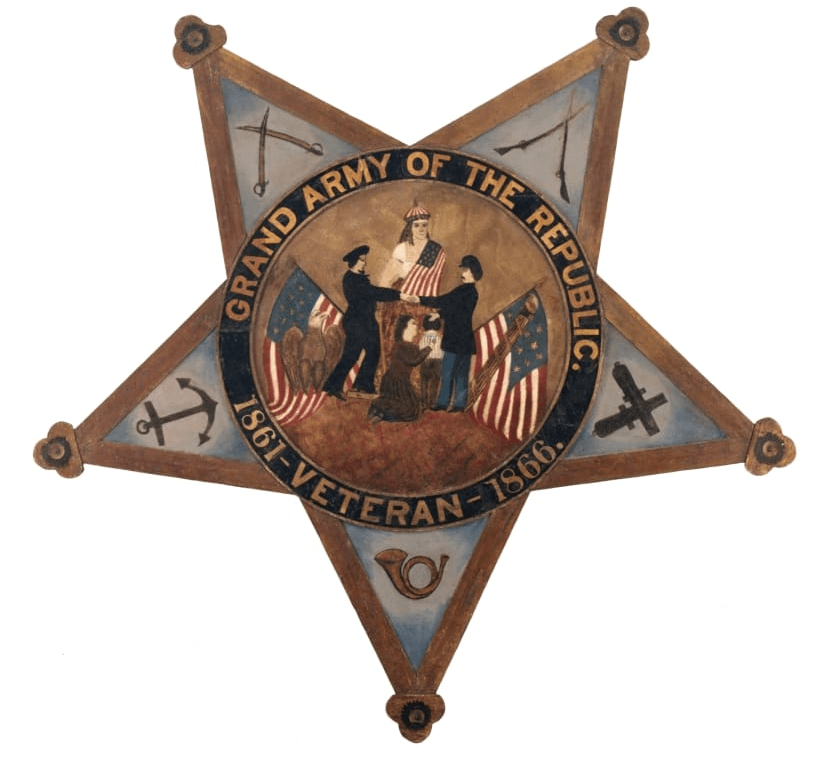
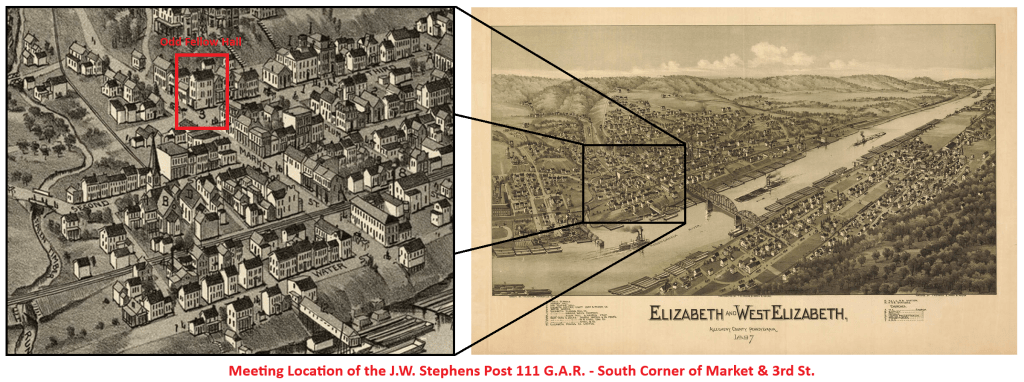
Local veterans established J. W. Stephens Post No. 111 of the Grand Army of the Republic in Elizabeth, Pennsylvania, naming the post in honor of their fallen soldier and neighbor.
Contemporary records in The Elizabeth Herald confirm that the post met regularly – “every other Monday evening” – in the second story hall of the Odd Fellows’ building, placing it at the center of the town’s civic life.

From that hall, the veterans helped organize and sustain the community’s acts of remembrance.
Decoration Day in Elizabeth
By the late nineteenth century, the veterans of J. W. Stephens Post No. 111 played a central role in organizing the town’s Decoration Day ceremonies – the observance that would later evolve into Memorial Day.
A contemporary newspaper account reported that approximately sixty members belonged to the post and that the town’s memorial ceremonies honored roughly forty soldiers buried in the cemeteries surrounding Elizabeth.
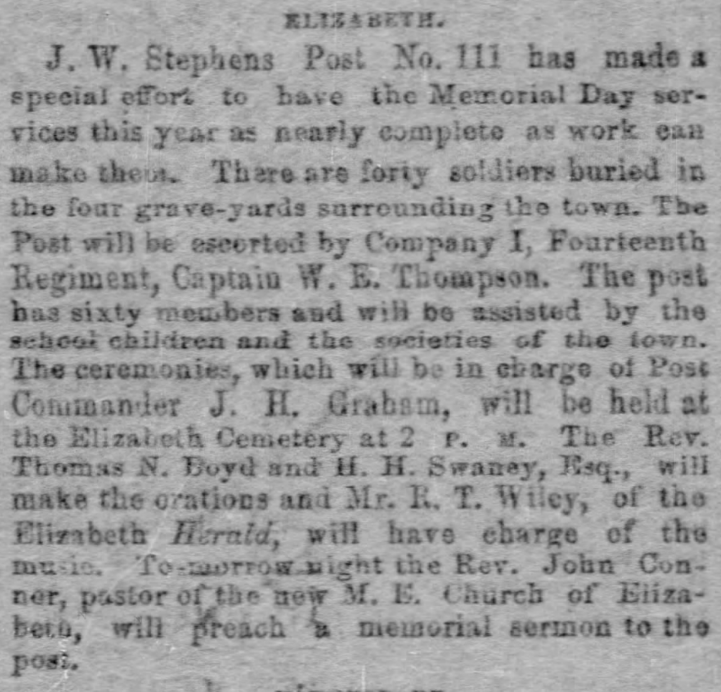
These events brought the community together through speeches, music, and religious services before culminating in ceremonies at Elizabeth Cemetery, where the graves of soldiers were decorated in remembrance.
But one element of the ceremony always stood particularly powerful…
The Names Were Read Aloud
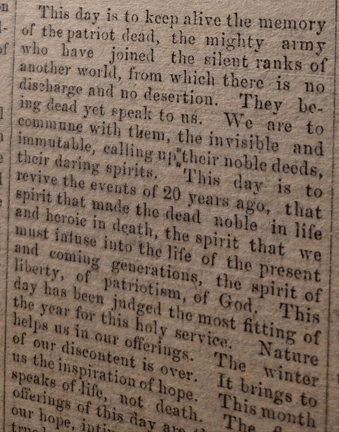
A report published in the June 6, 1884 edition of the Elizabeth Herald described the Decoration Day observances in Elizabeth and recorded this most important part of the ceremony.
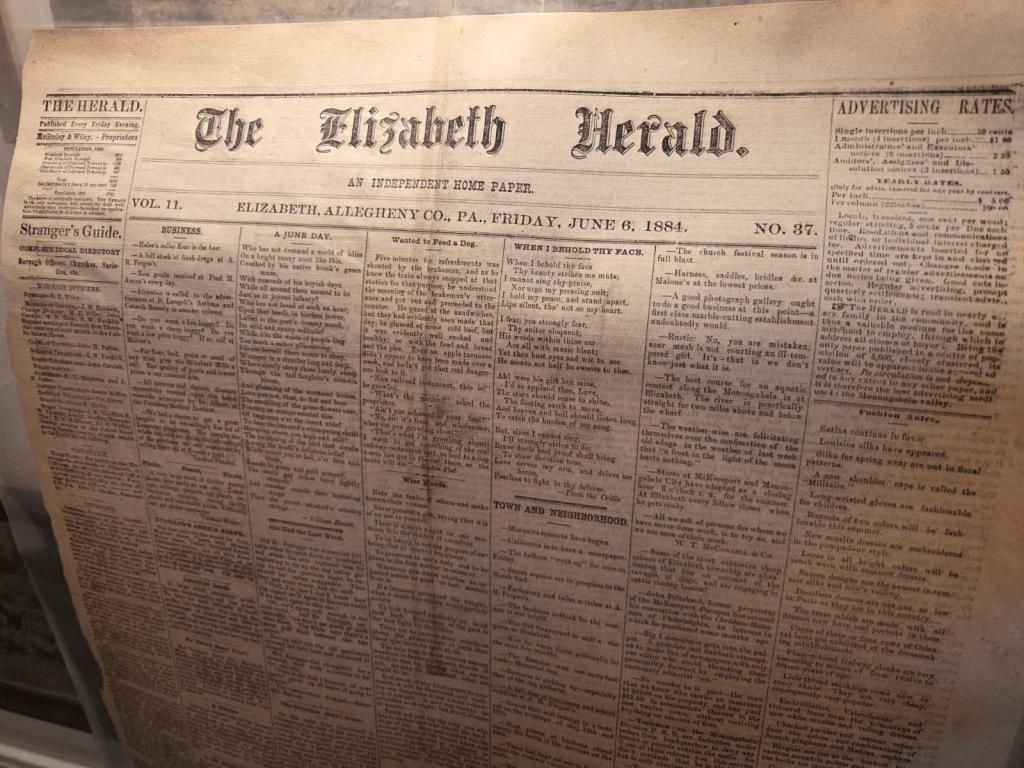
During the service, the names of the town’s Civil War dead were solemnly read aloud before those gathered.
The article introduced the list under the heading “Our Soldier Dead,” noting that most of the men named were buried in the surrounding cemeteries and that all had lived in Elizabeth or its vicinity.
Among the names read that day was Joseph W. Stephens.
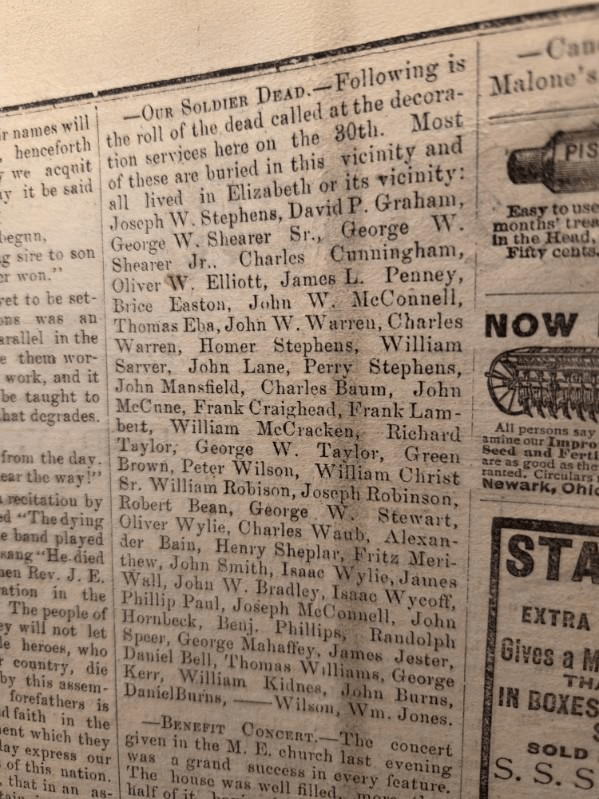
More than twenty years had passed since he fell at Ringgold, Georgia, yet his name remained part of the town’s living memory.
As each name was spoken, the ceremony reminded those present that the war had not been fought by distant figures alone, but by neighbors and fellow citizens whose lives had ended on battlefields far from home.
The roll of the dead read during the ceremony included dozens of local soldiers, among them:
- David P. Graham
- George W. Shearer Sr.
- George W. Shearer Jr.
- Charles Cunningham
- Oliver W. Elliot
- James I. Penney
- Brice Easton
- John W. McConnell
- Thomas Eba
- John W. Warren
- Charles Warren
- Homer Stephens
- William Sarver
- John Lane
- Perry Stephens
- John Mansfield
- Charles Baum
- John McCune
- Frank Craighead
- Frank Lambert
- William McCracken
- Richard Taylor
- George W. Taylor
- Green Brown
- Peter Wilson
- William Christ Sr.
- William Robison
- Joseph Robinson
- Robert Bean
- George W. Stewart
- Oliver Wylie
- Charles Waub
- Alexander Bain
- Henry Sheplar
- Fritz Merithew
- John Smith
- Issac Wylie
- James Wall
- John W. Phillips
- Randolph Speer
- George Mahaffey
- James Jester
- Daniel Bell
- Thomas Williams
- George Kerr
- William Kidney
- John Burns
- Daniel Burns
- _ Wilson
- Wm. Jones
Each year, through the reading of these names, the memory of the town’s soldiers was renewed.
The war remained personal.
A Gun That Became a Memorial
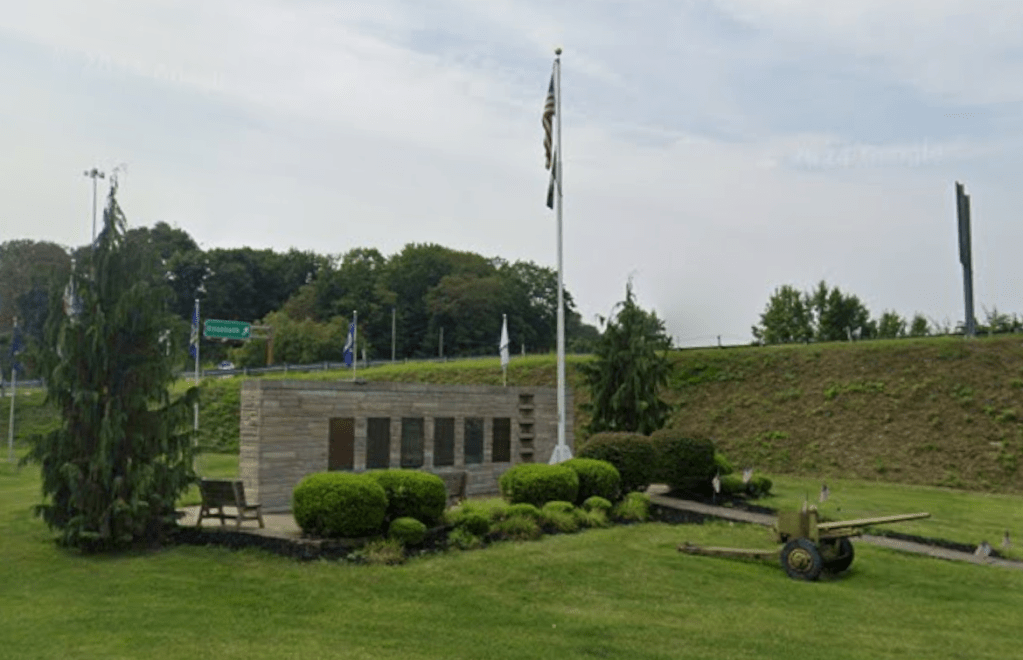
Today, the 30-pounder Parrott rifle in Elizabeth Cemetery remains one of the most visible reminders of that remembrance.
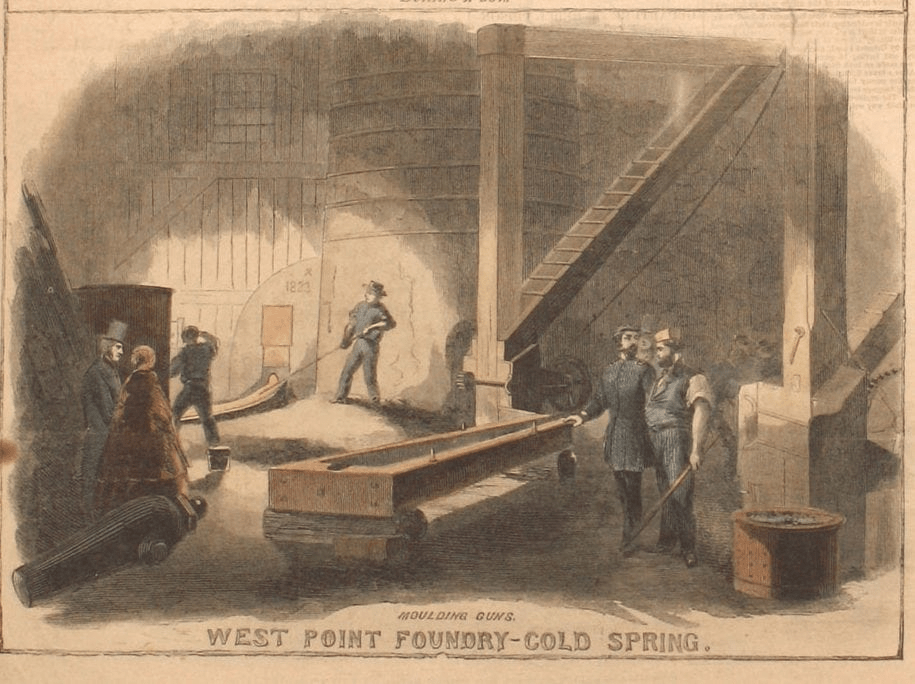
Forged in 1862 at the West Point Foundry in Cold Spring, New York, under the direction of Robert Parker Parrott, the gun once embodied the industrial power that came to define the Civil War battlefield.
Its purpose was destruction – to hurl devastating iron and fire across open ground.
But time has altered that purpose...
In 1897, the transformation of the gun into a memorial took visible form through the efforts of the community it would come to represent. The Secretary of War authorized the transfer of the piece for commemorative use, and the Ordnance Department carried out the order through Letter No. 15461, dated May 27, 1897, issuing one 30-pounder Parrott rifle from the New York Arsenal.
Set in place in connection with J. W. Stephens Post No. 111 of the Grand Army of the Republic, the monument was formally dedicated by the Ladies’ Patriotic Circle of Elizabeth.
In that act, the cannon was no longer defined by its wartime function, but by its role in remembrance.
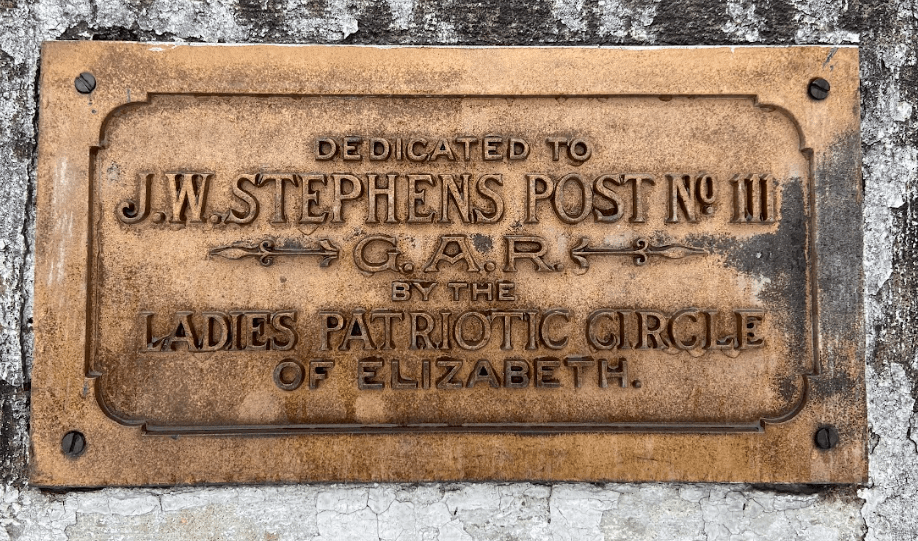
The gun remains as a physical link between those who returned from the war and those who did not – between the veterans who gathered in Elizabeth and the soldiers whose names they chose to carry forward.
Memory That Endures
Sergeant Joseph W. Stephens left Elizabeth in the summer of 1861 and died far from home two years later in the mountains of Georgia. Yet his story did not end there.
His fellow veterans preserved his name through J. W. Stephens Post No. 111, through the annual observances of Decoration Day, and through the quiet presence of a Civil War cannon standing watch, even today, in Elizabeth Cemetery.
Each year, the veterans gathered and spoke the names of the fallen into the ears of the living – and in those moments, the war was not distant history.
The men were not lost – They belonged to Elizabeth, and their community returned them Home.
– So Nobly Advanced.
Special thanks to Linda and Ed of the Elizabeth Township Historical Society for their invaluable assistance in locating the particular Elizabeth Herald edition referenced in this article.

It should be noted that the Elizabeth Township Historical Society appears to maintain the only known complete collection of The Elizabeth Herald. The clippings presented in this article may represent the only digitized or publicly accessible photocopies currently available online.
It is through efforts such as these – careful research, shared knowledge, and a commitment to preservation – that the memory of Elizabeth’s fallen endures.
In bringing their stories to light and speaking their names once more, we continue to take part in that quiet work of bringing them home.
Sources
- Bates, Samuel P. History of Pennsylvania Volunteers, 1861–1865. University of Michigan Digital Collections.
https://quod.lib.umich.edu/cgi/t/text/pageviewer-idx?idno=ABY3439.0001.001 - U.S. Department of Veterans Affairs. National Cemetery Administration – Grave Locator.
Joseph W. Stephens Burial Record - Fold3. “Joseph W. Stephens – Civil War Stories.”
https://www.fold3.com/memorial/660588122/joseph-w-stephens-civil-war-stories - Find A Grave. “Joseph W. Stephens.”
https://www.findagrave.com/memorial/54715675/joseph-w-stephens - USGenWeb Archives. “Grand Army of the Republic Posts in Pennsylvania.”
http://files.usgwarchives.net/pa/allegheny/military/cw/gar-posts.txt - Elizabeth Herald (Elizabeth, Pennsylvania), June 6, 1884. – Courtesy of the Elizabeth Township Historical Society
- Living History Registry. “30-Pounder Parrott Rifle – Elizabeth Cemetery.”
https://livinghistoryregistry.com/item.php?pasco=11869 - Tales from the Army of the Potomac: “Fear & Dread” at Taylor’s Ridge
- U.S. War Department, Ordnance Office. Press Copies of Letters Sent (“New Series”), Letter No. 15461, May 27, 1897. Record Group 156, Records of the Office of the Chief of Ordnance, National Archives.
 So Nobly Advanced
Leave a comment