
There are cemeteries meant to be seen, and there are cemeteries one almost has to be told are there.
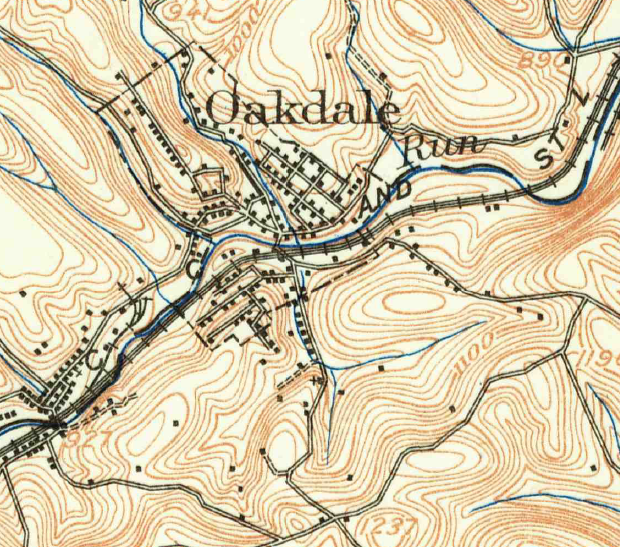
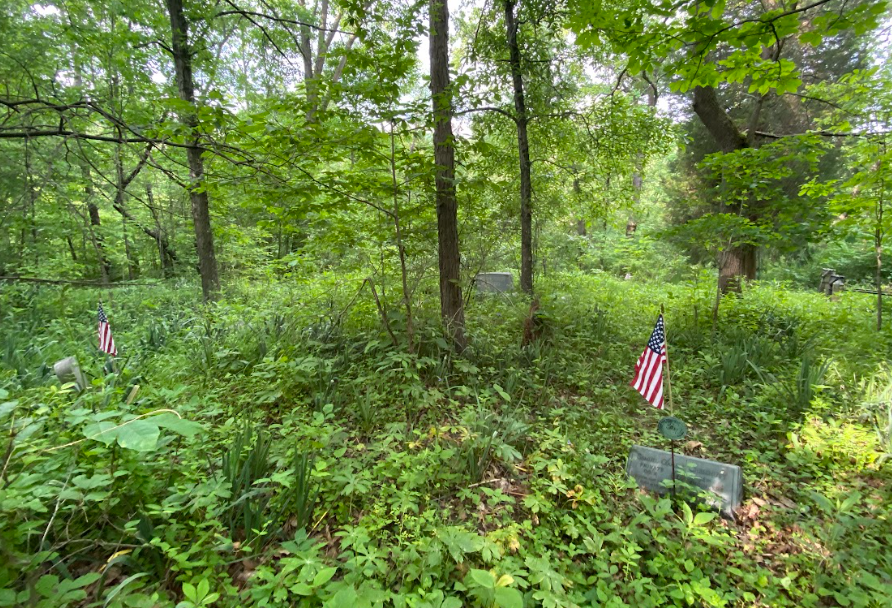
Oakdale Old German Cemetery belongs to the second kind. It lies back in the woods off Union Avenue in Oakdale, Pennsylvania, removed from the formal order of larger burial grounds. There is no grand entrance to announce its meaning, no public monument to explain why it should be remembered. What survives is quieter: family names, weathered stones, military inscriptions, and the possibility of graves no longer marked above ground.
That is precisely why it matters.
National memory does not only live at Gettysburg, Antietam, or Arlington. It also survives in neglected local cemeteries, where immigrant families, Civil War veterans, and ordinary communities left their record in stone.
Oakdale Old German Cemetery is one of those places. Its history does not come to us complete. It must be recovered from partial inscriptions, scattered records, family groupings, and names that still need to be tested against independent evidence.
Remembering such a place is not merely an act of feeling. It is an act of recovery.
A Cemetery Known by Fragments
The burial ground is identified in modern cemetery references as Oakdale Old German Cemetery in Allegheny County, Pennsylvania. A 2004 cemetery transcription described it as located in the woods off Union Avenue, apart from the larger Oakdale Cemetery, and recorded only the stones that could be read at that time. The same transcription noted that some stones were too weathered to identify and that the ground itself suggested the possibility of additional graves without readable markers.
That observation is essential. The cemetery should not be treated as a complete archive. It is a damaged one.
The readable names from the transcription suggest a small local burial ground shaped by families and German-American identity: Wilhelm, Metz, Lorenz, Kuhlman, Schlaich, Ott, Stype (or Steup), Hennemuth, Kramer, and others. The cemetery includes mothers and fathers, infants and children, husbands, family plots, homemade stones, fraternal symbolism, and military inscriptions. The visible death dates run from the late nineteenth century into the 1930s, though the cemetery may contain earlier or otherwise unrecorded burials.
It is tempting, with a place like this, to hurry toward the soldiers. But the soldiers should not be separated from the cemetery around them. They were not only military names. They were sons, husbands, fathers, brothers, neighbors, and members of a local world. They returned from war, lived their postwar lives, died, and were buried among families.

The cemetery is therefore not only a place of military memory. It is a place of belonging.
The “Old German” World Beneath the Names
The name “Old German Cemetery” is a clue, not a conclusion. It points toward a German or German-American community presence in Oakdale or the surrounding area, but the cemetery’s exact institutional origin still requires further research. It may have been connected to a congregation, a family burial ground, an ethnic community, or a local burial practice now only faintly remembered.
Still, the names matter. Lorenz, Wilhelm, Schlaich, Kuhlman, Hennemuth, Metz, and similar surnames suggest a burial ground shaped, at least in part, by German-speaking or German-descended families. That matters because the cemetery’s military story becomes more than a list of veterans. It becomes a story about how immigrant and ethnic communities entered the national life of the United States.
The Civil War was fought by armies, but those armies were filled from local worlds: neighborhoods, farms, boroughs, churches, workshops, immigrant families, and extended kinship networks. Men did not march out of abstraction. They left from somewhere.
Oakdale Old German Cemetery helps us remember that “somewhere.”
The Wilhelms: Family Memory and Civil War Service
Among the readable stones in Oakdale Old German Cemetery, one name stands out: Wilhelm.
The cemetery does not present the Wilhelms as isolated burials. It presents them as a family. The 2004 transcription recorded Bertha Wilhelm, marked as “Mother”; Albert Wilhelm; Sophia Wilhelm; George Alfred and Richard Wilhelm, children who shared the same birth date and died one day apart in October 1886; William Wilhelm, Charles Wilhelm, and Frederick Wilhelm.
Before the military records are even considered, the Wilhelms give the burial ground its human shape. Here are parents and children, early deaths and family memory, names gathered not in a national shrine but in a small wooded cemetery in western Allegheny County.
That family setting matters because the Wilhelms also provide the cemetery’s clearest Civil War thread. William, Charles, and Frederick Wilhelm all connect to the 5th Pennsylvania Cavalry. More specifically, the surviving roster evidence ties them to Company L, a company recruited in Allegheny County and therefore rooted in the same western Pennsylvania world to which Oakdale belonged.
This is the heart of the article. Oakdale Old German Cemetery is not merely a hidden burial ground with a few scattered military associations. Through the Wilhelms, it becomes a place where family memory and Civil War service meet.

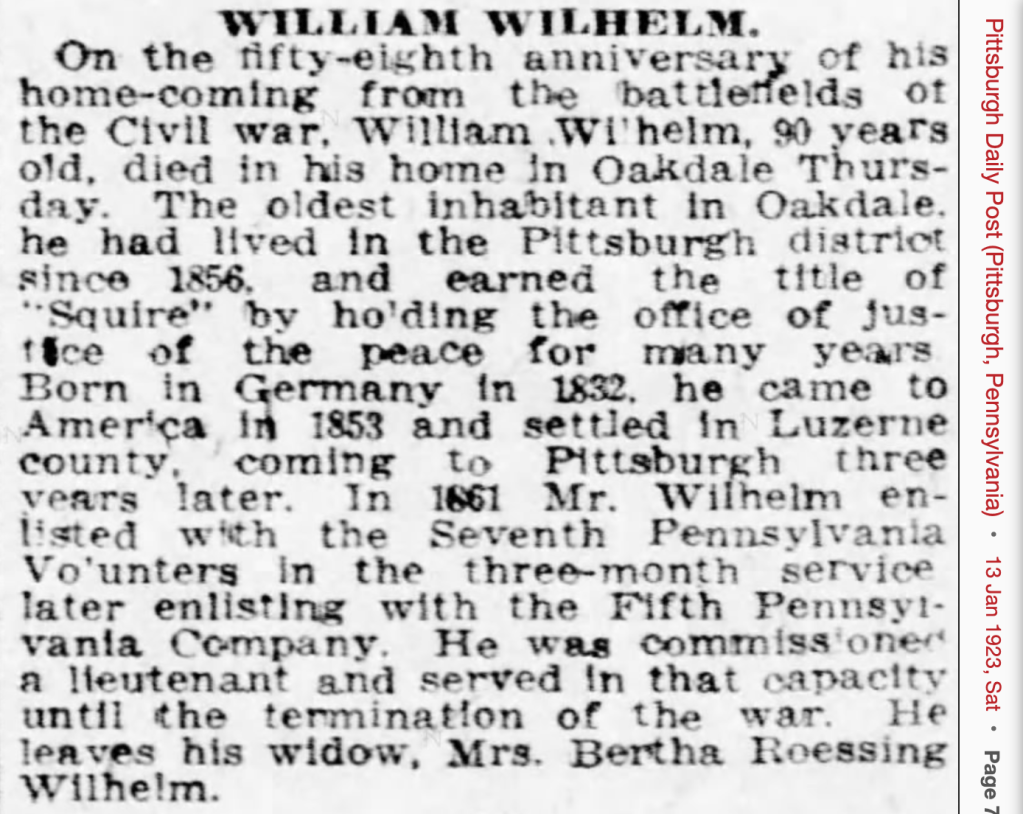
William Wilhelm: A Lieutenant in the 5th Pennsylvania Cavalry
William Wilhelm is the strongest verified Civil War figure presently visible in the cemetery’s record.
His stone was transcribed as identifying him as a lieutenant in the 5th Pennsylvania Volunteer Cavalry. The surviving roster for Company L of the 5th Pennsylvania Cavalry lists William Wilhelm as a second lieutenant, mustered on August 9, 1861, “promoted from first sergeant on July 2, 1864“, and “discharged on December 7, 1864.“
That is a strong match between the cemetery inscription and the military roster. It places William Wilhelm not merely in the Civil War generally, but in a specific company of a specific Pennsylvania cavalry regiment. More importantly for this local story, Company L is identified as recruited in Allegheny County.
His significance does not depend on fame. He represents the kind of citizen-soldier whose life passed through national events and then returned to local ground. His name is not among the war’s grand public monuments. Yet in a wooded cemetery in Oakdale, his stone preserves a real connection between western Pennsylvania and the Union war effort.
Charles Wilhelm and the Problem of the Stone
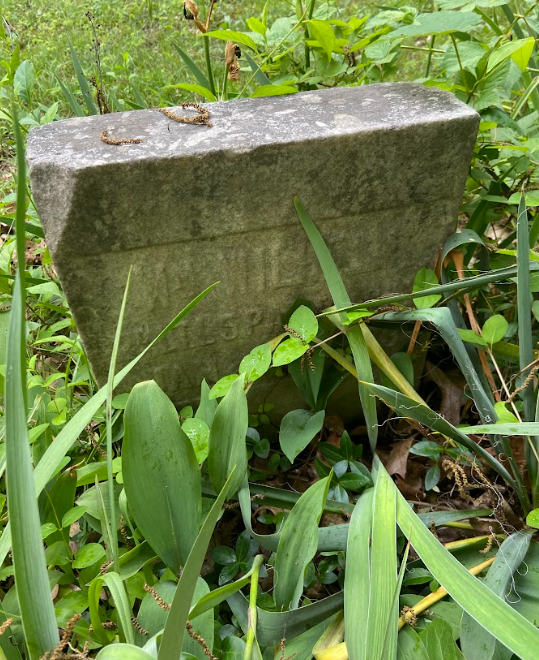
Charles Wilhelm’s service places him in the same Civil War world, though his case requires more care.
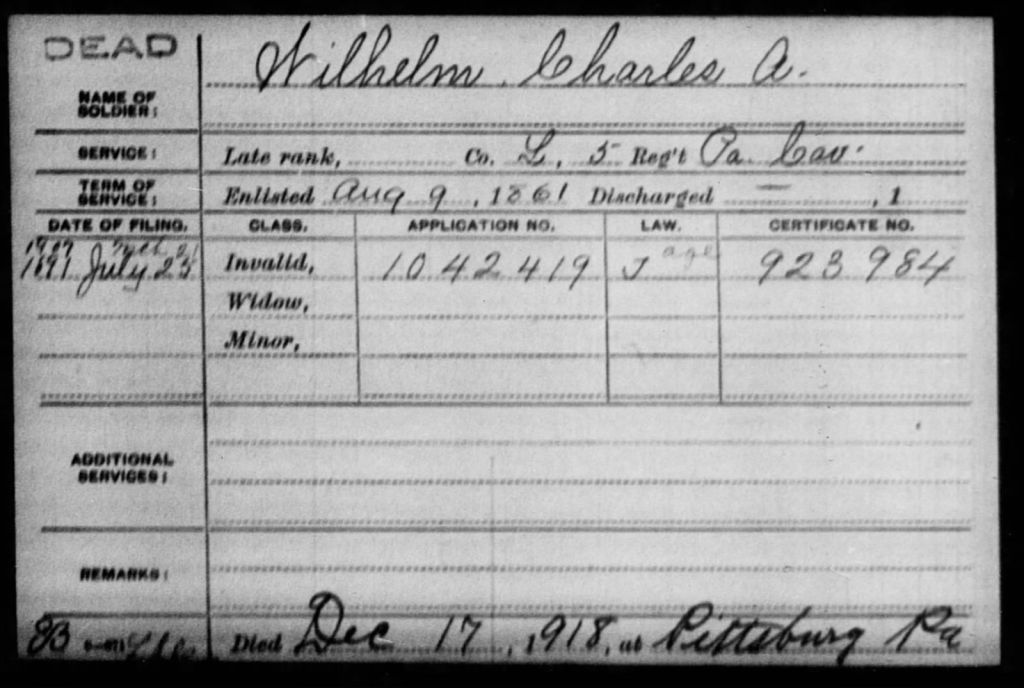
The 2004 cemetery transcription read his inscription as “Company I,” 5th Pennsylvania Cavalry. The available roster evidence points instead to Company L. The Company L roster lists Charles Wilhelm as a private who mustered on August 9, 1861, for a three-year term, with the notation that he was not on the muster-out roll. The Company I roster, by contrast, identifies that company as recruited at Philadelphia and does not provide the same local fit.
This discrepancy should not be hidden – it reflects a weathered inscription, a difficult reading, a transcription error, or a record conflict still requiring final confirmation. But the larger conclusion is strong: the best presently available roster evidence places Charles Wilhelm in Company L, the same Allegheny County company in which William Wilhelm served.
This kind of discrepancy is not a weakness of this article but rather a part of this article’s truth: Cemeteries like this do not always speak clearly… Stones weather. Inscriptions blur. Records scatter.
The historian’s responsibility is not to force certainty where it does not yet exist, but to distinguish carefully between what is proven, what is likely, and what remains unresolved.
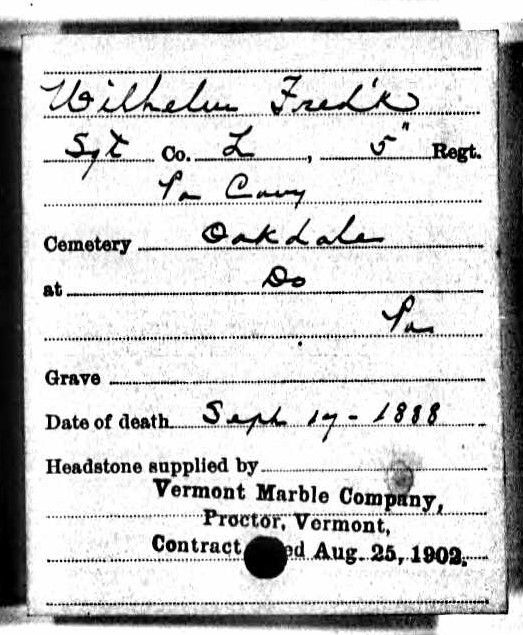
Frederick Wilhelm: Another Cavalryman in the Family Ground
Frederick Wilhelm completes the Wilhelm cavalry thread.
His headstone in Oakdale Old German Cemetery confirms that his burial belongs with the same family and military landscape as William and Charles Wilhelm. His service, in turn, is supported by the Company L roster of the 5th Pennsylvania Cavalry. The roster identifies Frederick Wilhelm as a commissary sergeant who mustered on August 9, 1864, and was “promoted to quartermaster sergeant” in Company F later that same month.
The fact that Frederick did not appear in the 2004 readable-stone transcription is worth noting, but not as a reason for doubt. It is a reminder of the cemetery’s fragmentary condition. Stones may be missed, obscured, weathered, newly identified, or recorded differently across time. In a place like Oakdale Old German Cemetery, the historical record improves only when field observation, cemetery documentation, and military records are brought together.
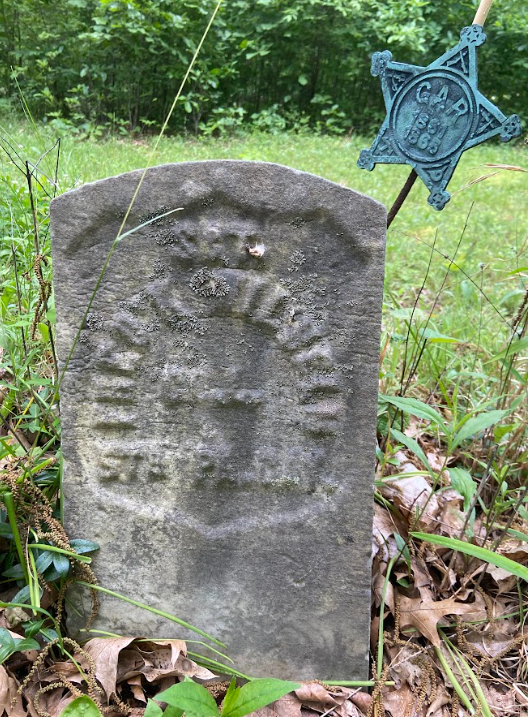
Together, William, Charles, and Frederick Wilhelm change how the cemetery should be understood. This is not a burial ground with one isolated Civil War veteran. It is a family cemetery landscape in which multiple Wilhelms were tied to the same Union cavalry regiment. Their stones connect the woods of Oakdale to Allegheny County recruitment, to the 5th Pennsylvania Cavalry, and to the broader Union war effort.
From Oakdale to Pittsburgh, and from Pittsburgh to War
The Wilhelms’ regiment, the 5th Pennsylvania Cavalry, was also known as the 65th Pennsylvania Volunteers. It was first known as the Cameron Dragoons and was among the early three-year regiments raised during the war. A regimental history notes that the first ten companies came from Philadelphia, while the last two came from Pittsburgh. Companies L and M, recruited at Pittsburgh, joined the regiment after it had gone to Washington and encamped at Camp Stoneman.
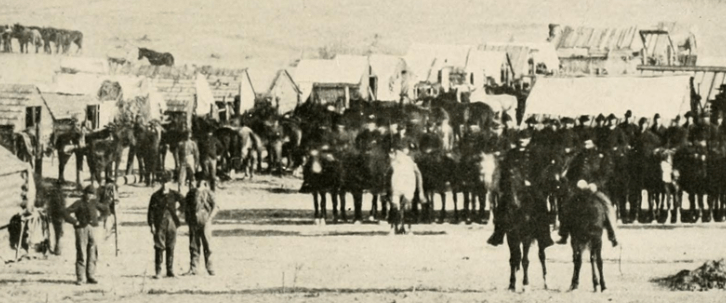
That detail is crucial and renders this Oakdale story as not simply “a few veterans are buried in the woods.” Rather, it is a local-to-national story. Company L gives the cemetery a route outward: from western Allegheny County to Pittsburgh recruitment networks, then to Washington, and from there into the long military geography of Union cavalry service.
The National Park Service identifies the 5th Pennsylvania Cavalry as organized in 1861 and records its service across the Army of the Potomac and Department of Virginia sphere, including duty connected to Washington, Virginia, North Carolina, Petersburg, Richmond, and Appomattox. The regiment lost 293 men during service: 77 killed or mortally wounded and 216 by disease.
Those numbers matter because they remind us that cavalry service was not a romantic abstraction. It meant scouting, picketing, raids, exposure, disease, imprisonment, wounds, and death. The 5th Pennsylvania Cavalry’s service stretched across years and places far from Oakdale. Yet when veterans such as William and Charles Wilhelm died decades later, their memory returned to local ground.
William, Charles, and Frederick Wilhelm remind us of that wider geography of memory. Through them, Oakdale Old German Cemetery becomes something larger than a forgotten local burial place. It becomes a small but meaningful point where family memory, immigrant community life, and national service meet.
Another Veteran in the Woods: Jacob Metz Sr.
Jacob Metz Sr. also belongs in the story of Oakdale Old German Cemetery.
His presence there is supported by his FindaGrave memorial and by the earlier cemetery transcription, which recorded a stone for “Jacob Metz Sr.” among the visible burials. That same transcription also recorded a separate “Jacob H. Metz,” 1869–1919, making clear that more than one “Jacob Metz” was associated with the cemetery.
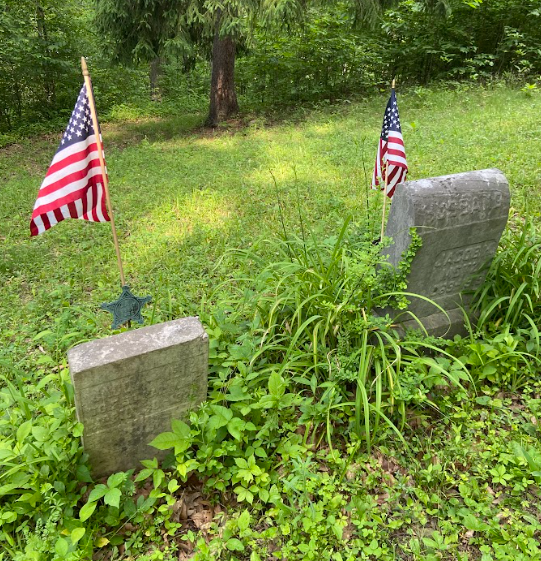
That distinction matters. Jacob H. Metz was born after the Civil War and therefore cannot be the soldier. Jacob Metz Sr. is the relevant candidate for the cemetery’s Civil War connection. He was likely the elder “Jacob” whose name later required the “Sr.” distinction after the birth of Jacob H. Metz in 1869.
The Company F roster of the 50th Pennsylvania Volunteers lists “Jacob Metz” as a private. According to that roster, he mustered on March 13, 1865, as a “substitute” and was mustered out with the company on July 30, 1865. Although Company F was recruited at Lancaster rather than Allegheny County, that does not rule out the Oakdale Jacob Metz Sr. Soldiers could enlist, substitute, relocate, or be buried apart from the place where their company was originally raised. His status as a substitute makes that geographic caution especially important.
Taken together, the evidence points strongly toward Jacob Metz Sr. as the cemetery’s 50th Pennsylvania Infantry connection. The military roster confirms that a “Jacob Metz” served in Company F, 50th Pennsylvania Infantry. The younger Jacob H. Metz can be ruled out by date of birth. And the wartime roster would naturally have listed the elder man simply as “Jacob Metz,” since his son of the same name had not yet been born and the “Sr.” distinction would not yet have been necessary.
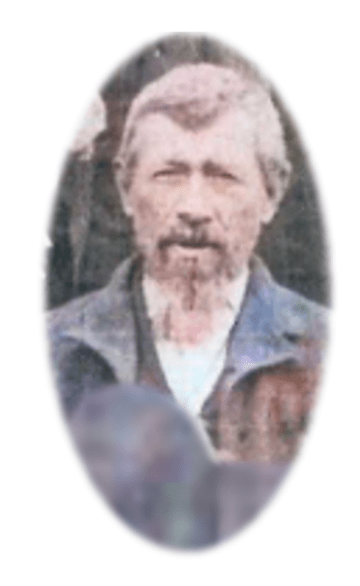
Jacob Metz Sr. therefore gives Oakdale Old German Cemetery a second Civil War thread beyond the Wilhelm family. The Wilhelms tie the cemetery to the 5th Pennsylvania Cavalry and an Allegheny County company. Metz points to the infantry service of the 50th Pennsylvania.
More Than One War
The cemetery’s martial memory did not end with the Civil War. The 2004 transcription also recorded Samuel Gamble Chessnutt, identified on his stone as a private in Company K, 56th Engineers, with enlistment and discharge dates corresponding to service during the First World War.
His presence widens the cemetery’s meaning. Oakdale Old German Cemetery is not only a Civil War memory place. It is a local burial ground where several generations of service, family loss, and community identity accumulated over time.
That should change how we see the cemetery. It is not simply an old place with a few military stones. It is a small landscape of American memory: immigrant or ethnic community, family burial, Civil War service, World War I service, childhood death, parenthood, fraternal symbolism, and the slow erosion of public attention.
The cemetery is hidden in the woods, but its story is not small.
To Remember Without Disturbing
Hidden cemeteries invite curiosity, but they also demand restraint.
A burial ground is not an abandoned object. It is a place of the dead, and perhaps of descendants still living. The proper response to a cemetery like Oakdale Old German Cemetery is not trespass, souvenir hunting, stone rubbing, digging, or amateur excavation. It is documentation, permission, preservation, and care.
The first preservation act is simply to notice. The second is to record accurately. The third is to verify. Photographs of stones, careful mapping of visible markers, comparison with older transcriptions, review of military records, death certificates, obituaries, deeds, and church records – these are the tools by which a damaged cemetery record can be responsibly rebuilt.
If the cemetery lies on private land or access is unclear, permission should be sought before any visit. If stones are broken, sunken, or obscured, they should not be moved or cleaned aggressively without proper guidance. If unmarked depressions suggest possible graves, they should be treated as graves.
A cemetery may be neglected, but it is not thereby open to disturbance.
The goal is not to possess the place. The goal is to remember it rightly.
The Local Ground of National Memory
Oakdale Old German Cemetery does not stand among the great national shrines. It has no marble amphitheater, no battlefield avenue, no crowds moving from monument to monument. Its record is quieter, humbler, and easier to miss.
A father. A mother. Children who died young. A lieutenant. A private. A sergeant. A substitute. A later soldier of another war. Family names gathered beneath weathered stones, surrounded by woods, holding a local fragment of the national story.
The story of the United States was not carried only by presidents, generals, and famous battlefields. It was carried by ordinary communities, by immigrant families, by men who enlisted, returned, aged, died, and were buried near their own. It was carried by families who marked graves as best they could, by descendants who remembered, by local transcribers who recorded what was still readable, and by those who come later asking what can still be known.
In Oakdale, some of that story remains in the woods.
It should not be exaggerated. It should not be romanticized. It should not be treated as complete. But, most importantly, neither should it be forgotten.
Today, Oakdale Old German Cemetery is not lost. It becomes lost only if no one takes the time to remember it carefully – and to carry forward, in this small and local place, the unfinished work remaining So Nobly Advanced.
The author wishes to extend his gratitude to the Sons of Union Veterans of the Civil War (SUVCW) organization for their placing of American flags on the graves of these veterans on Memorial Day – even for those hidden in the woods.

They are not lost.
Sources:
- Samuel P. Bates, History of Pennsylvania Volunteers, 1861–1865
- PA-Roots,
- “5th Pennsylvania Cavalry / 65th Regiment, Company I Muster Roll.” 5th Regiment Cavalry/65th Regiment Pennsylvania Volunteers, Company L
- “50th PA Infantry, Company F Muster Roll.” 50th Pennsylvnia Volunteers, Company F Muster Roll
- National Park Service, Civil War Soldiers and Sailors System, “5th Regiment, Pennsylvania Cavalry / 65th Volunteers.”
- Find a Grave, “Oakdale Old German Cemetery,” Allegheny County, Pennsylvania


 So Nobly Advanced
Leave a comment