
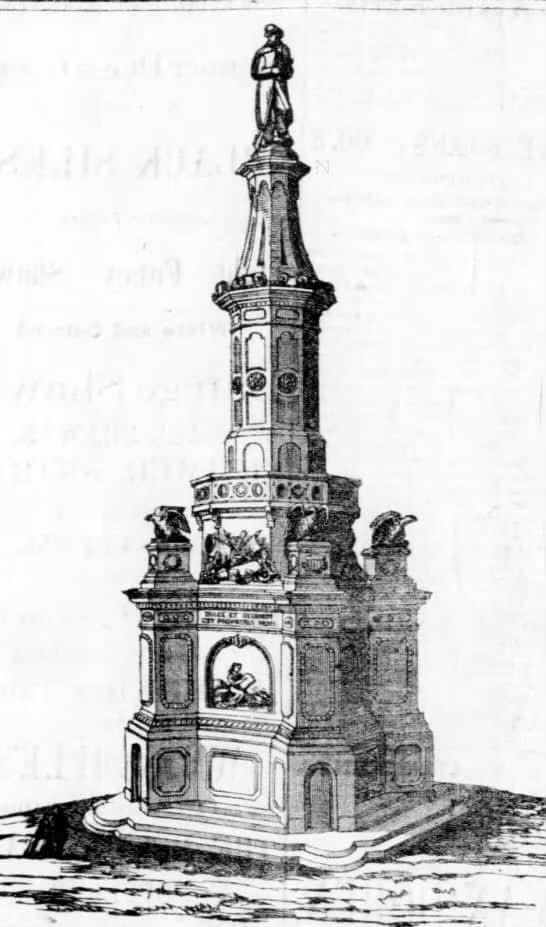
In 1871, the people of Allegheny County raised a monument unlike any other in Western Pennsylvania. Towering nearly 100 feet over the confluence of the Allegheny and Ohio Rivers, the Soldiers’ Monument stood not simply as a memorial to over 4,000 county men who died in the Civil War – it was raised as a message, a plea, and a trust for the future.
The generation that had lived through the war believed deeply that monuments could teach – that stone could carry meaning across time. And so they built a structure covered in symbols, inscriptions, and artistic elements that spoke directly to sacrifice, justice, and national healing. Yet most remarkably, they left two entire panels intentionally blank – explicitly “reserved for the inspiration of future time.”
They believed that future generations – you and I – would someday
step forward and complete the story.
More than 150 years later, those blank panels have vanished. The monument itself has been diminished, displaced, and reshaped almost beyond recognition. And the questions it once posed for the future linger unanswered.
A Monument Built as a Beacon Across Time
When it was constructed in 1870-1871, the Allegheny County Soldiers’ Monument was a masterpiece of symbolic architecture.
- Peter Charles Reniers, sculptor
- Louis Morganroth, architect
- Massillon sandstone, carved into a 100-foot tower
- A 11½-foot statue of Fame crowning the column
- Four figures representing Infantry, Cavalry, Artillery, and Navy
- Bas-reliefs depicting Faith, Hope, Charity, and Justice
- A balcony with a stone interior stair, where citizens could climb to overlook the city the soldiers died to preserve
The battles Antietam, Gettysburg, Vicksburg, Appomattox were carved in prominence across its sides. Beneath “Gettysburg” the primary inscription proclaimed:
“Erected to the memory of the 4,000 brave men of Allegheny County. Who fell in the great struggle to maintain the integrity of our union. The eye of God rests upon their graves even when unmarked by man. And their sleeping dust shall arise in the morning of their resurrection.”
On the opposite side, the words of Abraham Lincoln’s Second Inaugural were carved:
“With malice towards none, with charity for all with firmness. In the right as God gives us to see the night, let us finish the work we are in. To bind up the nation’s wounds, to care for those who shall have borne the battle and for his widow and his orphans. To do all which may achieve and cherish a just and lasting peace among ourselves and with all nations.”
For the two panels intentionally left blank for “the inspiration of future time” what would YOU inscribe? How would you have fulfilled the vision and purpose behind this important monument?
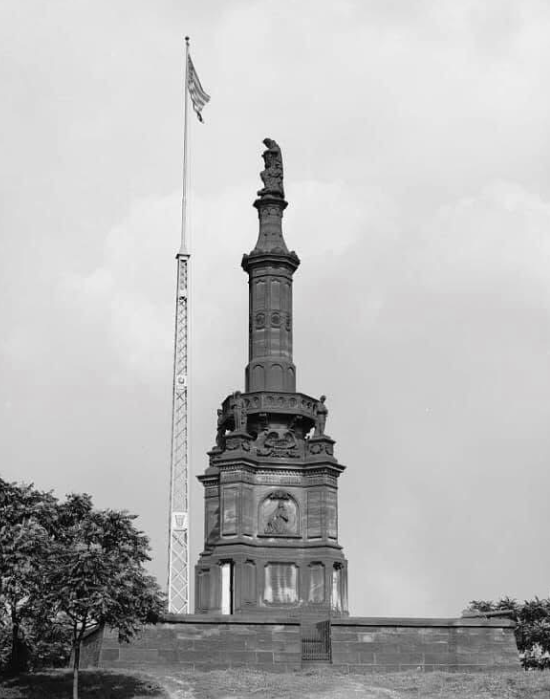
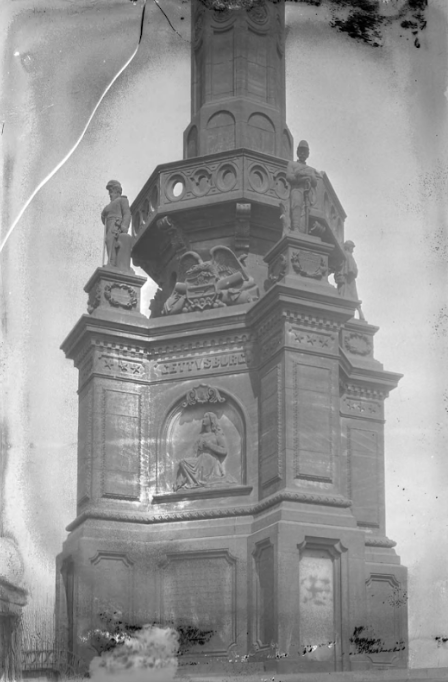
Instead of Completing Their Vision, We Buried It
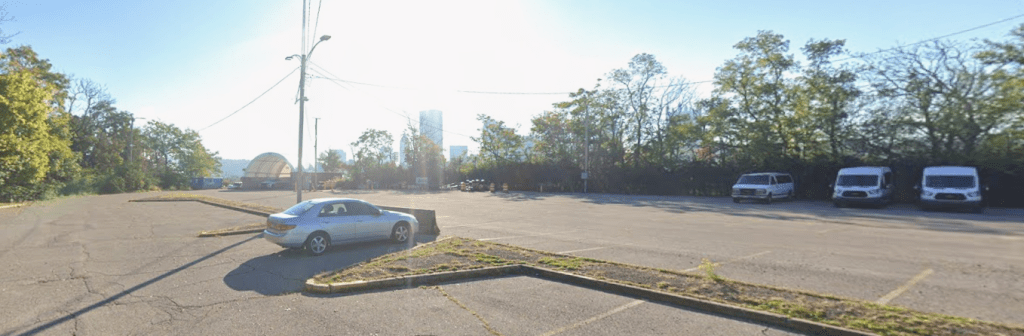
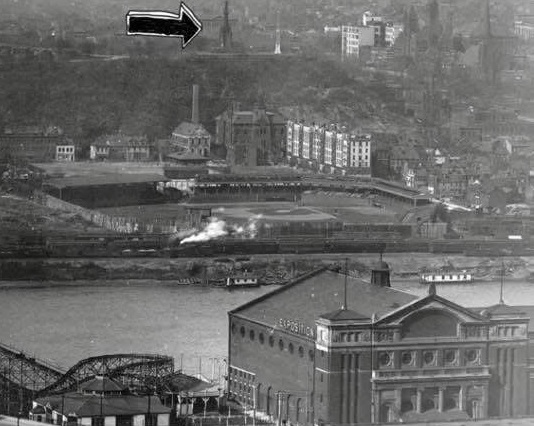
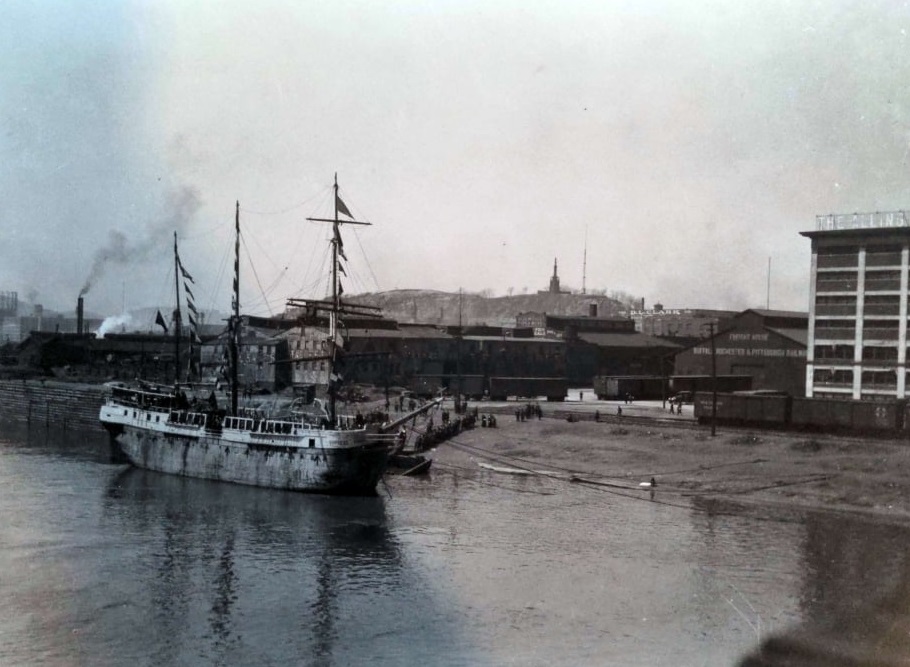
By the early 20th century, the hill on which the monument stood – which was chosen by a public vote in 1869 – was slated for redevelopment. The city wanted an athletic field, and the monument was in the way.
In 1929, the structure was dismantled. Citizens objected strongly, but the project moved forward. Many of the original artistic elements – the service figures, the bas-reliefs, the balcony, much of the original sandstone – were lost, discarded, or replaced. And, sadly, the two blank panels left for the future vanished.
By 1931, a redesigned, mostly granite version of the monument was reconstructed in West Park on the North Side. It was shorter. Plainer. Less commanding. Less visible. And profoundly disconnected from the prominent geography that had once given it meaning.
The Soldiers’ Monument was literally and symbolically moved from a summit within old Allegheny city – where the dead had been honored – into a corner beside Lake Elizabeth, where it now stands largely unnoticed.
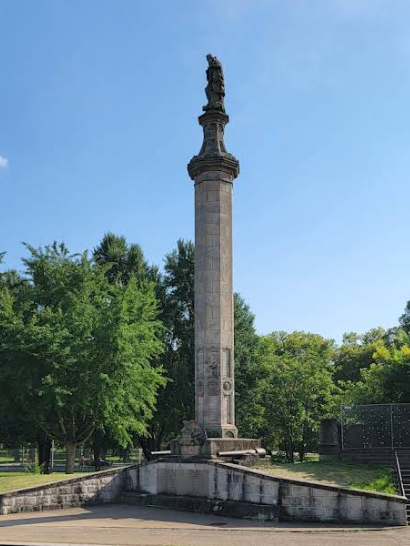
Further tragically, the athletic field built in its place is now a parking lot and a monument designed to speak to the future was instead consigned to the background.
What Should We Have Written on the Blank Panels?
Between the 1930s and today, the United States has faced profound political, social, and moral turmoil – far beyond what the monument’s creators could have imagined. We endured global wars, civil rights struggles, assassinations, economic upheaval, polarization, and bitter political divides.
The monument asked us to define what the Union meant after all this. What should we have written on its blank panels? Perhaps:
- A commitment to preserve democratic institutions?
- An affirmation of civil liberties and equal justice?
- A renewed duty to veterans, widows, and orphans – echoing Lincoln’s own directive?
- A promise to reject malice, cruelty, and division, especially in volatile political times?
- An acknowledgment that the Union’s preservation is not a finished project but an ongoing responsibility?
Instead, the panels disappeared before we ever took up the pen.
Have We Honored Lincoln’s Directive?
Lincoln’s words carved into the monument still instruct:
“…to bind up the nation’s wounds,… to care for him who shall have borne
the battle, and for his widow and his orphan…”
Have we fulfilled this?
In some ways, yes:
- Veterans’ care has expanded (though often too slowly).
- National cemeteries are maintained with dignity.
- Civil War memory is documented and preserved in scholarship.
But in many ways, no:
- Political rhetoric in our time is often rooted in malice, not forgiveness.
- National wounds remain open – racial, economic, civic, and ideological.
- Veterans still experience homelessness, mental-health crises, and inadequate support.
- Memorials are neglected, moved, rebuilt cheaply, or left to decay.
And the monument built to stand as a sentinel over Pittsburgh has been reshaped, displaced, and stripped of its original grandeur – its power to inspire the future diminished.
How Have We Honored the 4,000 Dead of Allegheny County?
Honestly? Not as they intended….
We did not preserve their monument. We did not preserve its setting. We did not preserve its full message. We did not fulfill the invitation left for us on its blank panels.
Instead, we allowed convenience and development to overrule memory. We allowed time, weather, and budget constraints to erode its meaning. We allowed political divides to overshadow the unity the dead had died for.
At best, we preserved fragments. At worst, we forgot the rest.
A Question for Us – The “Future Time” They Left Space For
The veterans and widows who built the Allegheny County Soldiers’ Monument believed deeply that future generations would rise to the challenge of preserving the Union and its principles. They believed we would speak with clarity and conviction about what their sacrifice meant.
They believed we would complete the monument by adding our own wisdom. So the question returns to us, heavier now…. What SHOULD we have written? And what WILL we write – metaphorically or literally – going forward?
Lincoln’s charge still stands:
“…let us strive… to do all which may achieve and cherish a just and lasting
peace among ourselves and with all nations.”
The blank panels may be gone, but the responsibility is not.
The monument’s original creators believed that memory had moral force. If we want to honor the 4,000 Allegheny County soldiers and countless others whose lives ended in war, then perhaps the greatest tribute we can offer now is simple: To finish the work they began.
To guard the Union they died for.
To honor their sacrifice with something more enduring than stone.
 So Nobly Advanced