
Daniel W. Morton was born around 1836, a native of Windsor in Kennebec County, Maine, a small farming community set among the rolling hills of central Maine. Little is known of his early life, but by the time the Civil War broke out in 1861, he was in his mid-twenties, a typical age for the thousands of young Maine men who would volunteer to serve the Union cause.
In the summer of 1862, when President Lincoln called for additional troops after the costly battles of the Peninsula Campaign and Second Bull Run, Maine answered with several regiments, among them the 20th Maine Infantry. The regiment was organized at Augusta and mustered into service on August 29, 1862, under the command of Colonel Adelbert Ames. Morton enlisted as a Private in Company C, which drew heavily from Windsor and the surrounding towns. He joined under the leadership of Captain Charles W. Billings.
Service in the 20th Maine
The 20th Maine first saw action in the late months of 1862 and endured the harsh Fredericksburg campaign that December. Throughout the winter and spring of 1863, Morton and his comrades trained, marched, and endured the hardships of camp life. By July, the regiment was part of the Union V Corps, moving north through Maryland and into Pennsylvania as General Robert E. Lee’s Confederate army advanced toward Gettysburg.
On July 2, 1863, the second day of the Battle of Gettysburg, Morton and Company C found themselves placed at the extreme left of the Union line on Little Round Top. Their position was of immense strategic importance: if the Confederates broke through, they could roll up the entire Union flank. Colonel Joshua Lawrence Chamberlain, who had recently taken command of the regiment, extended his line and ordered Company C and other units to “refuse” the flank – that is, bend it back at a right angle to guard against a turning movement.
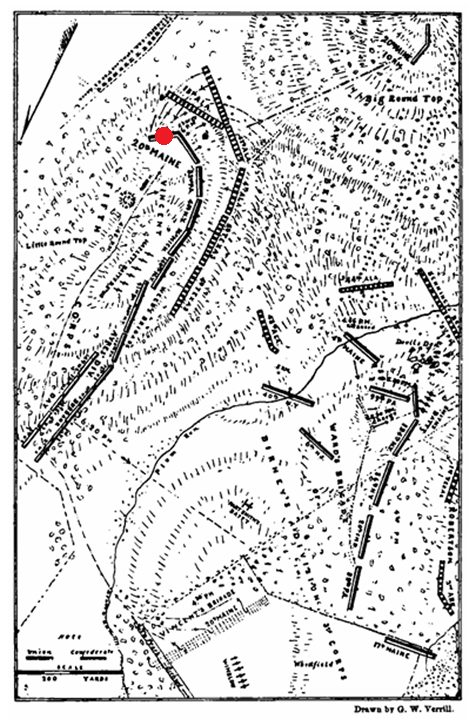
Above: Order of 20th Maine Companies at Little Round Top on July 2, 1863, from Left to Right: G, C, H, A, F (Color/Center), D, K, I, E (Note: Company B detached)
Here the regiment withstood repeated assaults by Law’s Alabama Brigade, most fiercely the 15th Alabama Infantry. Amid the chaos, Company C’s captain, Charles W. Billings, was struck down by a mortal wound, and Lieutenant James H. Stanwood was also badly injured. First Sergeant Isaac Estes fell mortally wounded as well. Despite these losses, the company held firm. Daniel Morton’s name does not appear among those killed or wounded, a testament either to luck or to the cover he found amid the rocks and scrub of Little Round Top. As the fighting reached its climax, Chamberlain ordered the famous bayonet charge down the slope. Company C, along with the rest of the regiment, surged forward, driving back the exhausted Alabamians and securing the Union flank. Historians have since credited the 20th Maine’s stand with helping save the Union army that day. Daniel Morton was among the men who made that stand.
Continued Service
Morton remained with the regiment for the rest of the war. The 20th Maine served through the grueling campaigns of 1864 under General Ulysses S. Grant, from the Wilderness to Petersburg. When the regiment mustered out on July 16, 1865, the men had covered nearly three years of arduous service. For Daniel Morton, it meant a return home to Windsor, carrying with him the memory of comrades lost and the pride of having stood on one of the Civil War’s most famous battlefields.
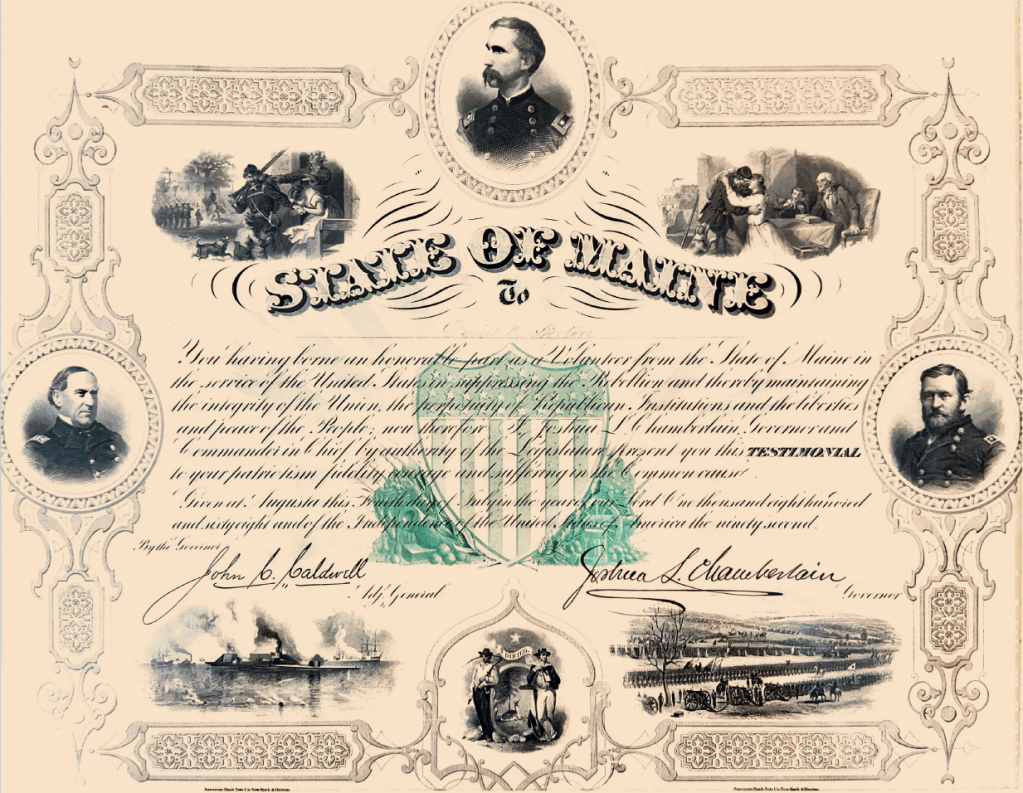
Life After the War
Back in Maine, Morton resumed civilian life. He married Rosilla S. Morton, and the couple spent their lives in or near Windsor. The scars of war – whether physical or invisible – seem to have followed him into later years. In the 1890s, his name appeared in the Congressional Record as the subject of a private bill introduced to grant him a pension, suggesting either disability or difficulty in meeting the standard requirements for federal veterans’ benefits. This detail testifies to his ongoing identification as a Civil War veteran and to the community’s recognition of his service.
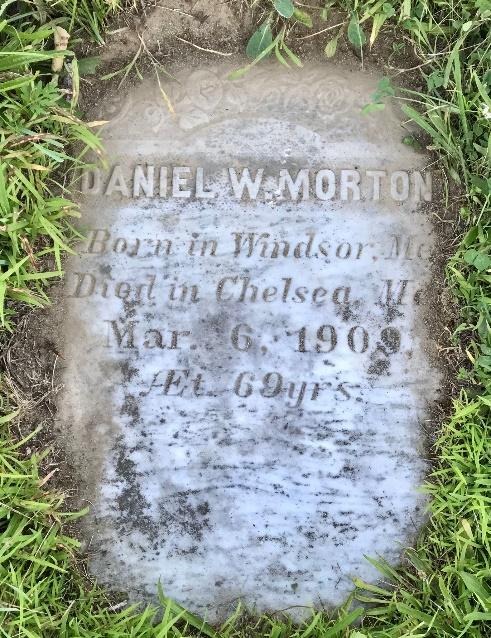
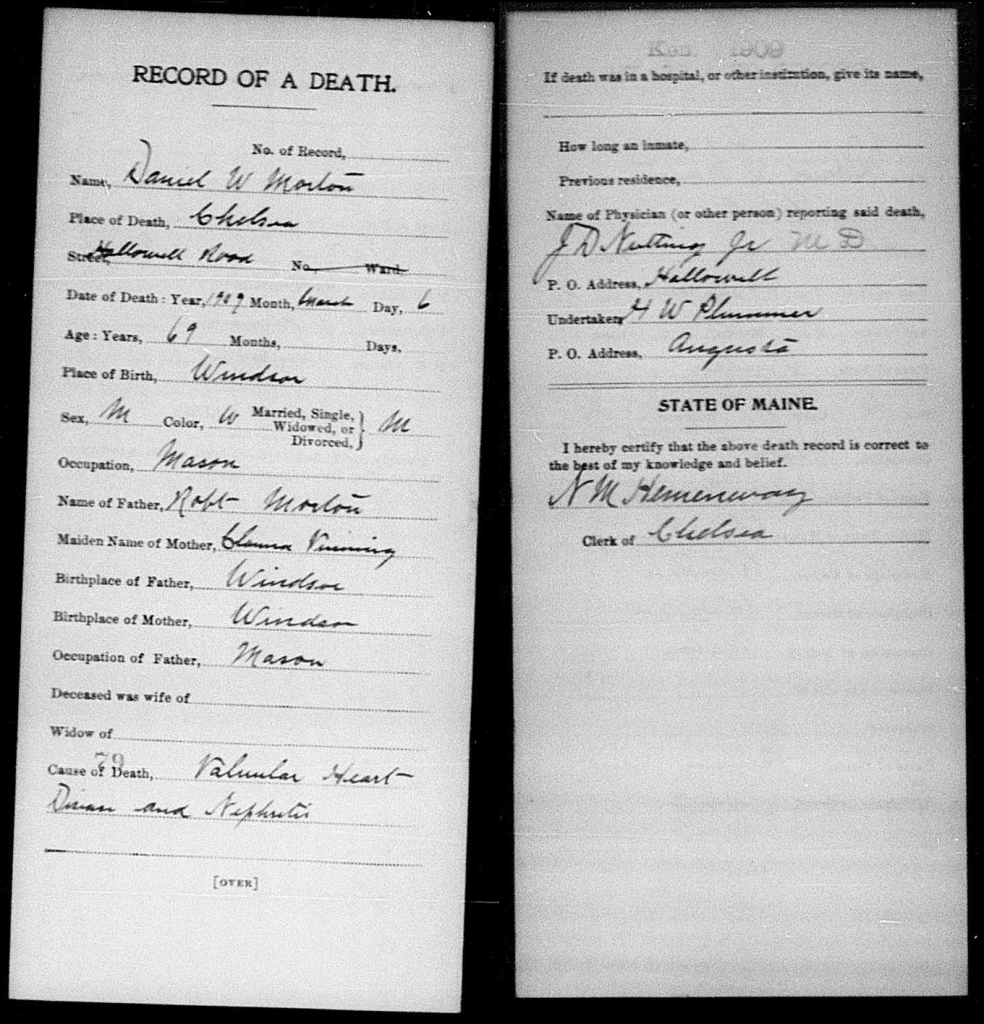
Rosilla passed away on April 9, 1907, and Daniel followed her in death on March 6, 1909.


 So Nobly Advanced
Leave a comment