
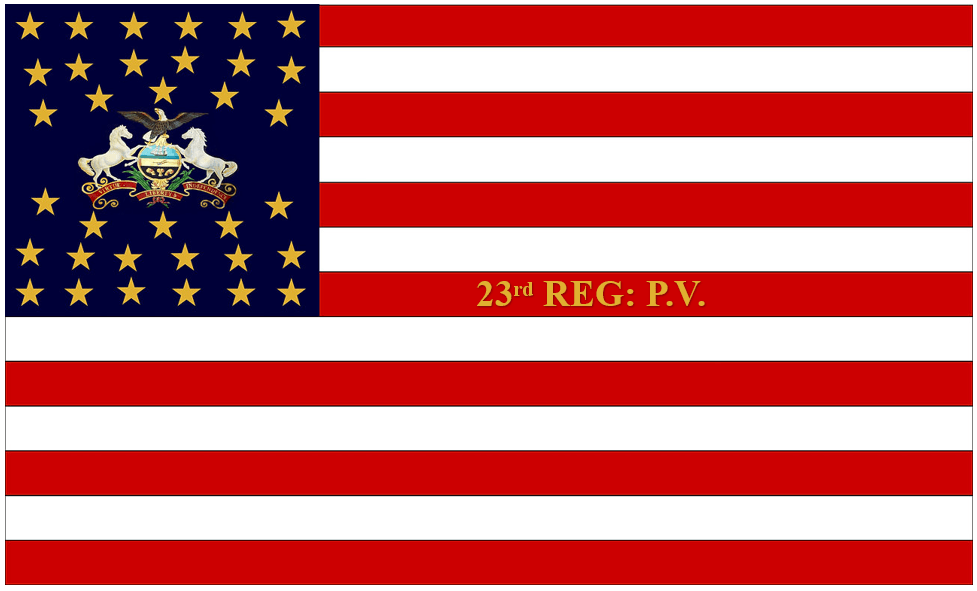
From Holytown to the Monongahela Valley
Colin Forsyth was born on 11 January 1842 in Holytown, North Lanarkshire, Scotland, the son of Adam F. Forsyth and Helen (Latta) Forsyth. Holytown lay in Scotland’s industrial heartland – an area shaped by coal mining, ironworks, and railroads – conditions that drove many families to seek opportunity overseas.
By the late 1850s, Forsyth had immigrated to the United States, settling in western Pennsylvania, a region similarly defined by industry, immigration, and labor. Like many young immigrants, he came of age in a society where civic loyalty was increasingly tested by the sectional crisis gripping the nation.
When civil war erupted in 1861, Forsyth was only nineteen years old.
An Early Volunteer
Rather than waiting for conscription, Colin Forsyth volunteered for military service, enlisting in Company H, 23rd Pennsylvania Volunteer Infantry. He was mustered into service on 3 September 1861, committing to a three-year term at a time when few Americans yet grasped how long or destructive the war would become.
The 23rd Pennsylvania, commanded by Colonel David B. Birney, was among the Commonwealth’s earliest regiments. Known as “Birney’s Zouaves,” the regiment adopted the Zouave style – distinctive uniforms, demanding drill, and light-infantry tactics modeled after European elite units. Early in the war, such regiments were believed capable of swift, decisive action that might bring the rebellion to a quick end.
Forsyth entered an army still learning how to fight a modern industrial war.
Service with the 23rd Pennsylvania Infantry
The 23rd Pennsylvania served in the Eastern Theater, operating primarily in Virginia and around the defenses of Washington, D.C. during the war’s formative years. Forsyth’s service spanned nearly the entire conflict, from late 1861 through the autumn of 1864.
Like most infantrymen, his daily experience consisted of:
- extended marches and bivouacs
- drill and guard duty
- exposure to disease and exhaustion
- long periods of waiting punctuated by moments of danger
Family tradition and secondary regimental accounts state that Forsyth was wounded by cannon fire while driving an ammunition wagon – a hazardous duty that placed soldiers under direct enemy artillery fire. Ammunition trains were frequent targets during engagements, and men assigned to them often faced sudden, catastrophic danger.
Muster Out and the War’s End
Colin Forsyth mustered out of service on 24 September 1864, completing over three years of active wartime duty. His discharge came as the Union army pressed toward final victory, after the long and costly campaigns that had transformed both the nation and the men who fought for it.
Forsyth returned to civilian life bearing the marks – seen and unseen – of prolonged military service.
Marriage, Family, and Civilian Life
While still in uniform, Forsyth married Sarah McCracken on 15 March 1864 at Braddock’s Field, a site already steeped in American military history from the Revolutionary War. Sarah, born in Ireland around 1847 or 1851, would become the matriarch of a large immigrant family.
Together, Colin and Sarah raised twelve children – nine sons and three daughters:
- Adam (1866–1952)
- Thomas (1868–1900)
- John (1869–1940)
- George (1872–d.)
- Mary (1875–1957)
- Robert (1876–d.)
- James (1879–1952)
- William Wallace (1881–1910)
- Nellie Latta (1882–1957)
- Colin Latta (1884–1955)
- David Birney (1886–d.)
- Grace (1888–1953).
The naming of David Birney Forsyth is particularly telling. It reflects a deliberate act of remembrance, honoring the regiment’s wartime commander and suggesting that Forsyth’s military service remained a defining element of his identity long after the guns fell silent.
Census records place Forsyth in McKeesport, Allegheny County, in 1870, and later in Lincoln, Allegheny County, in 1880, anchoring his postwar life firmly within Pennsylvania’s industrial communities.
Death and Reinterment
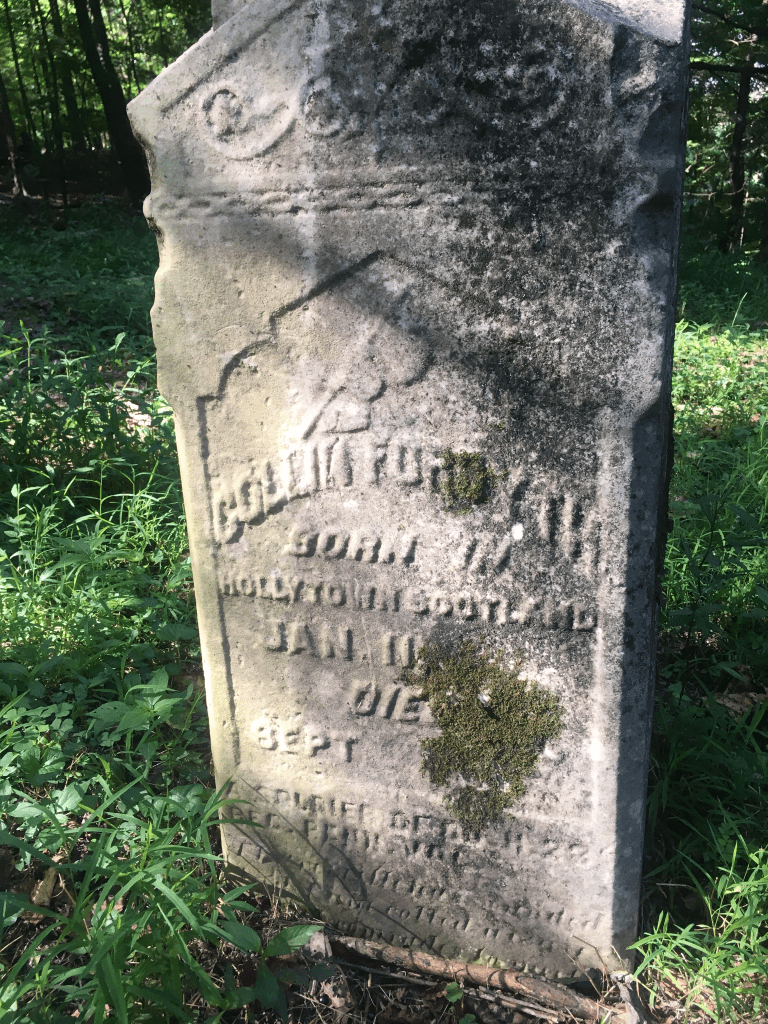
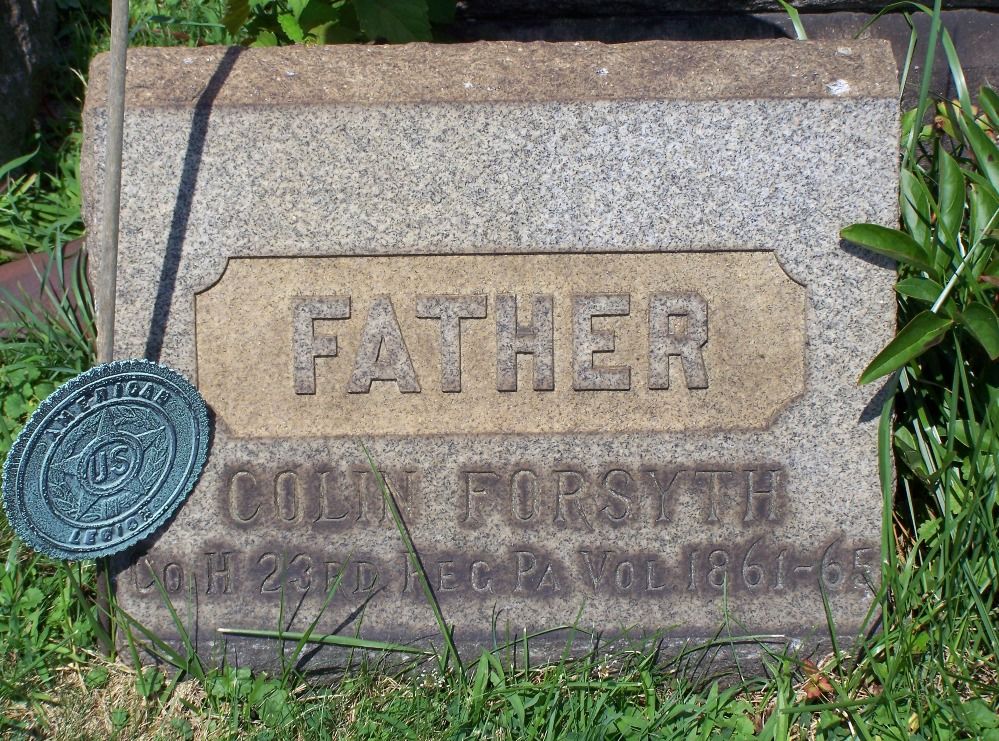
Colin Forsyth died on 11 September 1887, at just 45 years of age, in Allegheny County, Pennsylvania. He was originally buried at Lobbs Run Cemetery, a resting place for many local families and veterans.
On 4 December 1924, decades after his death, Forsyth was reinterred at Richland Cemetery in Dravosburg. Notably, his original tombstone at Lobbs Run was not moved, leaving behind a physical reminder of his first burial place.
Why his remains were moved – and why the stone was left behind – remains uncertain. The timing, coming shortly after the death of his wife Sarah in 1923, suggests a family decision to consolidate burials, but definitive documentation has yet to surface.
The separation of body and marker stands as a poignant symbol of how veterans’ stories can fragment over time unless deliberately preserved.
Why Colin Forsyth’s Story Matters
Colin Forsyth’s life captures several essential truths about the Civil War generation:
- He was an immigrant who chose to fight for his adopted country
- An early volunteer, serving before conscription and before victory was assured
- A soldier who endured years of service and likely suffered serious injury
- A father whose wartime experience shaped his family’s identity for generations
Forsyth was not a general, politician, or celebrated hero. He was one of the thousands whose willingness to serve – early, steadily, and without fanfare – made Union victory possible.
His story reminds us that the Civil War was fought not only by native-born Americans, but by immigrants who bound themselves to the Union through service and sacrifice. Remembering men like Colin Forsyth restores depth and humanity to our understanding of the war – and honors those who carried its consequences long after the fighting ended.
Sources & References
- Pennsylvania Volunteers, 23rd Infantry, Company H roster
https://www.pa-roots.com/pacw/infantry/23rd/23dcoh3yrs.html - 23rd Pennsylvania Infantry (Birney’s Zouaves), regimental history
https://civilwarintheeast.com/us-regiments-batteries/pennsylvania/23rd-pennsylvania-infantry - FamilySearch: Colin Forsyth (L8M8-238)
https://www.familysearch.org/tree/person/details/L8M8-238 - U.S. Census records, 1870 & 1880 (McKeesport; Lincoln, Allegheny County)
- Lobbs Run Cemetery Directory; Richland Cemetery reinterment records (1924)
WJHHS – Lobbs Cemetery Directory
 So Nobly Advanced
Leave a comment