
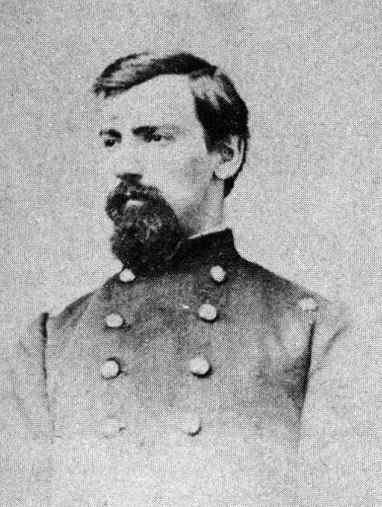
Rufus R. Dawes was a Union Army officer whose Civil War service placed him repeatedly at the point of decision during the conflict’s most violent engagements. Serving with the 6th Wisconsin Volunteer Infantry, a core regiment of the Iron Brigade, Dawes experienced the war not from distant headquarters but from the front ranks – where command was often assumed suddenly, casualties were severe, and survival itself was uncertain.
Dawes’s wartime record spans the early disasters of 1862, the slaughter at Antietam, the defining stand at Gettysburg, and the grinding attrition of the Overland Campaign. After the war, he remained engaged with public life, serving a term in Congress and later publishing a regimental history that preserved the voice and perspective of the Western soldiers who fought in the Eastern Theater. His life reflects the trajectory of a citizen-soldier shaped by repeated exposure to combat and a lifelong commitment to remembering it accurately.
Early Life and Education
Rufus Dawes was born on July 4, 1838, in Malta, Morgan County, Ohio – a date that carried symbolic weight in a family conscious of its Revolutionary heritage. He was the great-grandson of William Dawes, whose midnight ride alongside Paul Revere had helped signal the outbreak of the American Revolution. That lineage placed Rufus Dawes within a tradition that emphasized civic responsibility and national service.
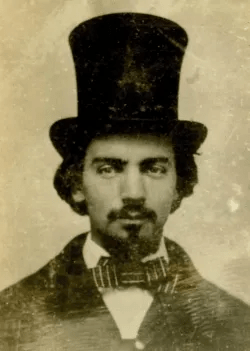
He received his formal education at Marietta College, graduating in 1860. Like many young men of his generation, Dawes completed his education just as sectional tensions hardened into open conflict. Within a year, the theoretical ideals of republican citizenship would be tested in war.
Raising Company K and Entering the War
When the Civil War began, Dawes traveled to Wisconsin, where he helped organize a volunteer company drawn largely from Juneau County. Known locally as the “Lemonweir Minute Men,” the company reflected the frontier character of the region – many of its men were woodsmen and laborers accustomed to physical hardship but inexperienced in formal military discipline.
The company was mustered as Company K, 6th Wisconsin Infantry, a regiment that would soon be assigned to what became the Iron Brigade. Dawes was elected captain by his men, a common practice early in the war that placed immediate responsibility on junior officers to earn authority through competence rather than rank alone.
Civil War Service
Early Campaigns and Advancement
Dawes’s regiment saw its first major action during the Northern Virginia Campaign in 1862. At Second Bull Run, South Mountain, and Antietam, the Iron Brigade was repeatedly committed to exposed positions, often absorbing disproportionate casualties.
By mid-1862, battlefield losses among senior officers forced capable junior leaders into expanded roles. Dawes was appointed major on June 21, 1862, reflecting both attrition and his demonstrated ability to command under pressure. His promotion was not ceremonial; it came with the expectation that he could assume regimental leadership if necessary.
Antietam and the Cost of Command
At Antietam, the Iron Brigade advanced into what later became known as the Cornfield – ground contested repeatedly throughout the morning of September 17, 1862. The brigade’s losses were catastrophic, and command structures were repeatedly shattered.
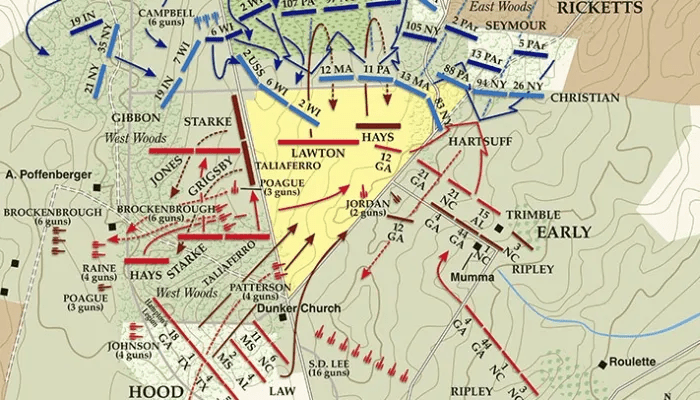
For officers like Dawes, Antietam reinforced the realities of Civil War leadership: orders delivered amid chaos, formations dissolving under fire, and the constant need to maintain cohesion when fear and confusion threatened to overwhelm discipline. His survival through these engagements placed him among a shrinking cohort of experienced officers within the regiment.
Gettysburg and the Railroad Cut (July 1, 1863)
By the summer of 1863, Dawes had been promoted to lieutenant colonel (March 24, 1863). On July 1 at Gettysburg, the 6th Wisconsin entered the fight west of town as Union forces attempted to slow the Confederate advance.
Dawes played a central role in the attack on Confederate troops who had taken cover in an unfinished railroad cut. His official report describes a difficult assault conducted under fire, followed by the surrender of enemy soldiers once the position became untenable. Dawes personally recorded the surrender of Major John A. Blair of the 2nd Mississippi Infantry, along with a large portion of that regiment.
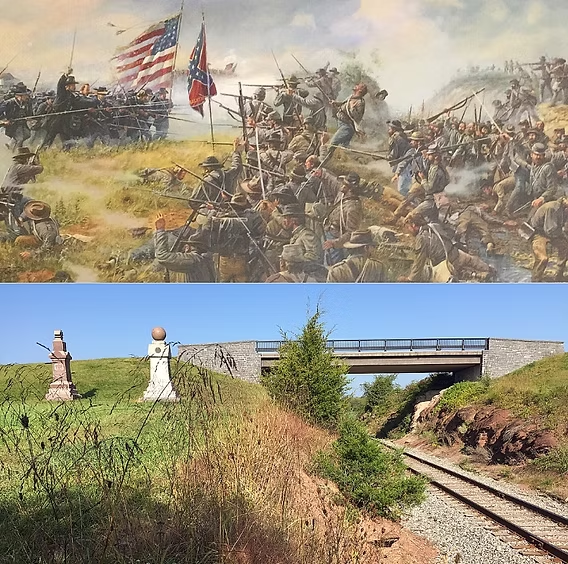
Modern historical accounts consistently note that more than 200 Confederate soldiers were captured during or immediately after this action. While tactically successful, the engagement exemplified the brutal close-range fighting that characterized the first day at Gettysburg and contributed to heavy casualties on both sides.
Gettysburg and Culp’s Hill (July 2-3, 1863)
After the hard fighting west of Gettysburg on July 1, Rufus Dawes and the 6th Wisconsin did not withdraw from the battle. Instead, it was redeployed during the evening hours to reinforce the Union right flank on Culp’s Hill, a position that would become critical over the next two days.
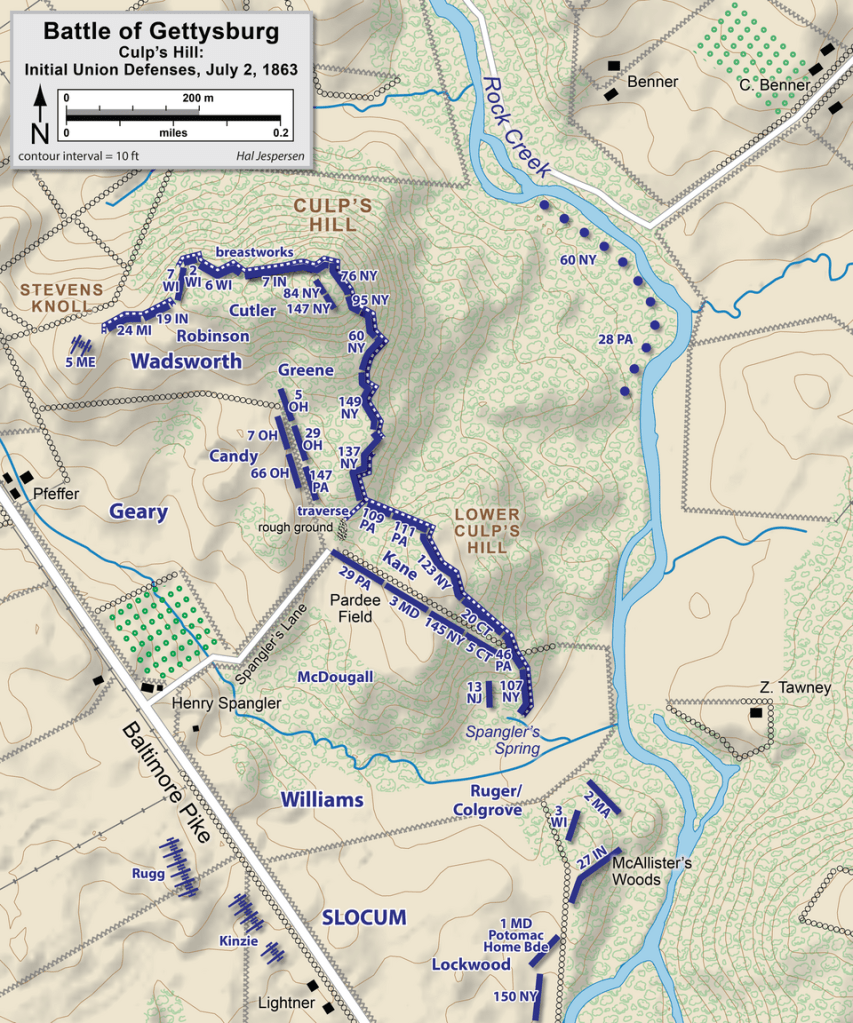
On the night of July 2 and into the morning of July 3, the 6th Wisconsin took part in the defense of the upper slopes of Culp’s Hill, occupying hastily constructed breastworks. Confederate forces under Edward Johnson launched repeated attacks against these positions, attempting to seize the high ground and threaten the Union line from the east.
The fighting on Culp’s Hill was markedly different from the open-field assaults of July 1. Combat occurred at close range, often in darkness. The 6th Wisconsin, though already worn down by losses from earlier fighting, held its position through sustained pressure, contributing to the successful defense of the Union right. By late morning of July 3, Confederate assaults had failed, and the line on Culp’s Hill remained intact.
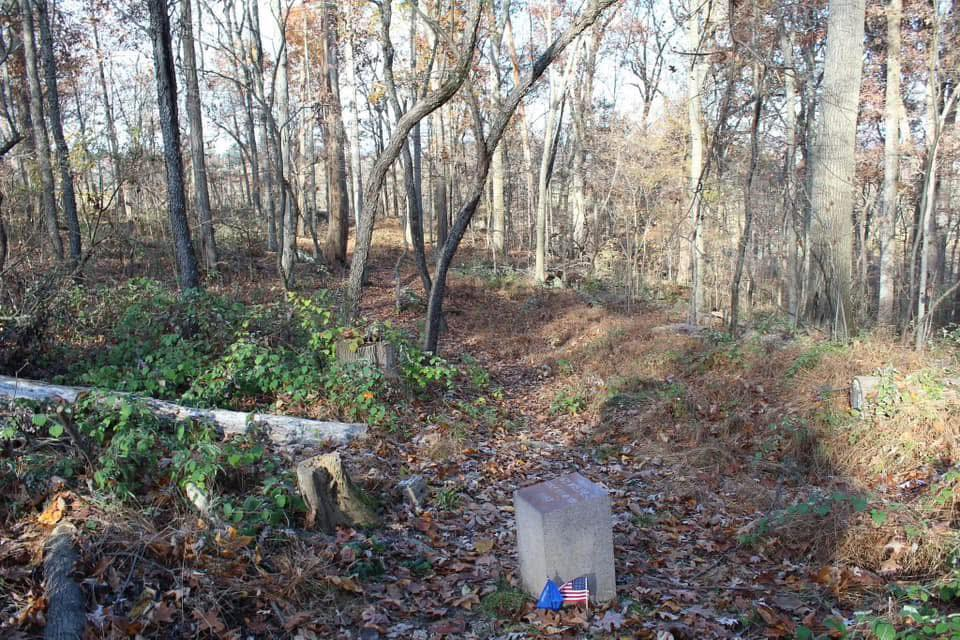
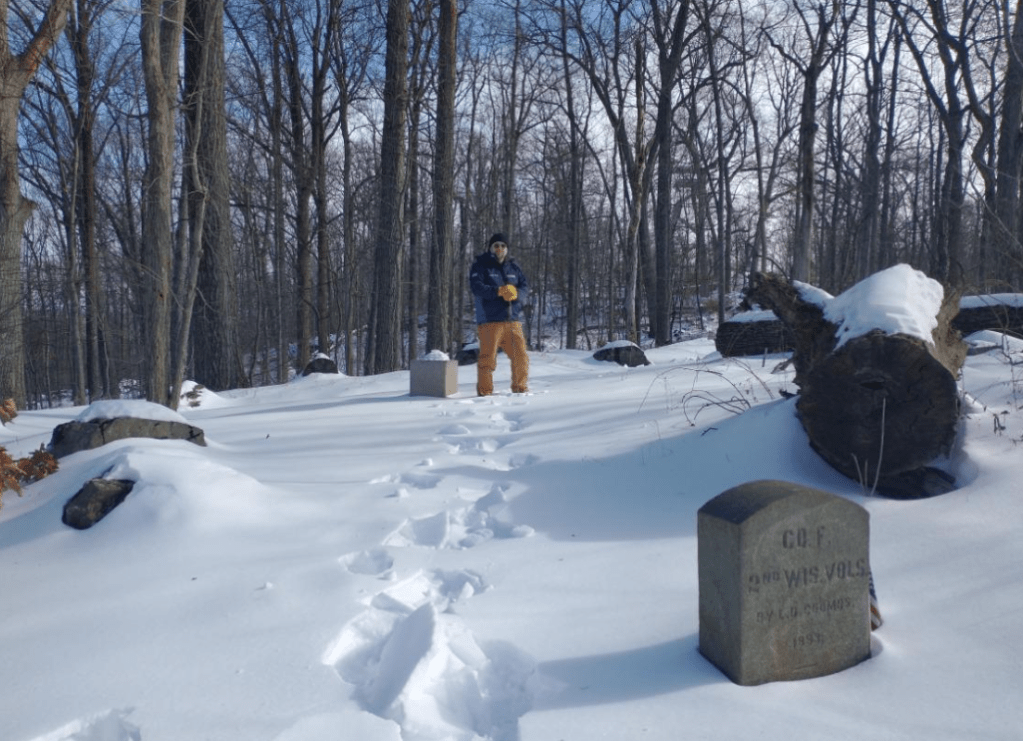
For Dawes and his regiment, the Gettysburg campaign thus encompassed both a dramatic offensive action on the first day and a disciplined defensive stand on the second and third. Together, these actions illustrate the varied demands placed on veteran regiments – rapid assault, rapid movement, and stubborn defense – during the battle that would mark a turning point in the war.
Later War Service and Brevet Rank
Dawes continued to serve through the Overland Campaign of 1864, a period defined by sustained combat and relentless losses. He was promoted to colonel on July 6, 1864, assuming full regimental command late in the war.
On March 13, 1865, he received the honorary rank of brevet brigadier general, recognizing cumulative service rather than a single act of heroism. Such brevets were common at war’s end but nevertheless marked official acknowledgment of his long and demanding command experience.
Postwar Life and Public Service
After the war, Dawes returned to Marietta, Ohio, where he entered the wholesale lumber business. Like many veterans, he balanced private enterprise with continued public engagement, maintaining an interest in national affairs shaped by wartime experience.
In 1881, Dawes was elected as a Republican to the U.S. House of Representatives, serving one term during the Forty-seventh Congress (1881–1883). His congressional career was brief. He was defeated in his bid for reelection in 1882, a loss often attributed – at least in part – to his opposition to the Chinese Exclusion Act, a position that placed him at odds with prevailing political currents.
Author and Custodian of Memory
In 1890, Dawes published Service with the Sixth Wisconsin Volunteers, drawing heavily on his wartime letters, diaries, and official reports. The work stands as a significant regimental history, notable for its emphasis on structure, discipline, and lived experience rather than romanticized heroics.
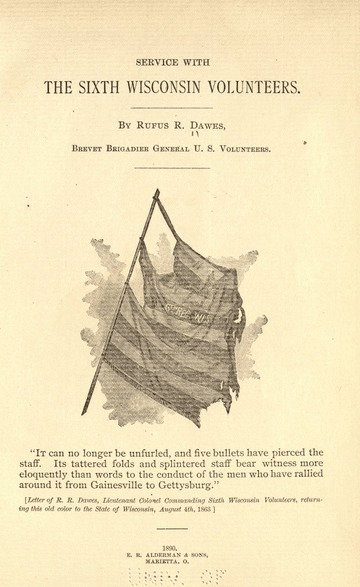
Through this publication, Dawes helped preserve the perspective of Western soldiers whose contributions were sometimes overshadowed by Eastern regiments. His writing reflects a deliberate effort to document events accurately, ensuring that sacrifice was remembered in proportion to reality.
Death and Burial
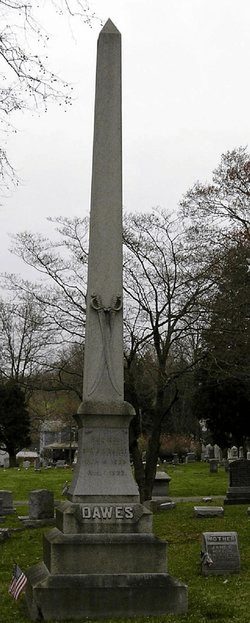
Rufus Dawes died in Marietta, Ohio, in August 1899. Reputable sources differ slightly on the exact date – some record August 1, others August 2 – but all agree on the location and circumstances. He was buried in Oak Grove Cemetery, Marietta, alongside other veterans of the Civil War.
Why Rufus Dawes Matters
Rufus Dawes represents a generation of officers forged by necessity rather than ambition. His career illustrates how leadership emerged under fire, how responsibility expanded through attrition, and how veterans later struggled to reconcile memory with meaning.
Through service, public life, and authorship, Dawes bridged the battlefield and the civic sphere. His legacy endures not just through monument or myth, but through record – official reports, regimental history, and a life lived in sustained engagement with the consequences of war.
Sources:
- Wisconsin Historical Society — Dawes, Col. Rufus R. (1838–1899) https://www.wisconsinhistory.org/Records/Article/CS2572
- American Battlefield Trust — Rufus Dawes and the Antietam Epicenter https://www.battlefields.org/learn/articles/rufus-dawes-epicenter
- Biographical Directory of the United States Congress (Retro) — DAWES, Rufus (1838–1899) https://bioguideretro.congress.gov/Home/MemberDetails?memIndex=D000149
- Official Records of the War of the Rebellion — Report of Lt. Col. Rufus R. Dawes, 6th Wisconsin Infantry, Gettysburg https://gettysburg.stonesentinels.com/union-monuments/wisconsin/6th-wisconsin/
- Coddington, Edwin B. The Gettysburg Campaign: A Study in Command
- Pfanz, Harry W. Gettysburg: Culp’s Hill and Cemetery Hill
 So Nobly Advanced
Leave a comment