
History sometimes leaves behind objects so small that their meaning is easy to overlook – until their story is traced end to end.
I am in possession of a Civil War-era Minie ball, recovered from the ground on a friend’s property near Mobile Bay, just outside Bay Minette, Alabama. The bullet is clearly identifiable as Union ammunition by its three-ring design, a common feature of .58-caliber Minie balls used in rifled muskets such as the Springfield Model 1861.
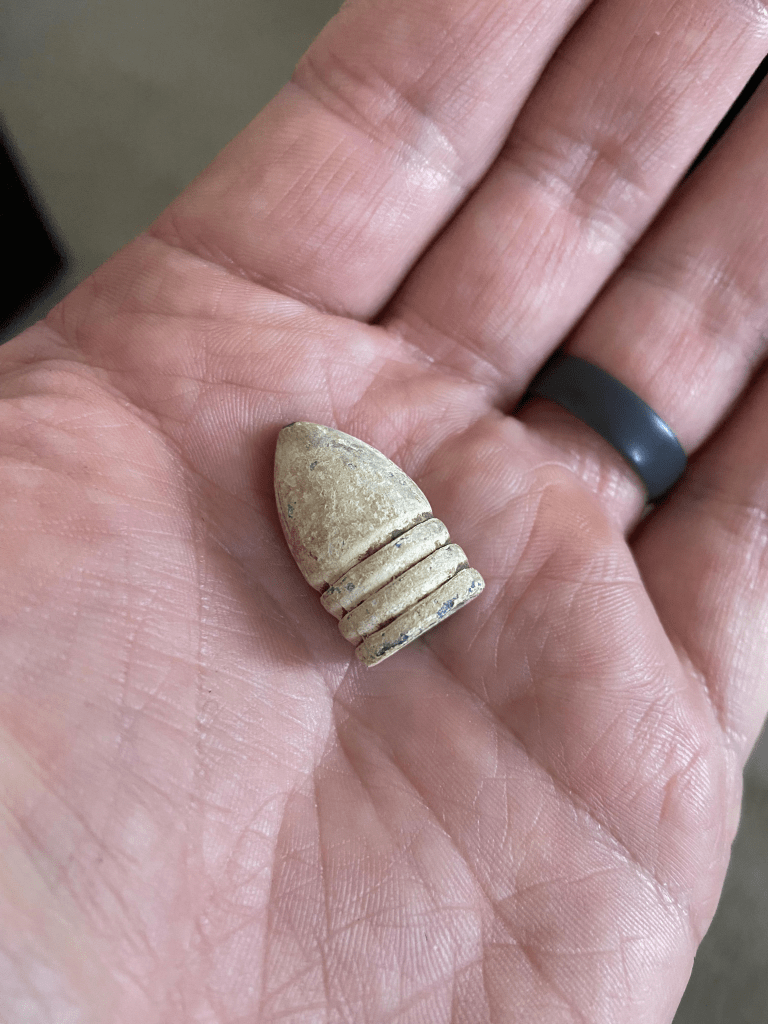
The find location adds an important layer of context. The property sits along Bluefield Drive, a name rooted in local memory: the land was used as a Union campsite during the siege and assault on Fort Blakeley in the closing days of the Civil War. What is now a quiet residential street once echoed with the sounds of marching men, stacked arms, and the daily routines of soldiers preparing for combat.
For roughly a century and a half, the bullet lay undisturbed in Alabama soil – until it was recovered and gifted to me in Pittsburgh.
The Battle of Fort Blakeley (April 2–9, 1865)
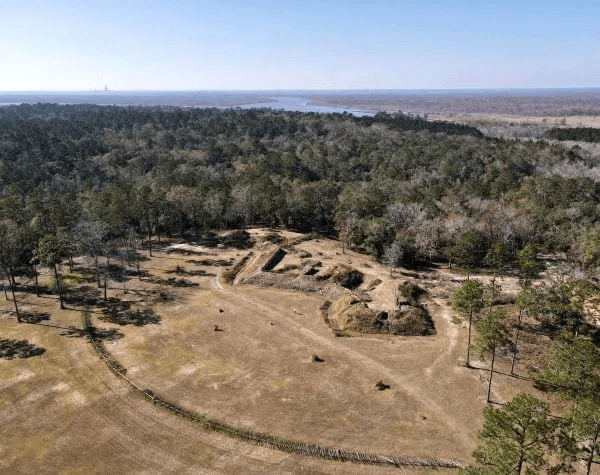
The Battle of Fort Blakeley was among the final major engagements of the American Civil War. Located northeast of Mobile, Alabama, Fort Blakeley was a key Confederate defensive position protecting the eastern approaches to the city – one of the last significant Gulf ports still in Confederate hands.
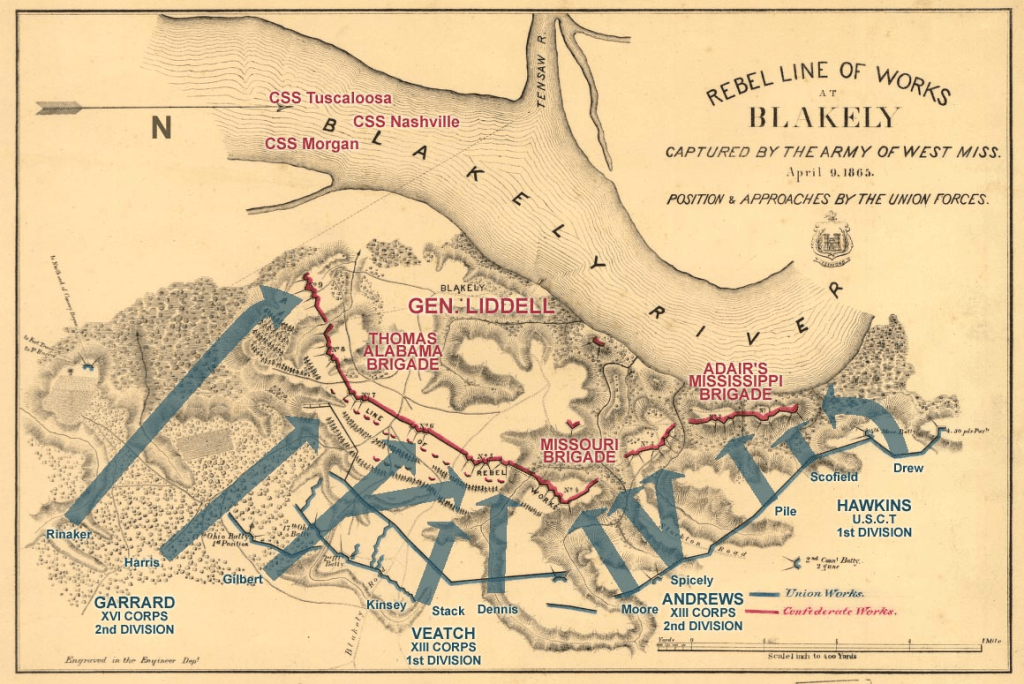
By the spring of 1865, Union forces under Major General Edward R. S. Canby were methodically closing in. After the successful capture of Spanish Fort, Union troops invested Fort Blakeley beginning on April 2, 1865, constructing extensive trench lines and siege works in classic nineteenth-century fashion.
On April 9, 1865, Union forces launched a massive, coordinated frontal assault. Approximately 16,000 Union soldiers advanced against a Confederate garrison of roughly 4,000 men, overwhelming the earthworks after intense fighting. The attack is widely recognized as the last large-scale infantry assault of the Civil War.
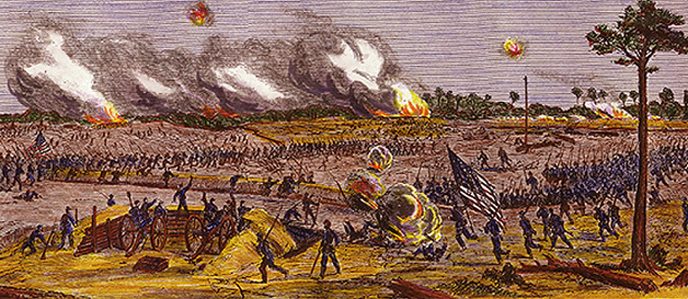
Ironically, this decisive action took place the same day that General Robert E. Lee surrendered the Army of Northern Virginia at Appomattox Court House – news that had not yet reached the soldiers fighting in Alabama.
Union Camps Near Bay Minette
The siege of Fort Blakeley required extensive logistical support. Thousands of Union soldiers camped across the countryside north and east of Mobile, establishing temporary bivouacs, supply points, and staging areas.
The area surrounding modern-day Bay Minette lay along these lines of movement. Soldiers lived there for days or weeks at a time – drilling, preparing ammunition, and awaiting orders. In such environments, bullets were easily lost: dropped from cartridge boxes, discarded during resupply, or left behind as camps were struck and troops advanced.
The Minie ball recovered from Bluefield Drive is entirely consistent with this setting – a quiet remnant of the daily life of a Union soldier in the final days of the war.
A Possible Pittsburgh Connection: Allegheny Arsenal
What gives this artifact a deeply personal resonance is the question of where it may have been made.
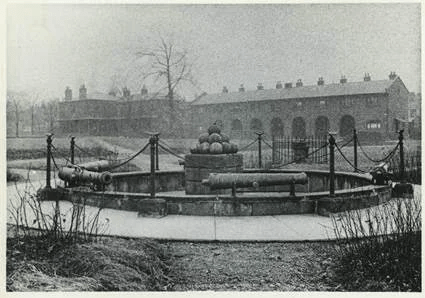
During the Civil War, Allegheny Arsenal, located in present-day Lawrenceville, was one of the Union’s most important ammunition manufacturing centers. The arsenal produced millions of small-arms projectiles, including .58-caliber Minie balls, as well as complete cartridges, artillery fuses, and other ordnance. These supplies were shipped by rail and river to Union armies across every major theater of the war – including the Gulf Coast.
While no specific maker’s mark survives on this bullet, its form, caliber, and ring pattern are fully consistent with Union-manufactured ammunition produced at Northern arsenals such as Allegheny. If this Minie ball did indeed originate in Pittsburgh, it traveled hundreds of miles south, passed through supply depots and army hands, and ended its military life outside Fort Blakeley.
Today, having returned north, it may well be back where its journey began.
A Small Object, A Vast Story
This Minie ball was likely never fired. Or perhaps it was, and missed. It may simply have fallen unnoticed into the soil as a soldier went about his duty.
What is certain is this:
- It represents the industrial power of the Union.
- It connects a Union soldier’s presence in Alabama to Northern manufacturing.
- It lay buried while the nation reunited, rebuilt, and transformed.
- And it now rests once more in Pittsburgh.
In holding this object, we hold a closed circle of history – from arsenal to battlefield, from earth to hand, from past to present.
This is the power of tangible history.
This is why we remember.
 So Nobly Advanced
Leave a comment