
The United States Constitution does not begin by defining citizenship. It begins by limiting power.
This ordering is neither accidental nor incidental. From the nation’s founding through the Civil War and Reconstruction, the survival of American Liberty has depended upon a single foundational principle: that rights attach first to persons, and only then to legal status.
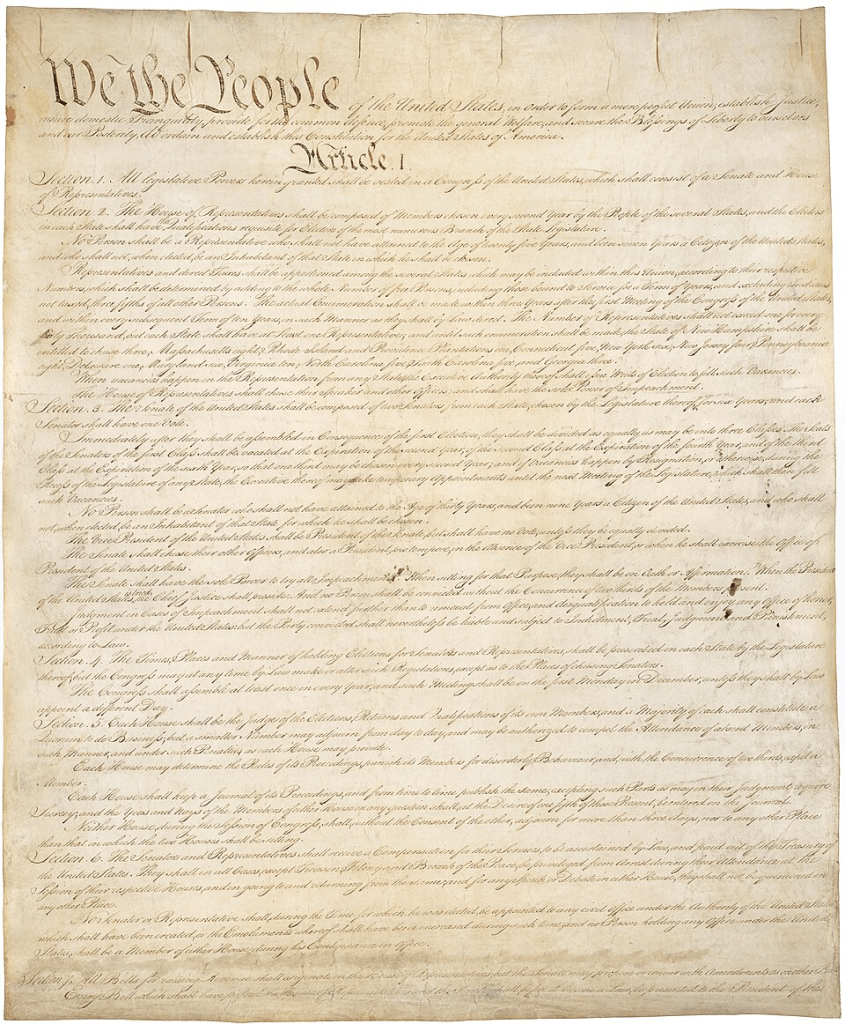
History demonstrates why this distinction matters. Once a government is permitted to decide who qualifies for rights, it acquires the power to deny the very process by which that qualification could be challenged. Liberty does not disappear through open declaration alone; it erodes when personhood becomes conditional.
The Civil War – and the constitutional amendments that followed – exist as a corrective to that danger.
Personhood in the Founding Constitutional Order
Although the original Constitution notoriously tolerated slavery, its legal structure reveals a critical insight shared by the Founding generation: government power must be restrained even when its subjects are unpopular, accused, or marginalized.
This concern appears repeatedly in constitutional language:
- The Fourth Amendment secures “the people” against unreasonable searches and seizures.
- The Fifth Amendment guarantees that no person shall be deprived of life, Liberty, or property without due process of law.
- The Suspension Clause protects persons from unlawful detention except under the narrowest circumstances.
These provisions do not speak exclusively in terms of citizenship. They speak in terms of personhood – a recognition that Liberty cannot depend solely upon political membership.
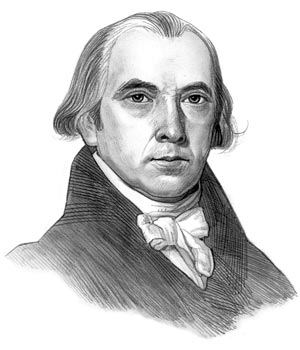
James Madison warned that unchecked power, not external threat, posed the greatest danger to republican government. Due process was therefore designed not as a reward for loyalty, but as a structural safeguard against error, abuse, and tyranny.
The Antebellum Failure: When Personhood Was Denied
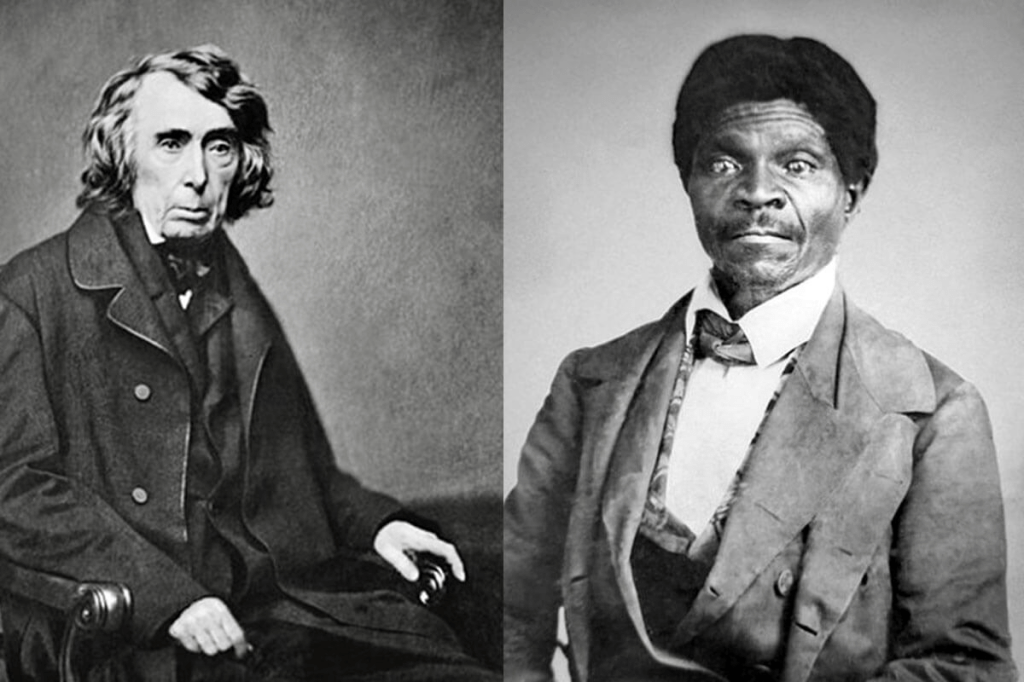
The gravest constitutional failure of the antebellum United States was not simply the existence of slavery, but the legal denial of personhood.
In Dred Scott v. Sandford (1857), the Supreme Court declared that Black Americans were not included within “the people” protected by the Constitution and possessed “no rights which the white man was bound to respect.” This decision did more than deny citizenship – it denied legal standing as persons.
Once that threshold was crossed, the consequences were absolute:
- No due process
- No protection against seizure or detention
- No right to testify
- No legal avenue to assert Liberty
The lesson was stark and unmistakable: when personhood is withdrawn, law ceases to protect and becomes an instrument of domination.
The Civil War: A Conflict Over Who Counted Under Law
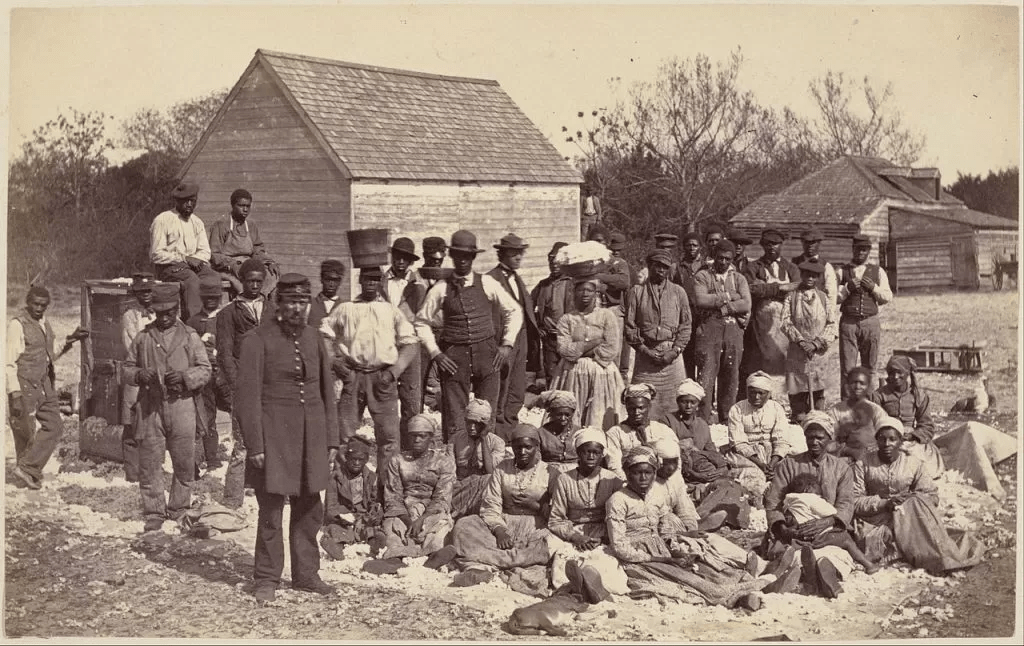
While often framed as a struggle over union or sovereignty, the Civil War was, at its core, a conflict over whether states could lawfully deny personhood to entire classes of people.
Southern states asserted the authority to define populations as legally subordinate. The federal government initially lacked both the constitutional mechanisms and political consensus to prevent this.
The war resolved the question of secession. It did not, by itself, resolve the question of rights.
That task fell to Reconstruction.
Reconstruction and the Constitutional Securing of Personhood
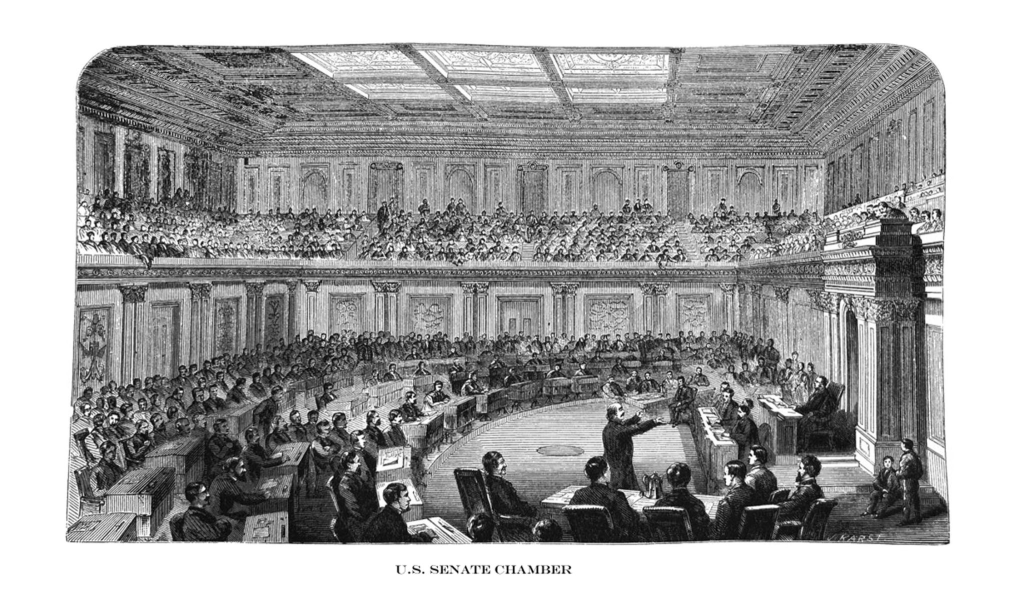
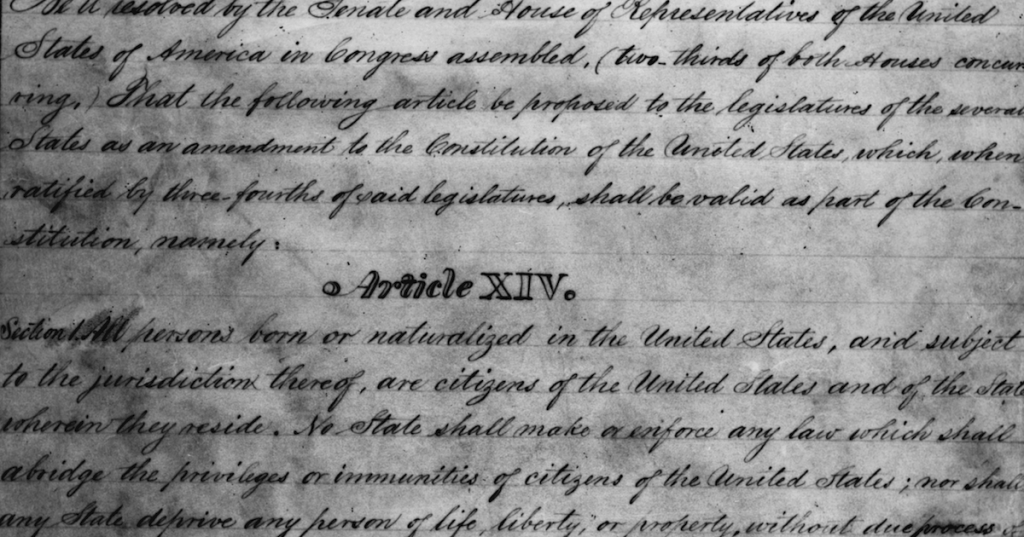
The Fourteenth Amendment stands as the Civil War’s most profound constitutional outcome. It did not merely expand rights; it reordered the logic of American Liberty.
Its Due Process and Equal Protection Clauses apply to “any person” within a state’s jurisdiction. This language was deliberate, informed by lived experience rather than abstraction.
Congress understood a critical danger: If rights were limited only to citizens, states could simply declare individuals not to be citizens – and thereby deny them the process necessary to contest that claim.
In such a system:
- Citizenship could be revoked by assertion
- Due process could be denied by classification
- Liberty could vanish without adjudication
By securing rights to persons first, the Fourteenth Amendment ensured that citizenship itself could be proven, defended, and protected through law.
This was not an act of generosity. It was a constitutional necessity.
Due Process for Persons as the Ultimate Safeguard
One of the enduring insights of Reconstruction is often overlooked:
Due process afforded to all persons is what ultimately protects citizens themselves.
If due process applied only to citizens, the government could evade constitutional restraint simply by misidentifying, misclassifying, or falsely denying citizenship. By extending procedural protections to persons, the Constitution preserved the integrity of legal identity itself.
The Supreme Court later affirmed this logic. In Yick Wo v. Hopkins (1886), the Court held that constitutional protections extend to all persons “without regard to any differences of race, of color, or of nationality.” The ruling did not expand rights – it preserved their coherence.
Personhood, not status, became the Constitution’s failsafe mechanism.
Personhood as the Constitution’s Structural Core
Personhood functions as the Constitution’s load-bearing principle.
It ensures that:
- Errors can be corrected
- Power must justify itself
- Identity can be proven
- Liberty cannot be erased by decree
This is why the Constitution demands warrants, hearings, counsel, and impartial adjudication. Not because government is inherently malicious – but because it is fallible.
The Civil War taught, at extraordinary cost, that fallibility combined with unchecked authority produces injustice on a national scale.
The Enduring Meaning of Personhood
Over time, constitutional law has refined the protections surrounding personhood:
- Incorporation applied the Bill of Rights to the states
- Equal protection limited arbitrary classification
- Due process jurisprudence clarified procedural fairness
Yet the central principle has remained unchanged: the Constitution protects persons so that power cannot decide who deserves protection.
This insight remains as relevant today as it was in 1868.
Conclusion: The Inheritance of Safeguards
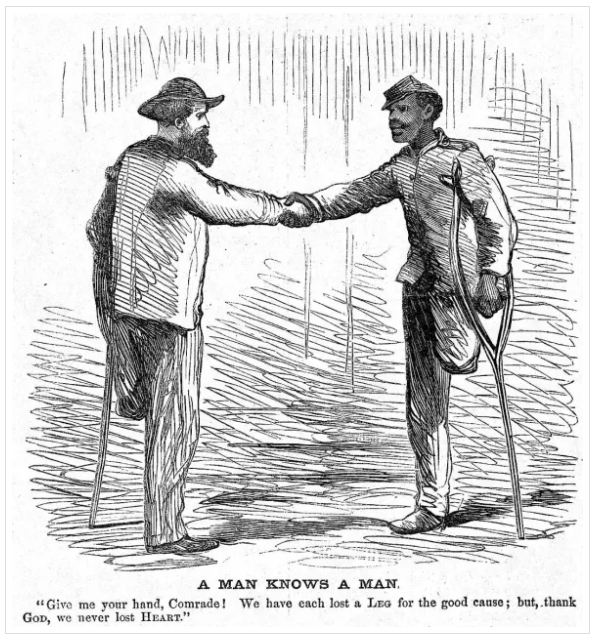
The generation that fought the Civil War did not leave behind slogans. They left behind safeguards.
They understood that Liberty survives only when government is denied the authority to decide – unilaterally – who is entitled to be heard, protected, or believed.
By securing personhood, they ensured that no American could be stripped of rights by mislabeling, silence, or administrative assertion alone.
That constitutional inheritance now rests with us.
To defend personhood is not to weaken citizenship. It is to preserve it.
This quiet, disciplined, constitutional work – the work of applying Liberty faithfully to all persons – is the unfinished task entrusted to every generation.
It is the work begun in crisis.
It is the work refined through law.
It is the cause – so nobly advanced.
Sources
Constitutional Text
- U.S. Constitution, Amendments IV, V, XIV
https://constitution.congress.gov
Reconstruction & Legislative History
- Congressional Globe, 39th Congress (1866–1868)
— Statements of Sen. Jacob Howard and Rep. Thaddeus Stevens
Supreme Court Precedent
- Dred Scott v. Sandford, 60 U.S. 393 (1857)
- Hurtado v. California, 110 U.S. 516 (1884)
- Yick Wo v. Hopkins, 118 U.S. 356 (1886)
- Wong Wing v. United States, 163 U.S. 228 (1896)
- Plyler v. Doe, 457 U.S. 202 (1982)
Historical & Constitutional Scholarship
- Eric Foner, Reconstruction: America’s Unfinished Revolution, 1863–1877
- James M. McPherson, Battle Cry of Freedom
- Akhil Reed Amar, America’s Constitution: A Biography
Founding Context
- James Madison, Federalist No. 51

 So Nobly Advanced
Leave a comment