
Part of Series “The Architecture of War”
War is often remembered in terms of movement. Advances, retreats, charges, and lines drawn across a map. Histories follow ground taken and lost, and the decisions that shaped those outcomes.
But there is another kind of movement that rarely receives the same attention. It begins when the firing stops, and it determines what remains of an army once the noise fades…
It is the movement of the wounded.
Who carries them?
Where do they go?
How quickly are they treated?
…and how many never return?
Before 1862, there were no consistent answers to these questions in American armies. Care existed, but it was uneven. Effort was present, but it was not organized.
The wounded did not pass through a system. They depended on circumstance.
Then came Jonathan Letterman.

A contemporary account would later say that his work did more than improve conditions. It “robbed war of many of its horrors.”
That is not a small claim. It suggests not just reform, but transformation. And what Letterman introduced was not a single improvement, but something more deliberate.
He introduced structure.
The Human Story
Jonathan Letterman was born in Canonsburg, Pennsylvania on December 11th, 1824. His early life followed a path that would not have seemed unusual for a young man entering medicine. He studied, trained, and entered the profession with discipline and intention, guided in part by his father’s example.
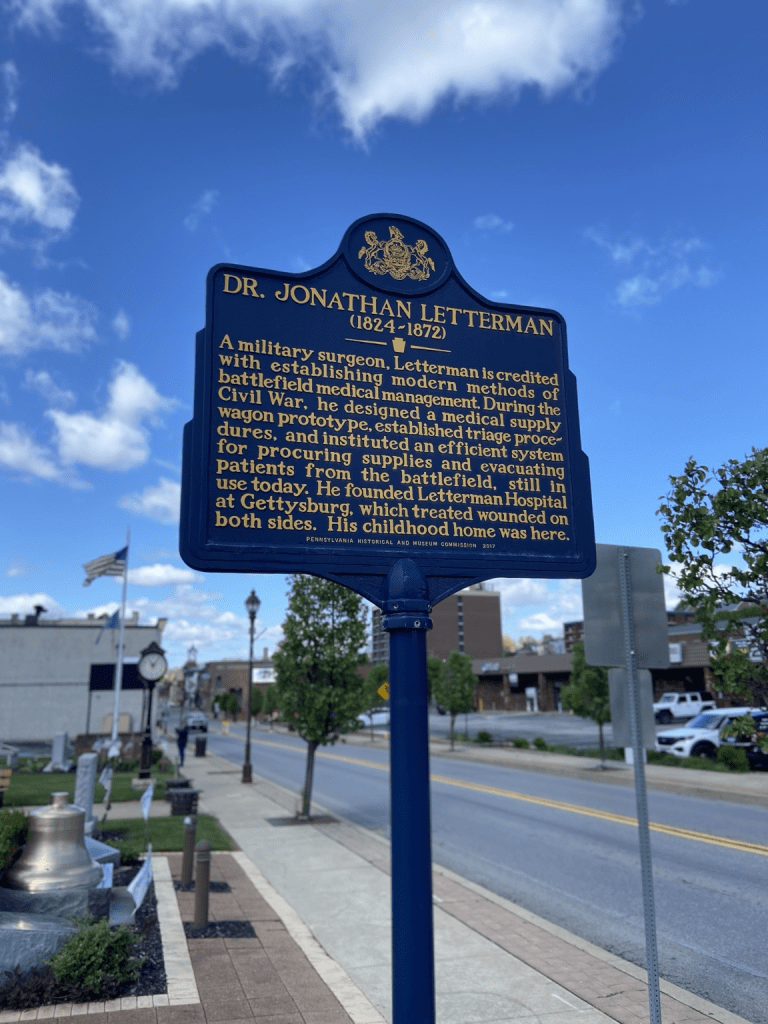
Nothing in that early trajectory suggested that he would one day reshape the experience of war.
That change came later, and it came gradually.
His early Army service took him far from established institutions and into environments where structure was thin or nonexistent. In Florida, New Mexico, and California, he encountered conditions where outcomes depended not on theory, but on what could be made to work with limited means.
In those places, he learned that care cannot depend on good intentions alone. Distance, delay, and disorganization have consequences that compound quickly. A man who might survive with prompt treatment may be lost entirely if that treatment comes too late.
Over time, he came to understand something that would shape everything he later did.
Without structure, even capable systems fail.
A System That Did Not Exist
By the time Letterman joined the Army of the Potomac in 1862, the war had already revealed a critical weakness.
The army could fight…
It could maneuver…
It could endure…
…But it could not reliably care for its wounded.
General George B. McClellan described the condition of the Medical Department in stark terms:
“Supplies had been almost exhausted or necessarily abandoned; hospital tents abandoned or destroyed, and the medical officers deficient in numbers or broken down by fatigue.”
This was not simply a temporary breakdown caused by one difficult campaign. It was evidence that no coherent system existed at all.
The memoir reinforces this point with unusual clarity:
“In the history of our country there were no precedents for the organization…
and no aid was to be had from the study of the medical service of foreign armies.”
Even abroad, the situation offered little guidance. The basic task of removing the wounded from the field remained, in the words of one observer, “the most defective part of the medical service.”
In practical terms, this meant that when a soldier fell, there was often no one specifically responsible for retrieving him. His survival depended on whether a comrade left the line to carry him to safety.
The memoir captures the cost of that arrangement:
“There are none… to carry them off except their own comrades…
the soldier quits the ranks often never to return.”
What might appear as an act of compassion carried its own consequence. Every man who left the line weakened the unit. Every delay increased the risk to the wounded.
This was not only a failure of care. It was a structural weakness within the army itself.
The Shape of a Solution
Letterman’s response was not to correct individual failures. He approached the problem differently. He treated it as a system that needed to be designed from the ground up.
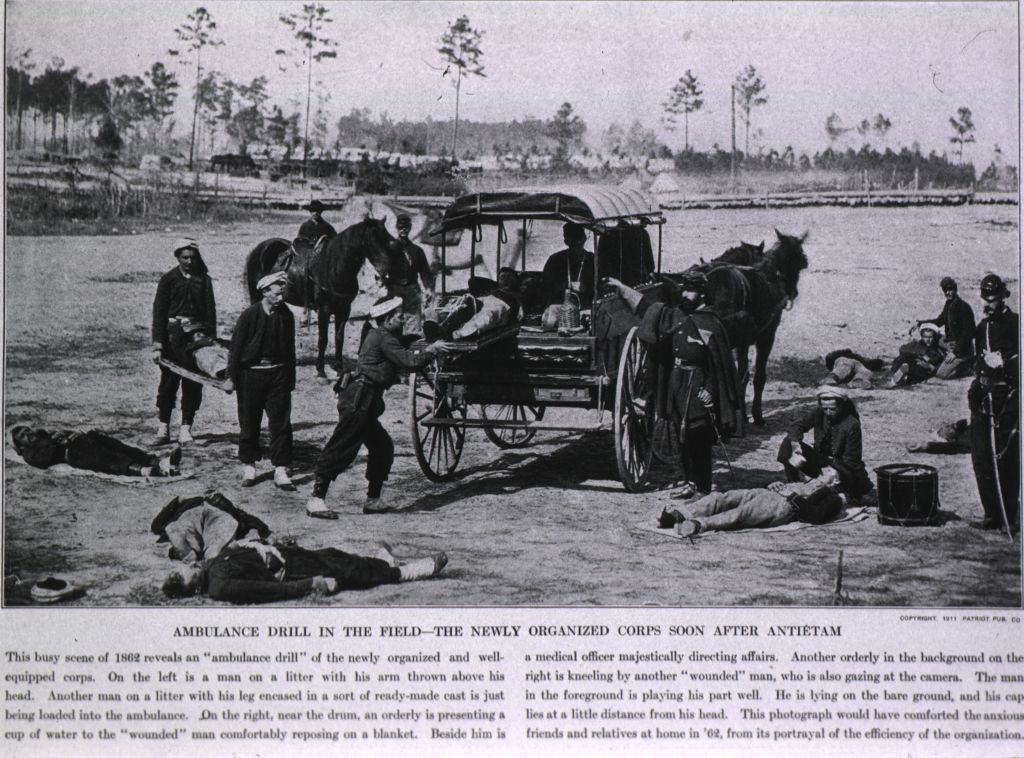
He began by addressing movement. The ambulance, which had previously been used inconsistently and often without clear purpose, was brought under centralized control. It would serve one function, and it would do so reliably.
He then turned to supply. Instead of allowing excess in some places and absence in others, he imposed order. Materials were reduced to what was necessary, standardized across units, and made mobile so that they could be delivered where needed without delay.
Finally, he focused on the point at which care truly began. Field hospitals would no longer be improvised after the fighting. They would be established in advance, with defined roles and expectations for those who operated them.

The intent behind this system was straightforward: A system was required “by which every person should, beforehand, know what his duties were.”
That clarity was the foundation of everything that followed.
Antietam – The First Real Test

The Battle of Antietam provided the first real test of this emerging system.
The battle unfolded over a single day and produced casualties on a scale that compressed time and overwhelmed space. Thousands of men fell within hours, creating a level of demand that no previous system had been able to handle effectively.
At the same time, Letterman’s reforms were not yet fully in place. The army had recently moved, and in that movement supplies and ambulances had been lost or left behind. Medical personnel were already fatigued from prior operations.
As the memoir notes, these deficiencies had to be addressed even as the army was advancing into Maryland.
Antietam therefore did not present ideal conditions. It presented strain.
What Antietam Revealed
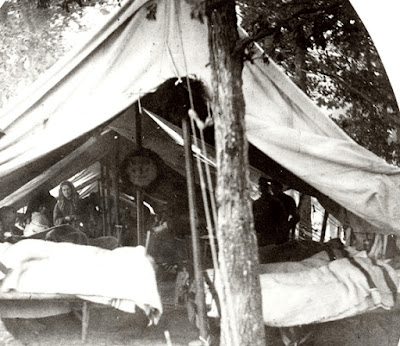
What emerged from Antietam was not a demonstration of perfection, but something more important. It showed that the system worked.
Even in its incomplete state, the memoir records that:
“The great value of the new system… was shown,
and warranted great hopes of its future excellence.”
This observation matters because of what came before it. Prior to Letterman’s reforms, the removal of the wounded depended heavily on informal effort. Comrades carried one another from the field, often leaving their positions to do so. That approach could not scale.
A battle producing thousands of casualties in a matter of hours required something more than individual acts of assistance. It required coordination. It required authority. It required a system that could function regardless of the immediate circumstances.
Antietam demonstrated that such a system was possible.
From Antietam to System
What Antietam revealed in part, later battles confirmed in full.
At Fredericksburg, the difference was already evident. The movement of the wounded took place with a level of coordination that had not previously been achieved.
“The wounded were brought without any delay or confusion… the celerity…
afforded the most pleasing contrast to what we had hitherto seen.”
At Chancellorsville, the speed of response further reinforced the effectiveness of the system.
“Two hours after the engagement…
the whole number of wounded were within the hospitals.”
Then came Battle of Gettysburg, where the system reached its fullest expression. After three days of sustained combat and thousands of casualties, the outcome spoke for itself:
“Not one wounded man… was left on the ground.”
This was not the result of improvisation.
It was the result of a system that had been tested, refined, and fully realized.
The Meaning
It is natural to see Letterman’s work as humanitarian, and it certainly was. Lives were saved. Suffering was reduced.
But the impact did not end there.
By organizing the care of the wounded, Letterman strengthened the army itself. Soldiers who might have been lost returned to service. Units retained their cohesion. Commanders could operate with greater confidence, knowing that the aftermath of battle would not dissolve into disorder.
The memoir expresses this clearly:
The system “added to the efficiency of the Army…
and saved that Army from much of the inevitable suffering of war.”
This is the central insight…
When care is organized, it does more than relieve suffering.
It preserves strength.
The Man Behind the System
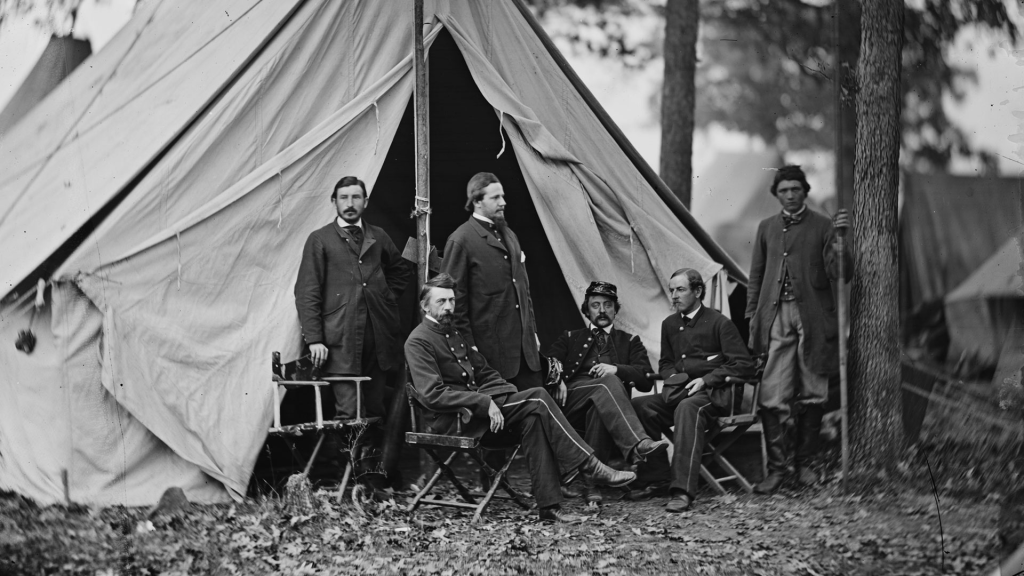
Letterman does not emerge from the historical record as a figure seeking recognition. He accepted his role, carried out his responsibilities, and focused on the work itself.
General George B. McClellan later reflected on his character and purpose:
“He had but one thing in view—the best possible organization… that he might diminish the
inevitable sufferings of the soldiers and increase the efficiency of the Army.”
Those who worked alongside him understood his contribution in more immediate terms:
“You can’t imagine how deeply we all are indebted to Letterman
for telling us what to do – and showing us how to do it.”
That statement captures something essential. He did not simply design a system.
He ensured that it could be understood and executed by others.
Legacy
Letterman’s system did not remain confined to the Army of the Potomac. It spread, was adopted more broadly, and eventually became embedded in law.
Its endurance was not accidental.
It worked because it addressed the realities of war as they existed, not as they might be imagined. It was grounded in practical experience, shaped by necessity, and refined through repeated use.
The memoir reflects on this with confidence:
Its “simplicity and tried adaptation to all emergencies of warfare
must render its adoption inevitable.”
What makes that statement striking is how fully it has proven true.
The principles Letterman established did not disappear with the Civil War. They became the foundation for how modern medicine responds to crisis. The idea that care must be organized in advance, that patients must be moved quickly through a coordinated system, and that responsibility must be clearly defined at every stage did not remain confined to battlefields.
They are now visible in every emergency response system.
When an ambulance arrives, it does so as part of a coordinated network, not as an isolated effort. When a patient enters an emergency department, they are triaged, prioritized, and directed through a structured process of care. In large-scale disasters, medical teams establish forward treatment areas, stabilize the injured, and move them systematically to higher levels of care.
These are not modern inventions. They are extensions.
What Letterman introduced was the idea that survival depends not only on skill, but on organization. That insight remains at the center of emergency medicine, trauma systems, and disaster response today.
The scale has changed. The technology has advanced. But the structure is familiar.
Care is no longer left to chance. It is planned, coordinated, and executed with precision.
That continuity is his Legacy.
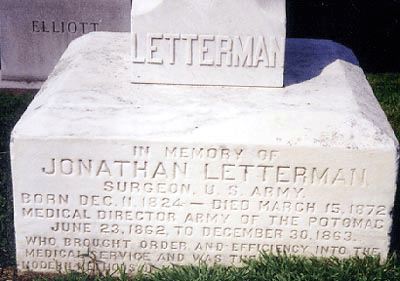
Order in the Aftermath
Jonathan Letterman did not change the violence of war…
Men still fell…
Battles remained brutal…
Loss could not be eliminated...
…But he changed what followed.
He ensured that the wounded were not left to chance and created a system in which care was expected, not uncertain. He brought order to a space that had long been defined by confusion. In doing so, he demonstrated something that extends beyond the Civil War.
Even in war, structure can reflect humanity.
Even in destruction, systems can preserve life.
He did not remove suffering. But he refused to let it remain disorganized.
And in that refusal, he carried forward something essential.
That even here, in the aftermath of battle, the work of humanity may still continue – So Nobly Advanced.
Addendum: The Quiet Transformation of Survival
Data tells a story that the battlefield alone cannot.
Before the American Civil War, death in war was governed as much by delay, disorder, and disease as by the violence of combat itself. Armies could fight and win engagements, yet lose men in staggering numbers simply because systems of care did not exist. The wounded lingered. The sick accumulated. Mortality followed.
What emerges after the war is something fundamentally different.
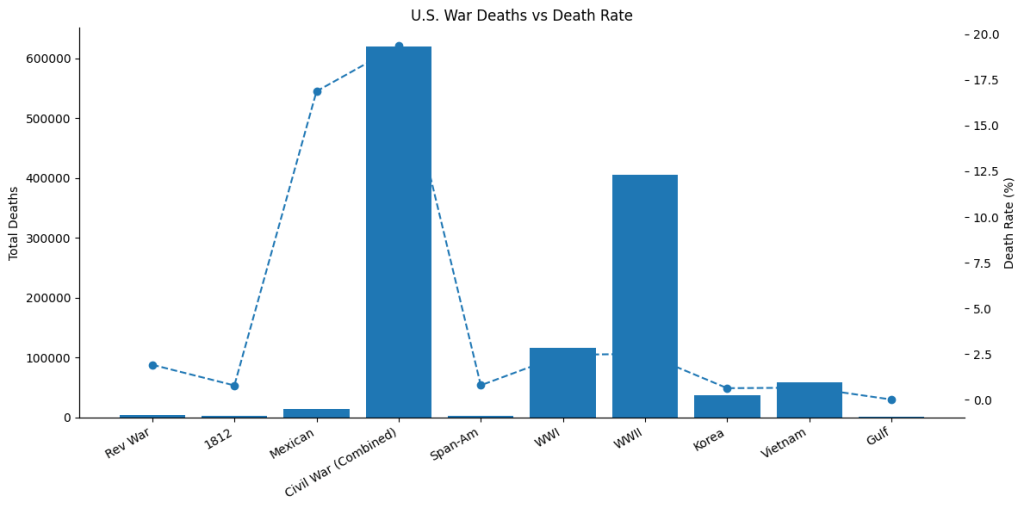
Across subsequent conflicts, the percentage of those serving who died begins to fall – and it does so decisively. This decline is not explained by a reduction in the scale or intensity of war. If anything, the wars that followed became more industrial, more mechanized, and more destructive. Yet survival improved.
That shift reflects a structural change.
The work of Jonathan Letterman did not eliminate death, but it altered its probability. By imposing order – triage, organized evacuation, tiered hospitals – he compressed the time between wound and care. And in war, time is survival. His system removed the wounded from the battlefield with unprecedented speed and moved them into environments where survival rates could exceed 90 percent once proper care was reached.
This is the inflection point.
The Civil War marks the last moment when death rates reflect the absence of system. What follows reflects its presence. The downward arc in mortality is not accidental – it is engineered.
Survival, increasingly, was no longer left to chance. It was organized.
Sources
- Bennett A. Clements, Memoir of Jonathan Letterman, M.D. (Journal of the Military Service Institution, Vol. IV, No. 15, 1883)
- Jonathan Letterman, Medical Recollections of the Army of the Potomac (New York: D. Appleton & Co., 1866)
- Congressional Research Service, American War and Military Operations Casualties: Lists and Statistics, RL32492 (2020).
- Find a Grave – Jonathan Letterman Memorial

 So Nobly Advanced
Leave a comment