
There are few questions in American history more persistently debated, more politically burdened, or more vulnerable to inherited memory than the cause of the Civil War. For generations, Americans have argued over whether the Confederacy was formed primarily in defense of “states’ rights” or in defense of slavery. The argument often becomes circular because it begins not with the documents of secession, but with later explanations of secession: postwar memoirs, Lost Cause apologetics, political slogans, regional inheritance, or modern discomfort with the plain language of the past.
But the seceding states did not leave historians guessing. They produced ordinances, declarations, convention proceedings, constitutional revisions, and finally a new national constitution. Some of these documents were terse and legalistic. Others were expansive and explanatory. Taken together, they form one of the clearest documentary records of political rupture in American history.
The proper question, then, is not what later generations wished the Confederacy had been about. It is what the seceding governments themselves said they were doing.
And when those governments spoke most fully, they spoke again and again of slavery.
To be perfectly clear, this does not mean that every Confederate soldier entered the ranks for the same reason, nor does it mean that every white Southerner personally owned slaves or understood the war through the same lens. It also does not deny that genuine constitutional disputes over federal power, state sovereignty, territorial governance, and political representation existed within the sectional crisis. But when the seceding governments themselves explained why they were leaving the Union, those constitutional disputes were repeatedly framed through the question of slavery – its protection, its expansion, its political security, and its long-term survival within the American constitutional order.
The Confederacy’s own documentary record shows that slavery was not merely a peripheral issue within the constitutional crisis. It was the central institution around which the constitutional crisis itself revolved.
Even if one chooses to frame the conflict principally as a matter of “states’ rights,” the documentary record still exposes the underlying reality; that the asserted right most consistently defended by the seceding states was the right to preserve, expand, and constitutionally protect slavery. Thus, at the center of the states’ rights argument itself stands the claimed right of slaveholding states to own human beings as property.
To deny this documentary reality is not merely to dispute interpretation, but to obscure the plain language of the seceding states themselves. The effort to separate the Confederacy from slavery despite its own declarations reflects not the historical record, but the enduring influence of Lost Cause revisionism.
This article will not retreat from the evidence, soften the language of the documents, or substitute inherited mythology for what the Confederacy explicitly said in its own words. There is no room nor appetite for that here.
The Evidence Begins Where the Secession Movement Began
South Carolina was the first state to leave the Union. Its Ordinance of Secession, adopted December 20, 1860, was brief, legalistic, and did not explicitly mention slavery. If one read only the ordinance, one might conclude that South Carolina’s formal act of secession was framed in the language of sovereignty rather than social order. But South Carolina did not stop with the ordinance. Four days later, the convention adopted a separate explanatory document: the Declaration of the Immediate Causes Which Induce and Justify the Secession of South Carolina from the Federal Union. In that document, the meaning of secession became unmistakable. South Carolina identified the central constitutional breach as Northern hostility to slavery and the failure of free states to honor constitutional obligations protecting slave property.
South Carolina’s declaration did not merely mention slavery in passing. It built its case around the claim that the constitutional compact had been broken because non-slaveholding states had become hostile to the institution and had refused to enforce the recovery of fugitive slaves. The document declared that “an increasing hostility on the part of the non-slaveholding States to the institution of slavery” had led those states to disregard their constitutional obligations. It complained that they had enacted laws rendering federal fugitive-slave protections ineffective and had denied “the rights of property” recognized in slaveholding states.
The language is worth sitting with because it reveals the actual structure of the grievance. South Carolina was not chiefly arguing that states should be free to do whatever they wished. It was arguing that Northern states had exercised their own power in ways that weakened slavery. The issue was not state power in the abstract. The issue was whether state and federal power would be used to protect slave property.
The declaration made that even clearer when it turned to the election of Abraham Lincoln. South Carolina argued that a sectional party had captured the federal government and that Lincoln’s election placed the slaveholding states in danger. The declaration complained that “a geographical line” had been drawn across the Union and that the Northern states had elected a president “whose opinions and purposes are hostile to slavery.” It further cited Lincoln’s belief that the government could not endure permanently “half slave, half free,” and that public opinion must come to rest in the belief that slavery was “in the course of ultimate extinction.”
That phrase is crucial. South Carolina was not claiming that Lincoln had already abolished slavery. He had not. The fear was not immediate emancipation by executive decree. The fear was political containment, moral delegitimization, territorial restriction, and eventual extinction. South Carolina seceded because it believed slavery’s future within the Union had become insecure.
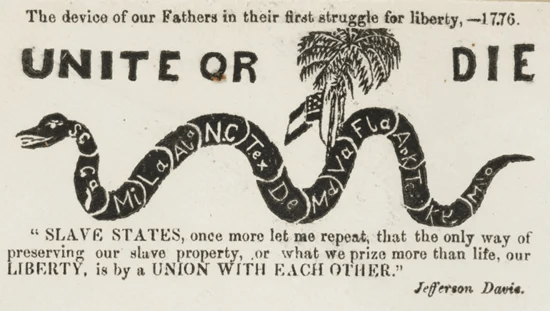
Mississippi Said the Quiet Part Loudly
If South Carolina’s declaration was clear, Mississippi’s was even more direct. Its Declaration of the Immediate Causes which Induce and Justify the Secession of the State of Mississippi from the Federal Union remains one of the most explicit statements ever produced by a seceding government. It began not with euphemism, but with confession:
“Our position is thoroughly identified with the institution of slavery
– the greatest material interest of the world.”
Mississippi then explained why slavery was, in its view, indispensable. Its labor, the declaration argued, supplied the products that formed “by far the largest and most important portions of commerce of the earth.” Mississippi insisted that those products were “peculiar to the climate verging on the tropical regions, and by an imperious law of nature, none but the black race can bear exposure to the tropical sun.” The declaration then condensed its economic, racial, and civilizational argument into a single claim: “A blow at slavery is a blow at commerce and civilization.”
This is not subtle. Mississippi did not describe slavery as incidental to secession. It described slavery as the material foundation of civilization itself. “There was no choice left us but submission to the mandates of abolition, or a dissolution of the Union….”
The declaration went on to list the grievances that made secession necessary. It accused the North of denying property rights in slaves, refusing protection for that property in territories and other federal jurisdictions, refusing the admission of new slave states, seeking to confine slavery within its existing limits, and advocating racial equality. Finally, Mississippi framed the crisis as a binary choice:
“There was no choice left us but submission to the mandates of abolition,
or a dissolution of the Union….”
That formulation matters because it reveals the long-term logic of secession. Mississippi was not merely defending slavery where it already existed. It was defending the right of slavery to expand, to receive federal protection, and to remain politically secure. The state’s leaders understood that containment was not neutral. If slavery could be barred from the territories, if new free states entered the Union while slave states did not, and if national politics turned permanently against slavery’s legitimacy, then the institution’s power would decline even before abolition arrived.
Mississippi’s declaration therefore makes the strongest possible case against the idea that slavery was a peripheral issue. For Mississippi, slavery was the issue through which commerce, civilization, property, racial hierarchy, and constitutional order were all understood.
Georgia and the Future of Slavery
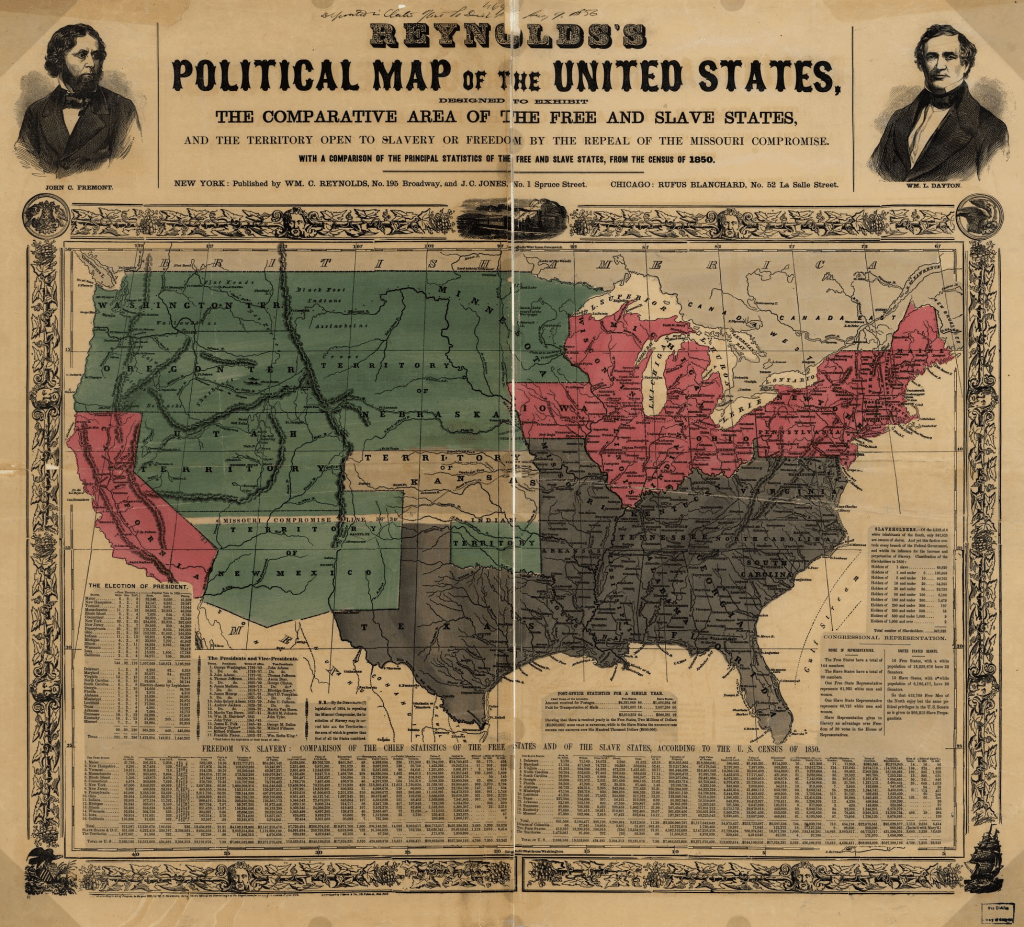
Georgia’s declaration reveals another essential feature of the secession crisis: the conflict was not only about slavery’s present security, but about slavery’s future expansion.
The Georgia declaration opened by stating that the people of Georgia, having dissolved their connection with the United States, wished to present to the world the causes that had led to separation. It then identified the central subject plainly:
“For the last ten years we have had numerous and serious causes of complaint against our non-slave-holding confederate States with reference to the subject of African slavery. They have endeavored to weaken our security, to disturb our domestic peace and tranquility, and persistently refused to comply with their express constitutional obligations to us in reference to that property, and by the use of their power in the Federal Government have striven to deprive us of an equal enjoyment of the common Territories of the Republic.”
Georgia’s case was expansive. It complained that Northern states had obstructed fugitive-slave enforcement, encouraged anti-slavery agitation, and increasingly rejected constitutional protections for slave property. But Georgia placed particular emphasis on the territorial question, which Southern leaders viewed as essential to slavery’s long-term survival and political security. The declaration identified “the prohibition of slavery in the Territories” as a defining principle of the newly formed Republican Party of the 1850s – the political movement then associated with Abraham Lincoln and opposition to the expansion of slavery – and condemned what it viewed as a growing Northern ideology hostile not only to slavery itself, but to the constitutional legitimacy of slave property and the racial order upon which the slaveholding South believed its society rested.
This territorial issue is often misunderstood. To modern readers, it may seem secondary whether slavery could expand into western lands. But to Southern political leaders in 1860, the territories were the future of political power. If slavery could not expand, slaveholding states would eventually be surrounded and outnumbered. The balance of power in the Senate would shift. The House already reflected Northern demographic advantage. Future free states would enter the Union. The federal government would eventually be controlled by voters and parties hostile to slavery.
In that sense, the debate over the territories was a debate over whether slavery would remain a growing national institution or become a contained regional one. Georgia understood this clearly. Restriction was not merely an insult. It was, in the minds of slaveholding politicians, the first stage of extinction.
Georgia therefore helps reveal the anticipatory nature of secession. The crisis of 1860 was not only a reaction to what had already happened. It was a rebellion against what slaveholding leaders believed was about to happen: the permanent political containment of slavery.
Texas and the Racial Constitution of Secession
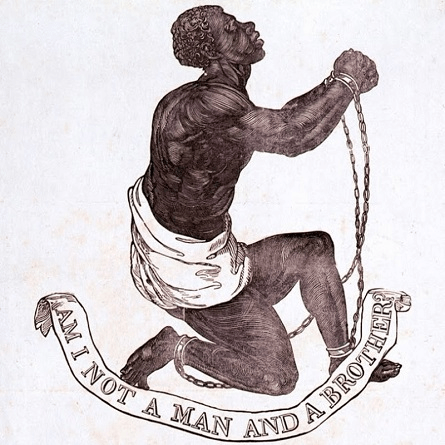
Texas’s declaration is among the most explicit in connecting slavery to racial hierarchy. It did not simply defend slave property. It defended a social order built upon white supremacy.
Texas declared that it had entered the Union as a slaveholding commonwealth and that its people were “holding, maintaining and protecting the institution known as negro slavery.” The declaration described slavery as “the servitude of the African race…which her people intended should exist in all future time” and claimed that this condition was mutually beneficial to both enslaved and free.
But Texas went even further than defending slavery as a constitutional or economic institution. The declaration openly rejected the very idea of racial equality and portrayed Northern opposition to slavery as an assault on what Texas believed to be the natural, social, and divinely ordained order of society. In the eyes of the convention, the conflict was not merely political – it was civilizational. The document condemned what it described as a growing Northern ideology hostile to slavery, white supremacy, and the belief that government itself had been established primarily for the benefit of white men and their descendants. The declaration stated:
“In all the non-slave-holding States, in violation of that good faith and comity which should exist between entirely distinct nations, the people have formed themselves into a great sectional party, now strong enough in numbers to control the affairs of each of those States, based upon an unnatural feeling of hostility to these Southern States and their beneficent and patriarchal system of African slavery, proclaiming the debasing doctrine of equality of all men, irrespective of race or color– a doctrine at war with nature, in opposition to the experience of mankind, and in violation of the plainest revelations of Divine Law.”
This is historically decisive because it demonstrates that slavery, in Confederate political thought, was not merely a labor arrangement. It was part of a larger racial ideology. Texas saw abolitionism and racial equality as linked threats. To defend slavery was to defend white political rule. To oppose slavery was, in the eyes of Texas secessionists, to attack the racial order itself.
The declaration also accused Northern actors of stirring up servile insurrection, distributing incendiary materials, and encouraging violence among enslaved people. These claims reflected one of the deepest fears of slaveholding societies: that the enslaved population, if encouraged by outside forces, might rise against slavery from within.
Texas therefore shows the full ideological range of secessionist thought. Secession defended property, but it also defended racial power. It defended constitutional guarantees, but it also defended a theory of human inequality. In Texas’s own words, the institution at stake was “negro slavery,” and the social order it protected was white supremacy.
Alabama and the Political Identity of the Slaveholding South
Alabama did not issue a long declaration of causes equivalent to those of South Carolina, Mississippi, Georgia, or Texas. That absence matters, but it should not be mistaken for silence. Alabama’s ordinance itself invited the “slaveholding States of the South” to meet in convention and form a new government. That phrase is significant because it defined the emerging political community not simply as Southern, agricultural, or sovereign, but explicitly as “slaveholding“.
The broader documentary record surrounding Alabama’s secession reinforces this point. In January 1861, Governor Andrew B. Moore described the election of Abraham Lincoln as a crisis produced by a political movement “avowedly hostile to the domestic institutions and peace and security of the people of the Southern States.” Moore further emphasized that “The people of the Southern slaveholding States are bound together by the same necessity and determination to preserve their constitutional rights.” These statements are important because they reveal how Alabama’s executive leadership understood the emerging Confederacy: as a coalition of slaveholding states united around the protection of institutions they believed were under existential threat.
Even more explicit was Stephen F. Hale, Alabama’s commissioner to Kentucky. In his letter urging Kentucky to join the seceding South, Hale declared that “The hostility of the North to slavery is the elemental and central idea of the Republican party.” Hale argued that Republican political success threatened the survival of slavery itself, warning “If the Southern States submit to the inauguration of Abraham Lincoln… slavery is abolished.”
Perhaps most revealingly, Hale framed the South politically not merely as a regional bloc, but as a civilization organized around slaveholding institutions and common interests. In Alabama’s own political language, the emerging Confederacy was increasingly understood not simply as a collection of sovereign Southern states, but as a united slaveholding republic organized around the preservation of slavery and the constitutional order built upon it.
The Upper South: Different Timing, Same Constitutional Order
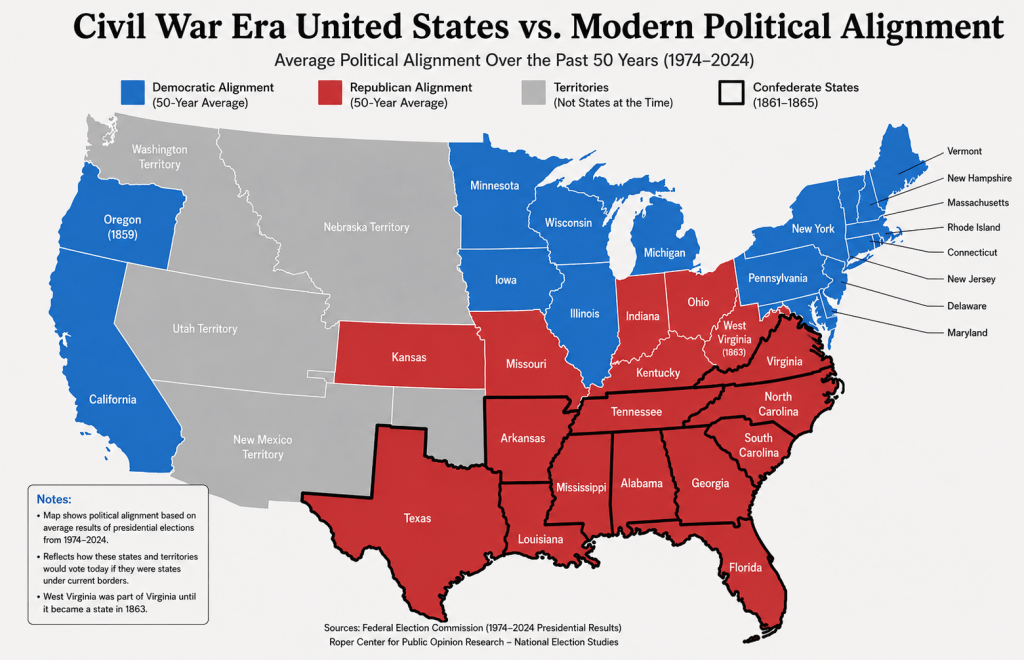
The Upper South requires careful treatment because its secession unfolded differently from the Deep South. Virginia, Arkansas, Tennessee, and North Carolina did not immediately secede after Lincoln’s election. Their movement toward disunion accelerated after the firing on Fort Sumter and Lincoln’s call for troops.
- South Carolina secedes — December 20, 1860
- Mississippi secedes — January 9, 1861
- Florida secedes — January 10, 1861
- Alabama secedes — January 11, 1861
- Georgia secedes — January 19, 1861
- Louisiana secedes — January 26, 1861
- Texas secedes — February 1, 1861 (ratified February 23, 1861)
- Confederate attack on Battle of Fort Sumter begins — April 12, 1861
- Abraham Lincoln calls for 75,000 volunteers — April 15, 1861
- Virginia secedes — April 17, 1861 (ratified May 23, 1861)
- Arkansas secedes — May 6, 1861
- Tennessee secedes — May 7, 1861 (approved June 8, 1861)
- North Carolina secedes — May 20, 1861
That timing shaped the language of their ordinances and the immediate political framing of their departure, but later timing does not mean slavery was irrelevant. Virginia’s ordinance explicitly declared that the federal government had perverted its powers not only to the injury of Virginia, but to “the oppression of the Southern slave-holding States.”
This phrase is revealing. Virginia did not describe the injured party merely as “Southern States,” “sovereign States,” or “agricultural States.” It described them as “slave-holding States.” The political category at the center of the grievance remained slavery.
The Upper South’s relative restraint in some formal ordinances should therefore be understood in context. These states seceded amid a rapidly developing military crisis. Their immediate justification often emphasized coercion, federal troops, and resistance to invasion. But they joined a Confederacy whose constitution already explicitly protected slavery and whose founding states had repeatedly explained secession in slavery-centered terms.
The distinction is important. The Upper South’s documents may not always speak with Mississippi’s bluntness, but the political order they joined had already defined itself.
Alexander Stephens and the Confederacy’s “Cornerstone”
No examination of Confederate ideology can be complete without Alexander H. Stephens, the Vice President of the Confederate States. Stephens was not an obscure radical speaking from the margins. He was the second-ranking officer of the new government.
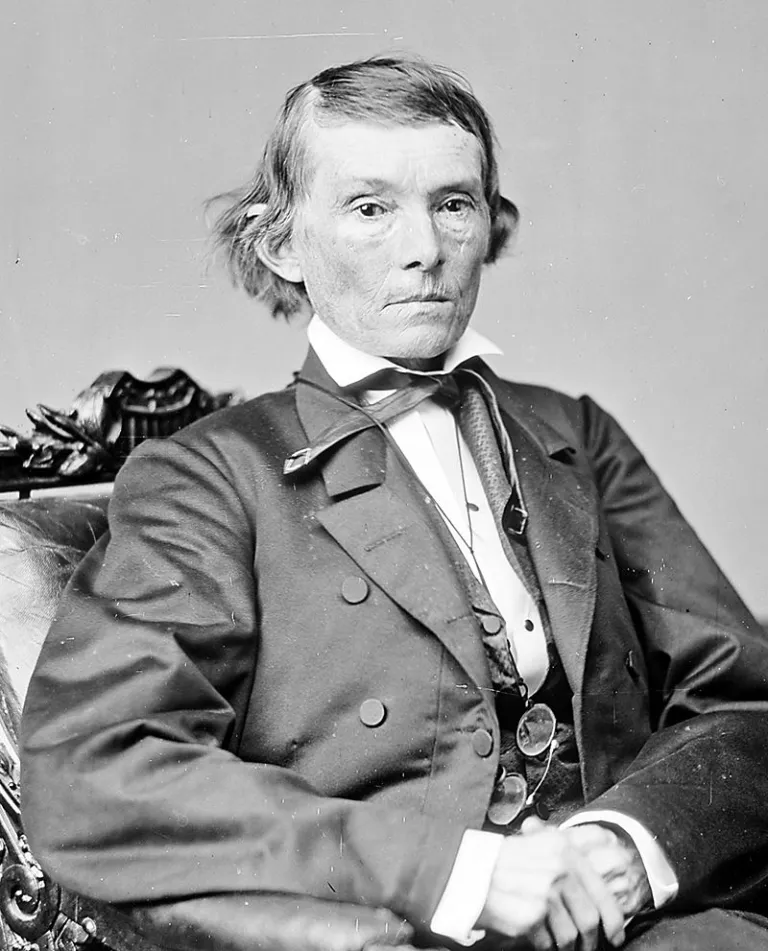
On March 21, 1861, in Savannah, Georgia, Stephens delivered what became known as the “Cornerstone Speech,” one of the most revealing ideological statements produced by Confederate leadership during the secession crisis.
In the speech, Stephens directly contrasted the new Confederate government with the constitutional principles of the Founding generation. He argued that many of the framers of the United States had believed slavery to be morally and politically inconsistent with the natural order and had expected the institution to eventually disappear. According to Stephens, that assumption had been fundamentally mistaken. The Confederacy, he declared, had been founded upon the opposite principle: that racial inequality and slavery were not temporary evils, but natural and enduring truths upon which the new government itself should rest.
His words are among the most important in the entire documentary record:
“Our new government is founded upon exactly the opposite idea; its foundations are laid, its corner-stone rests, upon the great truth that the negro is not equal to the white man; that slavery subordination to the superior race is his natural and normal condition.“
Stephens continued by describing the Confederacy as the first government in history founded upon this supposed “physical, philosophical, and moral truth,” arguing that the United States had been built upon a fundamentally flawed assumption regarding racial equality. In Stephens’ view, the central error of the North was the belief that Black people were equal to white people and therefore entitled to the same political and civil rights. He portrayed anti-slavery belief not merely as political disagreement, but as a form of ideological fanaticism rooted in what he considered a false premise. Stephens declared:
“Those at the North, who still cling to these errors, with a zeal above knowledge, we justly denominate fanatics. All fanaticism springs from an aberration of the mind from a defect in reasoning. It is a species of insanity. One of the most striking characteristics of insanity, in many instances, is forming correct conclusions from fancied or erroneous premises; so with the anti-slavery fanatics. Their conclusions are right if their premises were. They assume that the negro is equal, and hence conclude that he is entitled to equal privileges and rights with the white man. If their premises were correct, their conclusions would be logical and just but their premise being wrong, their whole argument fails.“
The significance of the speech is not that it alone explains the Confederacy. No single speech can bear that full weight. Its importance is that it aligns so closely with the formal documents of secession and the Confederate Constitution. Stephens gave ideological voice to what the documents had already demonstrated: the Confederacy understood itself as a political order built on slavery and racial inequality.
Later defenders of the Confederacy often attempted to soften this fact, but Stephens’ speech resists such softening. He did not present slavery as an inherited burden, a regrettable compromise, or an incidental economic arrangement. He presented Black subordination as the cornerstone of the new government.
The Confederate Constitution: Slavery Made Explicit
If the declarations explained why states left the Union, the Confederate Constitution showed what kind of government they intended to build.
The comparison with the United States Constitution is revealing. The original U.S. Constitution protected slavery indirectly, but it avoided the words “slave” and “slavery.” It used euphemisms such as “other persons” and “persons held to service or labor.” (Ref Article IV, Section 2) That avoidance reflected the compromises, tensions, and moral evasions of the founding generation.
The Confederate Constitution did something different. It named slavery directly.
It prohibited laws “denying or impairing the right of property in negro slaves.” (Ref Article I, Section 9.4) It protected the movement of enslavers with enslaved people through Confederate states. Most importantly, it required that in any Confederate territory, “the institution of negro slavery” would be “recognized and protected” by Congress and the territorial government. (Ref Article IV, Section 3.3)
This is one of the most important pieces of evidence in the entire debate. The Confederacy did not merely preserve slavery where it already existed. It gave slavery explicit national constitutional protection and required its recognition and protection within future territories.
That matters because the territorial question had been one of the central disputes of the 1850s. Could Congress prohibit slavery in the territories? Could territorial settlers exclude slavery before statehood? Could slaveholders carry enslaved people into federal territory as protected property? These questions had convulsed national politics from the Wilmot Proviso through the Compromise of 1850, Kansas-Nebraska, Dred Scott, and the election of 1860.
The Confederate Constitution answered those questions decisively. Slavery would be protected. Territorial governments could not exclude it. Congress would recognize it. Slaveholders could carry enslaved people into new territories.
This constitutional design exposes the limits of the “states’ rights” explanation. The Confederacy did not create a system in which local majorities could decide slavery for themselves. It created a system in which slavery received national constitutional protection.
When “States’ Rights” Conflicted with Slavery
To be clear, the phrase “states’ rights” is not meaningless. Southern politicians did invoke state sovereignty. They argued that the Union was a compact among sovereign states. They claimed a right of secession. They objected to what they viewed as sectional domination by the federal government.
But the documents reveal that “states’ rights” was not applied neutrally. Again and again, Southern leaders objected when Northern states used their own authority, in their own states, against slavery. South Carolina condemned Northern states for passing laws that interfered with fugitive slave recovery. Mississippi condemned the denial of property rights in slaves. Georgia complained about Northern resistance to constitutional guarantees protecting slavery. Texas accused Northern states and abolitionists of undermining slavery, encouraging insurrection, and promoting racial equality.
This is the heart of the matter. The secessionists were not defending a universal principle that every state could regulate slavery as it pleased. They were demanding that Northern states, federal courts, Congress, and territorial governments recognize and protect slavery – even in states that were non-slave!
In that sense, the Confederacy’s constitutional argument was not simply “leave us alone.” It was also “protect our slave property.”
The Confederate Constitution proved this. It made slave property a national constitutional right. It required territorial protection. It prevented Confederate lawmakers from impairing property in enslaved people. It preserved slavery not as a merely local institution, but as a protected national one.
Thus, when state sovereignty and slavery came into conflict, Confederate constitutionalism favored slavery.
What About Tariffs, Federal Power, and Sovereignty?
For this analysis to remain serious, it cannot pretend that slavery was the only word spoken in the sectional crisis. Tariffs, economic development, internal improvements, party competition, federal power, western expansion, and constitutional theory all mattered. The United States had argued over these questions for decades.
But the central question is not whether other issues existed. They did.
The central question is how those issues functioned in the crisis of 1860 and 1861.
When the seceding states explained their departure most fully, they repeatedly returned to slavery. When they complained of Northern states violating constitutional obligations, the obligations most often involved fugitive slaves and slave property. When they complained about the territories, the issue was whether slavery could expand. When they described Republican victory as dangerous, the danger was hostility to slavery. When the Confederacy wrote its constitution, it explicitly protected slavery.
This does not erase constitutional conflict. It clarifies it.
Slavery was the central subject around which the constitutional conflict revolved.
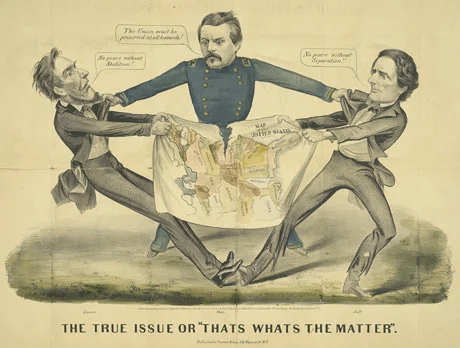
The Difference Between Secession, War, Soldiers, and Memory
It is also necessary to distinguish among several related but separate historical questions.
The cause of secession is not identical to the motivation of every Confederate soldier. The cause of the war is not identical to how later generations remembered the war. The ideology of Confederate political leaders is not identical to the private motives of every Southern family.
This article simply addresses one specific question: what did the seceding governments say they were doing when they left the Union and formed the Confederacy?
On that question, the documentary record is overwhelming. The states that explained themselves most fully centered slavery, the Confederate Constitution protected slavery and the Vice President of the Confederacy described racial inequality and slavery as the cornerstone of the new government.
One may study soldier motivation separately. One may study postwar memory separately. One may study the evolution of Union war aims separately. But those questions do not change what the secession documents say.
The Confederacy in Its Own Words
When read in isolation, a single document can be minimized. South Carolina can be dismissed as unusually radical. Mississippi can be treated as unusually blunt. Texas can be described as unusually extreme. Stephens can be explained away as one speaker in one moment.
But when the documents are read together, their force becomes cumulative.
- South Carolina said the crisis came from hostility to “the institution of slavery.”
- Mississippi said its position was “thoroughly identified” with slavery.
- Georgia centered its complaint on “African slavery” and the territories.
- Texas defended “negro slavery” and rejected racial equality.
- Alabama called upon the “slaveholding States.”
- Virginia spoke of the “Southern slave-holding States.”
- Stephens declared slavery and racial subordination the “cornerstone” of the new government.
- The Confederate Constitution protected “property in negro slaves” and required territorial recognition of “the institution of negro slavery.”
The pattern is too consistent to dismiss. The Confederacy did not hide its founding commitments.
The Constitutional Crisis Was Slavery
The secession documents matter because they allow the Confederacy to testify against later mythology.
They show that slavery was not merely one grievance among many. It was the institution through which Southern leaders understood property, race, constitutional obligation, territorial expansion, federal power, and political survival.
The “states’ rights” argument, when placed back into its documentary context, becomes far less abstract than later defenders often suggest. The states’ rights most fiercely defended by secessionists were the rights of slaveholding states to hold humans as property.
That is the essential insight.
The Confederacy was not formed simply because its leaders loved decentralization. It was formed because they believed slavery could no longer remain secure within the Union.
In the end, the most definitive evidence does not come from modern interpretation. It comes from the Confederacy itself. Its founders told us what they were protecting…
- They wrote it into their declarations.
- They defended it in their speeches.
- They embedded it in their constitution.
The documentary record leaves little room for honest ambiguity. Slavery was not peripheral to the Confederate constitutional project.
Slavery was its cornerstone.
Sources
- “Declaration of the Immediate Causes Which Induce and Justify the Secession of South Carolina from the Federal Union,” Avalon Project, Yale Law School.
- “A Declaration of the Immediate Causes which Induce and Justify the Secession of the State of Mississippi from the Federal Union,” Avalon Project, Yale Law School.
- “Georgia Declaration of Causes,” Avalon Project, Yale Law School.
- “Texas Declaration of Causes,” Avalon Project, Yale Law School.
- Andrew B. Moore, Message to the Alabama Legislature, January 1861, Civil War Causes — Alabama Appointment Documents
- Stephen F. Hale, Letter to Kentucky Governor Beriah Magoffin, 1860, Civil War Causes — Stephen F. Hale Letter
- Virginia Ordinance of Secession (April 17, 1861) – Encyclopedia Virginia
- Cornerstone Speech | American Battlefield Trust
- Avalon Project – Constitution of the Confederate States; March 11, 1861
 So Nobly Advanced
Leave a comment